
Lieferung heute & morgen

Qualitätsgarantie

Willkommens-Angebote freischalten: KOSTENLOSE Lieferung | Bis zu 80 % RABATT | Kostenlose 30-Tage-JoyPlus-Testphase
App herunterladen
If you want to buy an electric hob, you should consider more than just wattage, the number of cooking zones or a modern glass design. For households, families, keen cooks and small kitchens, the right installation dimensions, hob type and safe electrical connection are particularly important. Campers, people working from home and users of temporary kitchens may also need a different solution from a family with four cooking zones.
Figures such as 3,000-watt hob, 6,600-watt hob or 7,200 watts describe the maximum total power. They do not automatically indicate how much power several zones receive when used at the same time. With powerful built-in hobs, it is also important to check whether a suitable power connection and properly rated protection are available.
A two-zone hob with 3,000 to 3,500 watts may be sufficient for a small kitchen. A four-zone hob with 6,000 to 7,200 watts is more suitable for regular cooking with several pans, but in many cases requires electrical installation by a qualified professional.
A hob that is 60 cm wide will not automatically fit every existing worktop cut-out. The key factors are the product dimensions and the worktop cut-out dimensions. For a 60 cm hob, typical external dimensions are around 590 × 520 mm, while the worktop cut-out may measure approximately 560 × 490 mm or be slightly larger, depending on the model.
For small kitchens, a 30 cm two-zone hob is a space-saving alternative. However, the cut-out can also vary between models in this case. Before ordering, you should therefore check the installation diagram and the ventilation required beneath the hob.
Touch controls, nine power levels and a timer are practical, but they do not replace essential safety functions. Look for a child lock, residual heat indicator, automatic switch-off, overheat protection and, for induction models, pan detection. A smooth surface makes cleaning easier, but it remains hot after cooking. The “H” indicator must go out before the surface is touched or cleaned.
An induction hob heats suitable magnetic pans directly. Test your cookware with a magnet: if it sticks to the base of the pan, the pan is generally suitable for induction cooking. Aluminium, ceramic and some stainless-steel pans will not work without a magnetic base.
A ceramic hob uses heating elements beneath the glass ceramic surface. It is generally suitable for use with iron, stainless-steel, aluminium and ceramic pans, provided their bases are smooth and clean. The surface and cookware may remain hot for longer after switching off than with induction. For both types, spilled food should only be removed once the surface has cooled, using a suitable non-abrasive cloth.
An independent hob has its own controls and can be installed separately from an oven. This makes planning a modern fitted kitchen easier and allows for flexible positioning. Check the type of electrical connection: some models are supplied with a plug, while others have a connection cable without a plug and must be connected by a qualified professional.
A freestanding cooker combination such as the Beko FSS56000GW combines a hob and oven in one appliance. This design may be suitable for small to medium-sized kitchens, but offers less flexibility when planning the kitchen.
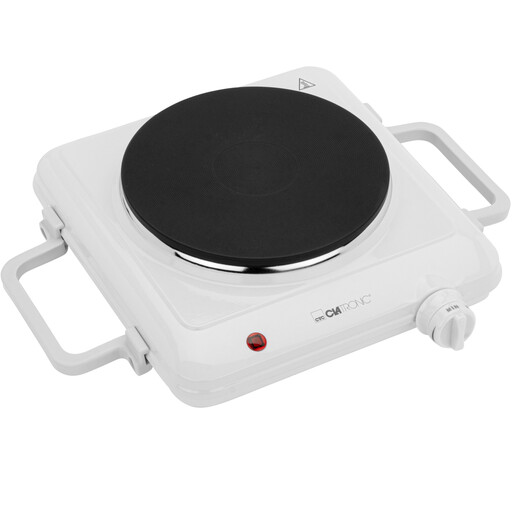
Why this product suits this profile: The portable single hotplate requires no installation cut-out and is suitable for camping, offices, guest rooms or temporary cooking arrangements.
There is no need to consider installation dimensions or a high-voltage connection. A continuously adjustable thermostat, indicator light and overheat protection are specified.
One 180 mm cooking plate, 1,500 W power, excellent stability and attachable cool-touch handles.
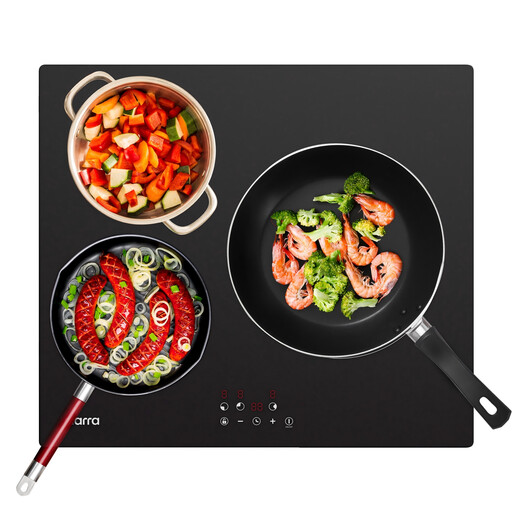
Why this product suits this profile: Three zones, nine power levels and a larger 280 mm zone offer versatile cooking options in a 60 cm fitted kitchen.
The zone sizes and 560 × 490 mm cut-out dimensions are clearly specified. This makes it easier to check whether the hob is suitable before installation.
Touch controls, timer of up to 99 minutes, child lock, residual heat indicator, pan detection and overheat protection.

Why this product suits this profile: For families and frequent cooks, four separately controllable zones, booster functions and a stated total output of 7,200 W are particularly useful.
The specifications state the external dimensions, cut-out, connection type without a plug and the need for professional installation. This helps ensure that installation requirements and power consumption are not overlooked.
Four zones, nine power levels, a timer from 1 to 99 minutes, child lock, residual heat indicator and automatic switch-off.

Why this product suits this profile: The 30 cm hob has two zones and is designed for use with various smooth pan bases, so no specialist induction cookware is required.
The product data states external dimensions of 290 × 520 × 52 mm and a cut-out of 260 × 490 mm. This allows you to check whether it is suitable before installation.
Two cooking zones, nine power levels, timer of up to 90 minutes, child lock, residual heat indicator and an easy-clean ceramic glass surface.
We have put together a complete, regularly updated list of products that fully meet these strict selection criteria and the safety regulations applicable in the EU.
A built-in hob should be connected in accordance with the technical specifications, the existing wiring and the instruction manual. Higher-powered models may require specific circuit protection or a fixed connection. An appliance without a plug must not be connected to the mains independently.
For cleaning, a soft, damp cloth is generally sufficient once the ceramic glass has cooled. Burnt-on residue can be removed from suitable models with a special glass scraper. Abrasive cleaners, hard sponges and direct contact between water and the controls may damage the surface or electronics.
Running costs depend on usage, power level, cooking time and electricity tariff. The wattage indicates the possible power draw, not the actual consumption of every cooking session. Using suitably sized pans, ensuring the base sits flat and switching off after use can help you use energy efficiently.
For limited worktop space, consider a 30 cm hob with two zones or a portable single hotplate. Check the required cut-out dimensions before installation. A portable hotplate does not need permanent installation and can be stored away when required.
The service life depends, among other things, on daily usage time, cleaning, the electrical connection, ventilation and how the glass surface is treated. A damaged or cracked surface should not be used. The relevant manufacturer’s operating and installation instructions are decisive.
The cost depends on the power actually used and the cooking time. At full power, a 3,000 W appliance theoretically consumes 3 kWh per operating hour; in everyday use, cooking is generally carried out at different settings rather than continuously at full power. For an accurate estimate, multiply your consumption in kWh by your current unit rate.