For slowly browned onions, what matters is a pan that fits the cooking zone and a heat setting low enough for the job – a high Boost setting is no substitute. An induction hob requires compatible cookware, while a radiant ceramic-glass hob does not. Whether a built-in hob or a portable hotplate is right for you also depends on how many cooking zones you need and which type of connection your kitchen can support.
Which hob is right for you?
Family cooks using a large frying pan
If you want to brown a large batch of onions slowly while preparing other dishes, look for a suitably sized pan zone and enough room for several pans. Good Food recommends slowly cooking a large pan of onions over a low heat.
Cooks who already own their pans
If you want to keep your existing cookware, check whether the base of your pan is suitable for induction before you switch. SCHOTT CERAN and Rommelsbacher explain the different requirements for a ceramic-glass surface and an induction-compatible pan base.
Cooks who need an extra hotplate
If a temporary extra cooking spot is all you need, a portable single hotplate could be an alternative to replacing your built-in hob. Rommelsbacher and Severin both offer portable models with one cooking zone.
What to look for when buying
First, check that your pan fits the zone and that the heat can be turned down low enough for slow browning. Then decide how many pans you want to use at once, and whether a built-in appliance or a portable hotplate will work best in your kitchen.
| What you need |
What to check before buying |
Who will find this particularly important |
| Slow, controlled browning |
Check the lowest power settings and how easy the specific model is to control. Good Food recommends cooking caramelised onions over a low heat, stirring occasionally. |
If you want to brown onions slowly, a well-controlled low heat matters more than high peak power. Around 33% of consumers put controlled, slow cooking first. |
| Pan size and cooking several dishes |
Compare the base of your pan with the shape and size of the cooking zone. Bosch lists a 28 cm induction zone on the PVS831HC1E, while Siemens describes the ET645HN17E as having a dual-circuit zone and an oval roasting zone. |
If you need room for a large pan of onions alongside other pots, consider the usable area of each zone. Around 27% of consumers place suitable cooking space for family meals above all else. |
| Appliance type and connection |
For a built-in appliance, measure the existing cut-out and check the connection requirements for the exact model. Bosch says the PVS831HC1E must be connected by a qualified electrician; Severin describes the portable KP 1071 as having a Schuko plug. |
If you need to decide between installing a fixed hob and setting up a portable extra hotplate, the available space is a key consideration. Around 20% of consumers say appliance type and connection are their top priorities. |
| Cookware and future costs |
Check whether the base of your pan is suitable for induction and compare its size with the cooking zone. Rommelsbacher specifies a ferromagnetic base for the CTS 2000/IN; Bosch describes the PKE645BA2E as an electric hob with round zones. |
If you want to keep using your existing pans, their base and size should suit the heating technology you choose. Around 20% of consumers put cookware and potential additional purchases first. |
Avoiding buying pitfalls
-
Assuming “Ceran” refers to a specific heating technology
SCHOTT CERAN is a ceramic-glass surface that can be paired with different heating technologies. The term alone therefore does not tell you whether a hob uses induction or radiant heat.
Check the description of the specific model to see which heating technology it uses. If it is an induction hob, check that your pans are compatible too.
-
Choosing based only on width or Boost power
The overall width of a hob does not tell you whether its zones will suit your pans. A high maximum power setting also does not show how easily you can set the low heat needed for slow browning.
Compare the base of your pan with the shape of the zone, the installation dimensions and the connection details for the exact model. An incompatible pan may mean buying new cookware, while a cut-out that is the wrong size could require extra installation work.
-
Expecting a portable single hotplate to replace a full hob
The Rommelsbacher CTS 2000/IN and the Severin KP 1071 each have one cooking zone. Bosch lists four zones for the PVS831HC1E, and Siemens also describes the ET645HN17E as having four zones.
Count how many pans you need to heat at the same time for a family meal. A portable single hotplate is better suited to situations where one extra cooking spot is enough.
Brands to help you decide
Bosch
The range includes built-in induction hobs and radiant electric hobs, with features varying by model.
- Bosch lists a 28 cm zone and zones that can be combined on the PVS831HC1E.
- The PKE645BA2E has round zones; according to Bosch, this model does not have a PerfectFry frying sensor. These details apply only to the models named.
Siemens
The ET645HN17E is a built-in radiant hob with a range of cooking zones.
- Siemens lists a dual-circuit zone and an oval roasting zone on this model, which you can check against the shape of your pans.
- The ET645HN17E is not listed as having a frying sensor to prevent food from burning; Siemens says it must be connected by a qualified electrician.
Rommelsbacher
The CTS 2000/IN is a portable induction hotplate with one cooking zone.
- Rommelsbacher lists ten power settings and a zone diameter of 145–220 mm.
- The hotplate requires a pan with a ferromagnetic base. The manufacturer's temperature accuracy claims do not, on their own, guarantee a particular caramelising result.
Severin
The KP 1071 is a portable induction hotplate with one cooking zone.
- Severin lists pan detection, a timer and a Schuko plug for this model.
- Its single cooking zone is an extra cooking spot, rather than a multi-zone hob for heating several pans at once.
NEFF
Some NEFF built-in induction hobs offer flexible zones and alternative controls.
- NEFF describes Twist Pad controls and expanded Flex Induction on certain versions.
- Whether a flexible zone suits your pan depends on the specific version and the cookware you use; this does not guarantee a particular browning result.
Hobs at Joybuy
Compare the following hob options at Joybuy when planning a family meal. Check the heating technology, cooking zones and connection details for each model.
 No image available
Bosch PIE61RBB5E Series 4 built-in induction hob
This built-in induction hob could suit you if you are planning a fixed installation and use induction-compatible pans.
Model: PIE61RBB5E; heating technology: induction; series: Series 4.
View at Joybuy
 No image available
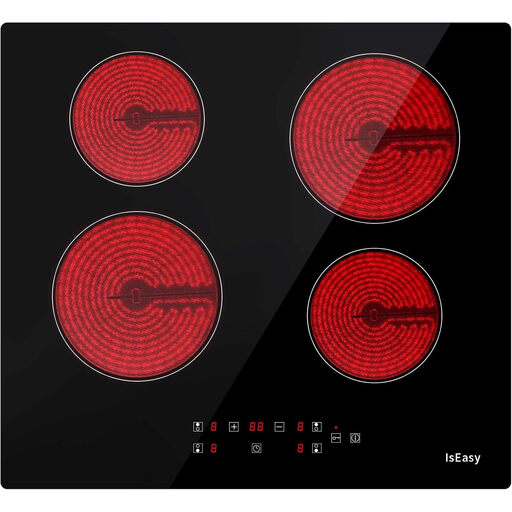
IsEasy ceramic-glass hob, 59 cm, 4 zones
Four zones could be useful if you want to use several pans at once for a family meal. Check that the zones suit your cookware.
Listed in the product name: 59 cm, 4 zones, 6000 W, built-in design, touch controls and nine heat settings.
View at Joybuy
 No image available
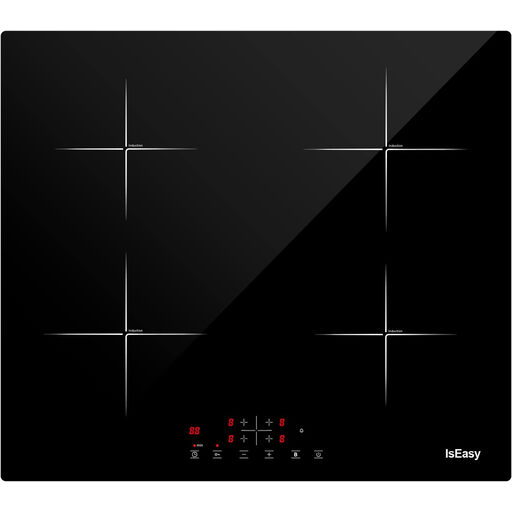
IsEasy built-in induction hob, 4 zones, 60 cm
This built-in induction hob could suit you if you need several cooking zones and your pans have a suitable magnetic base.
Listed in the product name: 4 zones, 60 cm, 6800 W, nine power settings, a 1–99-minute timer and a Boost function.
View at Joybuy
 No image available
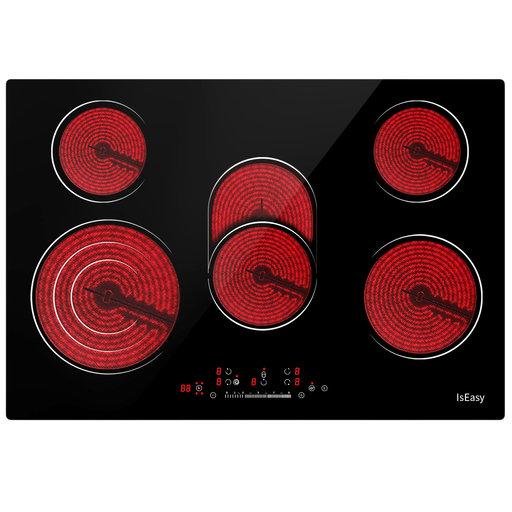
IsEasy ceramic-glass hob, 77 cm, 5 cooking zones
Five listed cooking zones could be useful for a meal where several pans need heating at once. Check that the hob will fit your available installation space.
Listed in the product name: 77 cm, 5 cooking zones, 8600 W and nine heat settings. Automatic shut-off and a residual heat indicator are also listed.
View at Joybuy
 No image available
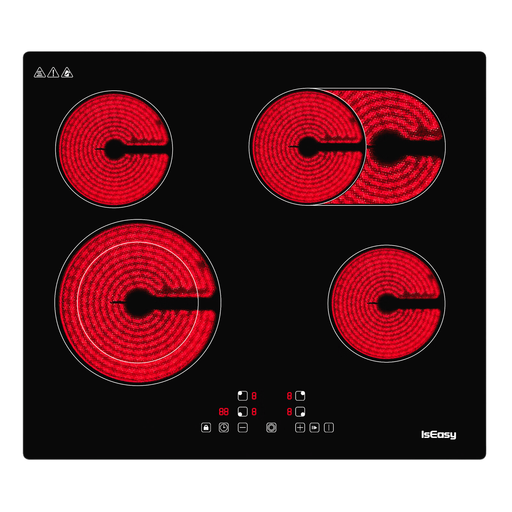
Ceramic-glass hob, 60 cm, 4 zones, oval and dual-circuit zone
The oval and dual-circuit zones listed in the product name may suit you if your pan's shape and base are compatible with them.
Listed in the product name: 60 cm, 4 zones, 6600 W, touch controls, an oval zone and a dual-circuit zone.
View at Joybuy
Frequently asked questions
Does a hob for caramelised onions need a Boost function?
No. Boost is not needed for slow browning over a low heat. Good Food recommends cooking the onions in a large pan over a low heat, stirring occasionally; a high peak power setting does not tell you how precisely you can control the low heat.
Can I connect a built-in hob to a socket myself?
Not necessarily. Bosch and Siemens describe the built-in PVS831HC1E and ET645HN17E as having no plug and requiring connection by a qualified electrician. Severin lists a Schuko plug for the portable KP 1071. If work on the fixed electrical installation is required, § 13 NAV sets out who is permitted to carry it out; this is different from using a plug designed for that purpose.
How can I stop onions burning while they caramelise?
Good Food recommends cooking the onions slowly over a low heat and stirring occasionally to stop them sticking or burning. Also check that the low setting on your particular hob suits the way you cook.
Are a warranty and statutory consumer rights the same thing?
No. The Verbraucherzentrale distinguishes statutory rights against the seller when goods are faulty from a voluntary warranty, whose terms depend on the provider. Check the specific warranty and service terms for the model you buy.


