Chicken fricassee cooks
If you brown the ingredients and then let the sauce simmer gently, look for easy-to-reach power settings and suitable pans. HEA notes that uneven pan bases can result in uneven heat transfer.


For chicken fricassee, a built-in induction hob with well-positioned cooking zones is a sensible choice if your pans are induction-compatible and you want to control the heat when browning ingredients and then simmering the dish. A radiant ceramic hob is an option if you want to keep using cookware that is not induction-compatible. If you don’t have a suitable space for a built-in hob, a plug-in hotplate may work for you, although the number of cooking zones will limit how much you can cook at once.
If you brown the ingredients and then let the sauce simmer gently, look for easy-to-reach power settings and suitable pans. HEA notes that uneven pan bases can result in uneven heat transfer.
If you’re cooking fricassee and a side dish at the same time, the number, size and arrangement of the cooking zones should suit your cookware. Manufacturers’ specifications for individual hobs distinguish, for example, between four cooking zones and specialised zone layouts.
If a built-in hob isn’t an option, consider a plug-in hotplate. The key question is whether one or two cooking zones will be enough for the dishes you want to cook at the same time.
First, check that your pans are suitable and that the hob will fit your kitchen. Then compare the controls and usable cooking zones with the way you cook.
| What matters | What to check when buying | Who it matters most to |
|---|---|---|
| Adjusting the heat when browning and simmering | Check the controls and power settings on the specific model, as well as the suitability of the pan you’ll be using. | If I want to adjust the heat for browning and then simmering, the controls are my main concern. Around 33 % of consumers focus above all on adjusting the heat for different stages of cooking. |
| Cooking fricassee and a side dish at the same time | Compare the number and arrangement of the cooking zones with the dimensions of your pans. If the hob has bridging or combined zones, check the conditions for the specific model. | If I’m cooking a main course and a side dish at the same time, I need enough suitable cooking zones. Around 27 % of consumers prioritise cooking several dishes at once. |
| Continuing to use your pans and existing installation | Check the cookware manufacturer’s information on induction compatibility, and separately check the cut-out dimensions and connection type for the built-in hob. | If I need to take my existing pans and kitchen installation into account, I’ll check both before choosing a heating technology. Around 27 % of consumers put this compatibility first. |
| Cooking without a fixed installation | Compare single or double hotplates, plug types and stated power ratings for the specific appliance. | If there’s no suitable space for a built-in hob, I need a plug-in hotplate and have to decide whether one zone will be enough. Around 13 % of consumers favour this option when a fixed installation isn’t available. |
Ceramic glass describes the surface; on its own, it doesn’t tell you whether the hob uses induction or radiant heat. The cookware requirements differ.
Check the product details to see whether it’s an induction hob or a radiant electric hob, then make sure your pans meet the requirements.
The required cut-out dimensions and connection conditions depend on the specific model. For example, Siemens’ 90-cm EX975LXC1E model requires a cut-out of 880 × 490–500 mm.
Measure your existing cut-out and compare it with the installation instructions for the exact model before ordering. You may need additional work to adapt the worktop or electrical connection.
According to the manufacturer, the SEVERIN KP 1071 has one cooking zone, while the DK 1031 double hotplate has two. This makes a practical difference if you want to heat the fricassee and a side dish at the same time.
Before buying, think about how many pans you usually have on the hob at once when preparing a meal.
The models listed are examples of built-in induction and radiant ceramic hobs.
The EIV634I is an example of a built-in induction hob with a bridging function.
The KP 1071 and DK 1031 are examples of plug-in single and double hotplates.
The EX975LXC1E is an example of a wide built-in induction hob with several cooking zones.
The products below are built-in induction hobs, selected for cooking with several pans and managing different stages of cooking.
 No image available
Four cooking zones are specified, making it suitable for using several pans at once.
The description lists 17 power settings, Touch Select and a timer with automatic switch-off. Use only induction-compatible cookware with a magnetic base; installation should be carried out by a qualified electrician.
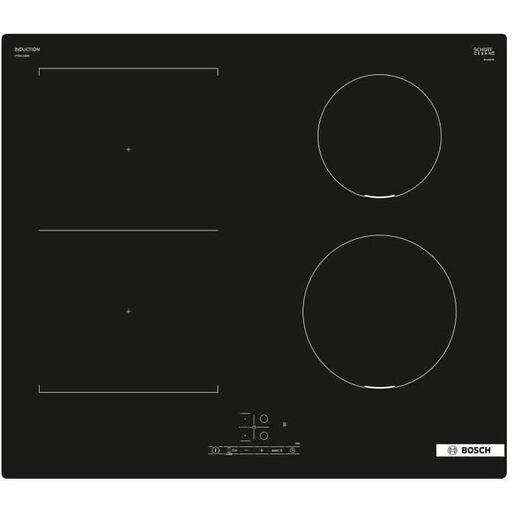 No image available
The four specified cooking zones may be useful for several pans, provided their size and layout suit your cookware.
The product name specifies 60 cm and 6.900 W. It also lists 17 power settings, PowerBoost, TouchSelect and a timer with automatic switch-off. Induction-compatible cookware is required; installation should be carried out by a qualified electrician.
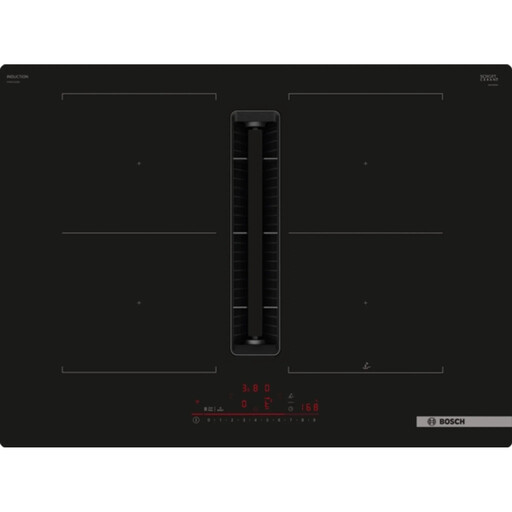 No image available
The hob has four cooking zones; check whether their layout suits the pans you’ll use for the main course and side dish.
The product name specifies 70 cm. It also lists 17 power settings, CombiZone and DirectSelect. Induction-compatible cookware and professional installation are required.
 No image available
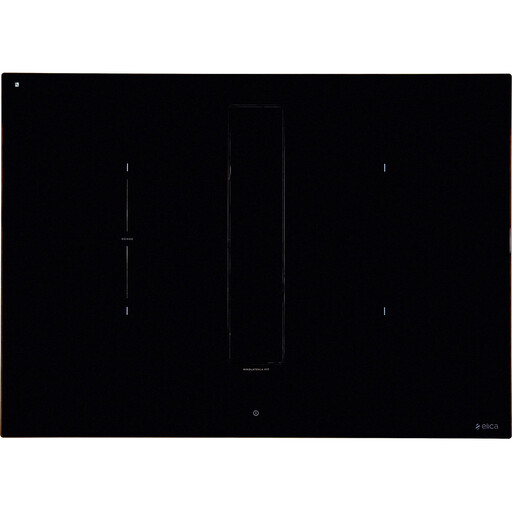
Four cooking zones are specified; check that their layout and size will suit your pans before choosing this hob.
The product name specifies 72 cm. It also lists nine power settings, a keep-warm mode and a timer. The described extraction setup requires additional ducting or optional accessories. Induction-compatible cookware and professional installation are also specified.
 No image available
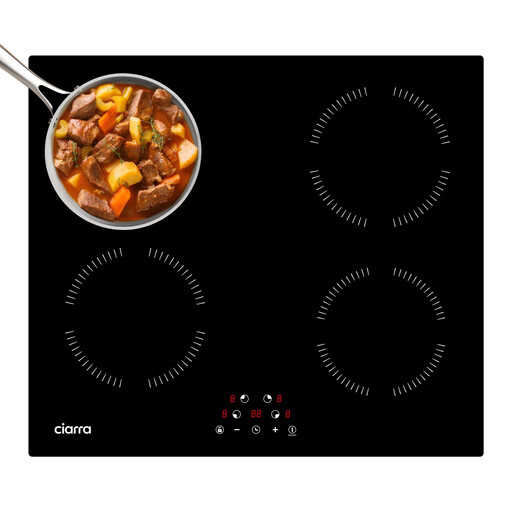
Four cooking zones are specified, which may be useful for several pans if their dimensions and positioning suit your cookware.
The description lists nine power settings, an individual timer for each zone and pan detection. Induction-compatible cookware with a magnetic base is required, and installation should be carried out by a qualified electrician.
Check the cookware manufacturer’s information to see whether it’s suitable for induction. A flat, suitable base is also important for heat transfer; a pan isn’t necessarily induction-compatible just because it’s described as “stainless steel”.
Not just because you’re cooking fricassee. A bridging function is useful if you want to use larger or elongated cookware. For separate pans, what matters is having cooking zones that are well positioned and can be used at the same time.
First, follow the instructions for your model and take residual heat into account. For ceramic glass, Electrolux recommends using a soft cloth or sponge and advises against steel wool and abrasive cleaners. Lift cookware when moving it across the surface.
For the built-in models mentioned here, leave the fixed electrical connection to a qualified electrician. Bosch explicitly recommends this for the models described, and HEA requires fixed connections to be carried out by a registered electrical installer. This is different from simply plugging in an appliance that is specifically designed to be plug-in.