Families with a large porridge pot
If you cook several portions in one pot, make sure the base of the pot matches the cooking zone. With portable hobs, you’ll also need to check the maximum load for the specific model.


Start by choosing a hob that suits the pot you already have, the diameter of its cooking zone and how many pots you want to use at once. Induction requires compatible cookware, while radiant ceramic-glass hobs and cast-iron hotplates may suit other types of pot. If you’re choosing a built-in hob, you’ll also need to make sure the cut-out, controls and electrical connection work with your kitchen.
If you cook several portions in one pot, make sure the base of the pot matches the cooking zone. With portable hobs, you’ll also need to check the maximum load for the specific model.
If you want to cook another dish alongside the porridge, check whether a single cooking zone will be enough or whether a double hotplate or permanently installed hob would suit your kitchen routine better.
If you want to keep using your existing cookware, compare radiant ceramic-glass hobs and cast-iron hotplates with the option of switching to induction-compatible pots.
First, check that your pot is suitable for the heating technology and cooking zone. Then decide how many cooking zones you need, and whether a portable hob or a built-in model and its connection will work in your kitchen.
| What matters when buying | What to check | Who will find this useful? |
|---|---|---|
| Controlling the heat while simmering | Check how you can adjust the heat on the specific model; a high maximum power rating alone doesn’t tell you how easily it can be regulated. | When I’m making porridge, I want to be able to turn the heat down easily once it’s come to the boil. Controls that are easy to reach matter particularly to me. Around 29% of consumers rank heat control while simmering as their top priority. |
| Keeping the pot I already own | With induction, the base and diameter of the pot need to suit the hob. If you don’t have a suitable induction pot, other heating technologies may be an option. | If I want to keep using my family-sized pot, I check whether it’s suitable before rushing to buy a new one. Around 23% of consumers prioritise keeping their existing cookware. |
| Having enough cooking zones | Count the pots you actually use at the same time. A double hotplate takes up more worktop space than a single one. | If I want to cook another dish alongside the porridge, I need a second usable cooking zone. Around 18% of consumers prioritise being able to cook more than one dish at a time. |
| Space and connection | Measure the worktop space or built-in cut-out, and check whether the hob needs to be connected to a cooker. Don’t treat a hardwired connection like a plug-in one. | I want to know before I buy whether the appliance will fit in my kitchen and how it needs to be connected. Around 18% of consumers prioritise kitchen fit, control compatibility and connection requirements. |
| Assessing the overall cost | Factor in any new cookware you may need and, for built-in appliances, the cost of connection. An oven energy label doesn’t show the hob’s energy consumption. | When I weigh up the purchase and running costs, I also consider cookware and whether I might need a professional installation. Around 12% of consumers prioritise the overall cost. |
A ceramic-glass surface can be used with different heating technologies. The ROMMELSBACHER CT 2010/IN and CT 2203/TC use different technologies.
Check the full model name and make sure the base of your pot and its size are suitable for the appliance.
You may need to replace a pot you already own if it isn’t suitable for the induction model you chose by mistake.
According to the manufacturer, the Bosch NKE611GA2E is controlled via the cooker. It therefore can’t be used like an independently controlled hotplate without a compatible cooker.
Before buying, check the controls, cooker compatibility, cut-out and connection.
Depending on your kitchen, you may need a different hob or changes to the installation.
Wattage alone doesn’t tell you whether a full family-sized pot will suit the cooking zone or stay within the maximum load. A flat pot base also helps transfer heat.
Compare the base of your pot and its weight when full with the specifications for the model you’re considering.
According to the Verbraucherzentrale, the EU energy label for a cooker combination applies to the oven, not the hob.
Only compare hobs using consumption figures based on a like-for-like comparison.
The CT 2010/IN is a portable induction hob, while the CT 2203/TC is a portable radiant alternative.
The DK 1031 is a portable double induction hob, while the DK 1014 has two traditional cast-iron heating rings.
The ProSlim 2000 is a portable induction hob for one pot.
The NKE611GA2E is a built-in electric ceramic-glass hob controlled via the cooker.
The EX975LXC1E is a wide built-in induction hob with multiple zones.
The Joybuy products below include built-in induction hobs as well as ceramic-glass models with two or more zones. For ceramic-glass hobs, check the specific heating technology; for built-in models, check the cut-out and connection requirements. The surface alone doesn’t tell you whether a hob uses induction.
 No image available
This built-in induction hob could be a good choice if you’re planning a permanently installed cooking zone and use induction-compatible cookware.
Before buying, check the installation requirements and make sure your pots are suitable. According to the product description, installation must be carried out by a qualified electrician.
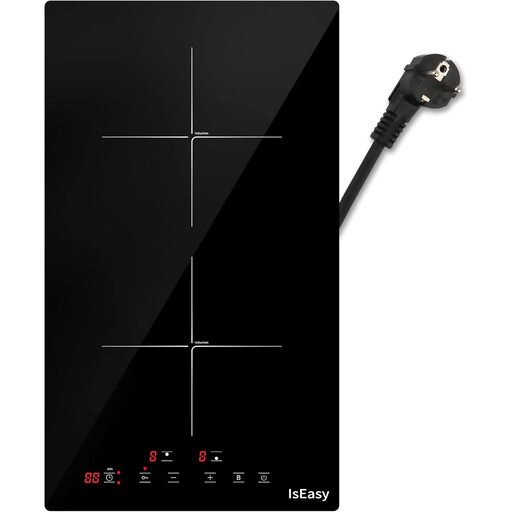 No image available
Two cooking zones could be useful if you want to heat porridge and another dish at the same time; both pots need to be induction-compatible.
The product title lists 3400 W, 29,5 cm, nine heat settings and 220–240 V. It describes the appliance as both a built-in and plug-in model, so check the exact connection type before buying.
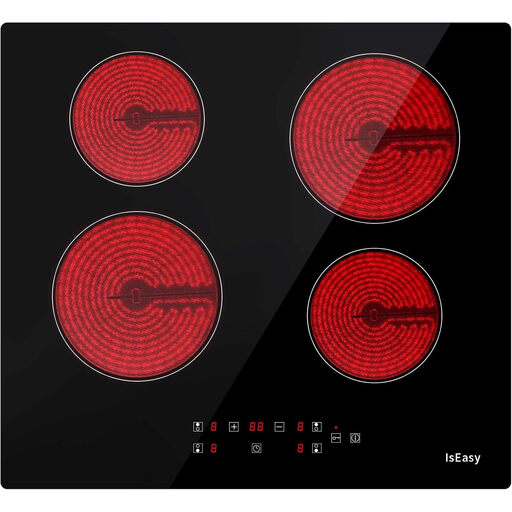 No image available
Four zones could suit a kitchen where you use several pots at once. The product name specifies ceramic glass, but doesn’t mention induction.
The product title lists 6000 W and nine heat settings. Check the built-in cut-out and connection requirements before buying.
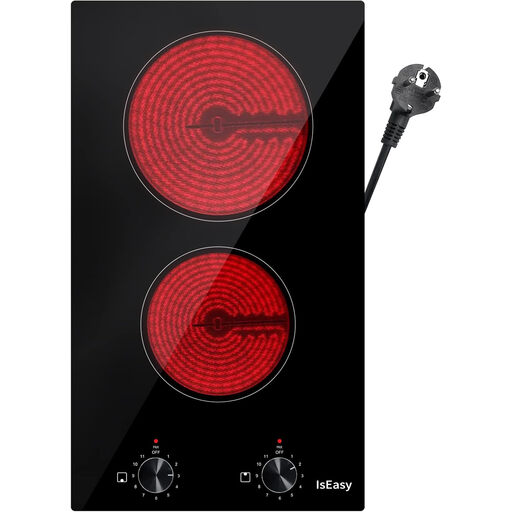 No image available
Two cooking zones could be useful if you want to make porridge and another dish at the same time. The product name specifies ceramic glass, not induction.
The title lists 3200 W, 29,5 cm and rotary controls. The description gives a built-in cut-out size of 49 × 27 cm.
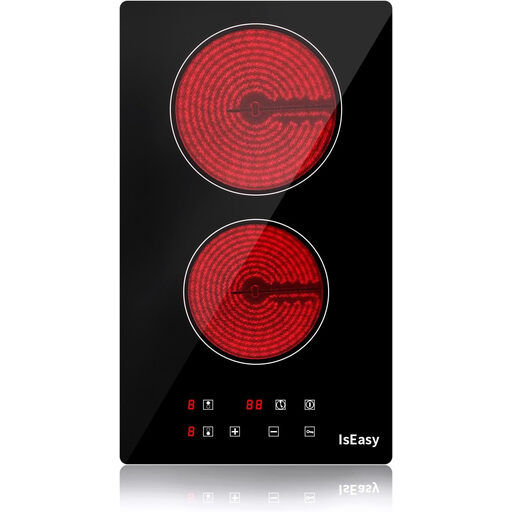 No image available
Two zones could work well if you want to heat porridge and another dish at the same time. The product description calls this a Domino built-in hob.
It lists 3000 W, 29,5 cm, nine heat settings and a timer of 1–99 minutes. Before buying, check that the installation and connection will work in your kitchen.
One suitable cooking zone is enough for a single pot. A second is useful if you want to heat another dish at the same time; also check how many suitable pots you have and how much space is available.
Not necessarily; it depends on the connection type of the specific appliance. According to the HEA’s connection guidance, a hardwired electric hob must only be connected by an electrical installer registered with the energy supplier. Appliances supplied with a plug need a suitable earthed socket.
No. The Verbraucherzentrale explains that the energy label for a cooker combination applies to the oven, not the hob. So compare hobs using suitable figures that are based on a like-for-like comparison.
CE marking is required for electrical and electronic equipment covered by the relevant harmonised EU regulations. By applying it, the manufacturer declares that the product meets the applicable requirements; it isn’t an independent assessment of how well the hob cooks porridge.
Under EU consumer law, when you buy from a business seller, you generally have at least two years of legal protection against the seller from the date you receive the goods. This is separate from any additional manufacturer’s guarantee.