Making coulis in a small pan
If you want to keep the fruit mixture simmering on a lower heat after bringing it up to temperature, easy-to-use controls and a suitable pan matter more than extra cooking zones.


For a single portion of fruit coulis, a portable single-zone hob is usually the most straightforward choice. First, check that your pan is suitable for induction and fits the cooking zone, and that you can turn the power down easily for simmering. A radiant ceramic hob is an option if your pan is not induction-compatible. Two cooking zones or a built-in hob are better suited to regular batch cooking, or if you’re already planning to replace your fixed hob.
If you want to keep the fruit mixture simmering on a lower heat after bringing it up to temperature, easy-to-use controls and a suitable pan matter more than extra cooking zones.
If you only need to heat one pan for the sauce, compare the size of a portable single-zone hob with the space available on your worktop and in your cupboards.
If you regularly have a second pan on the hob while making coulis, a portable double hob or a built-in hob could be an option. Make sure you have enough space and that the connection is suitable for the model you choose.
A good fit if: One cooking zone is enough and you have a pan with a ferromagnetic base that fits the cooking zone.
Bear in mind: You can’t use non-induction-compatible cookware, and the power levels don’t measure the temperature of the coulis.
A good fit if: Your pan isn’t suitable for induction or you prefer controls with a rotary dial.
Bear in mind: The heating zone itself gets hot and retains heat after you turn it down.
A good fit if: You want to make coulis and another dish at the same time on a regular basis.
Bear in mind: Two cooking zones take up more worktop space than one. Also check the connection required for the specific appliance.
A good fit if: You’re already replacing your fixed hob and need several cooking zones.
Bear in mind: Check the cut-out dimensions and connection required for the specific model. A built-in hob means extra work if you only make the occasional sauce.
| Priority | What to check before buying | Who it matters most to |
|---|---|---|
| Adjusting the heat while simmering | Controls and options for turning the heat down; a setting doesn’t measure the temperature of the fruit sauce. | If I want to turn the heat down gradually after bringing the fruit mixture up to temperature and keep an eye on it in the pan, easy-to-use controls are essential. Around 31 % of consumers put adjustable heat first. |
| Taking up little worktop space | Compare the appliance dimensions, the space needed for the pan and cable, and how many cooking zones you actually need. | If I only have one pan of coulis on the worktop, I want to be able to put the appliance away easily after use. Around 25 % of consumers prioritise a space-saving hob. |
| Using a pan I already own | For induction, check the pan base is magnetic and the diameter is suitable. With radiant heating, the cooking zone needs to match the pan base. | If I want to keep using my current fruit-sauce pan, I want to check that it’s suitable before buying. Around 19 % of consumers check cookware compatibility first. |
| Cooking two dishes at once | If you regularly cook two dishes at the same time, compare the number of zones, appliance dimensions and stated total power. | If I often have another pan on the hob while making coulis, I need an extra cooking zone. Around 13 % of consumers give cooking two dishes at once their highest priority. |
| Replacing a fixed hob | Before choosing a model, decide whether you’re replacing your existing hob. Then check the cut-out dimensions and appliance connection. | If I’m already planning to replace my built-in hob, I want the new one to work for making coulis too. Around 12 % of consumers prioritise replacing their fixed hob. |
A ceramic-glass surface alone doesn’t tell you whether a hob uses induction or radiant heating. On a radiant model, the cooking zone itself gets hot and stays warm after you turn it down.
Check the heating technology used by the specific model, then make sure your pan is suitable. If it uses radiant heating, also follow the guidance on residual heat.
A selectable heat level or temperature on the appliance doesn’t measure the temperature of the fruit mixture in the pan, or show how evenly a small portion will simmer.
Choose controls you find easy to use, and keep an eye on the sauce and stir it as it simmers. Don’t assume the result based on the set temperature alone.
A double hob takes up more worktop space than a single cooking zone. A built-in hob needs a suitable cut-out and may need to be connected by a qualified electrician rather than simply plugged in.
First consider whether you regularly use a second pan at the same time or are already planning to replace your fixed hob. Then check the dimensions and connection required for the specific model.
Portable single-zone induction hobs; the Touch 2000 is one example for adding a cooking zone for a single pan.
Offers portable single-zone induction hobs as well as a ceramic-glass alternative with radiant heating.
The DK 1031 is one example of a portable induction hob with two zones.
Built-in induction hobs are an option if you’re looking to replace an existing hob.
The products below are portable single-zone induction hobs for use with one pan. Before buying, check that your cookware is suitable and that the controls give you the adjustment you need for simmering.
 No image available
A portable single-zone hob for one pan, provided your cookware is suitable for induction.
Touch controls, a glass surface and an 8-hour timer. The description specifies magnetic cookware with a diameter of 12–26 cm.
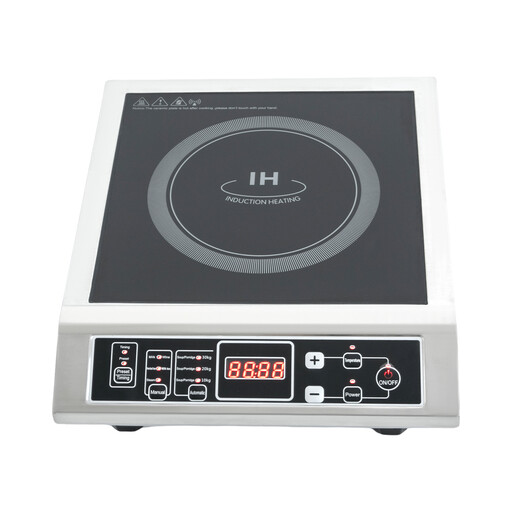 No image available
Designed as an extra cooking zone for one induction-compatible pan.
The product description lists ten adjustable temperature and power levels, as well as a timer and reservation function.
 No image available
Described as a portable hob for one pan; compatible magnetic cookware is required.
The product description lists eight temperature levels, a timer of up to three hours and a glass surface.
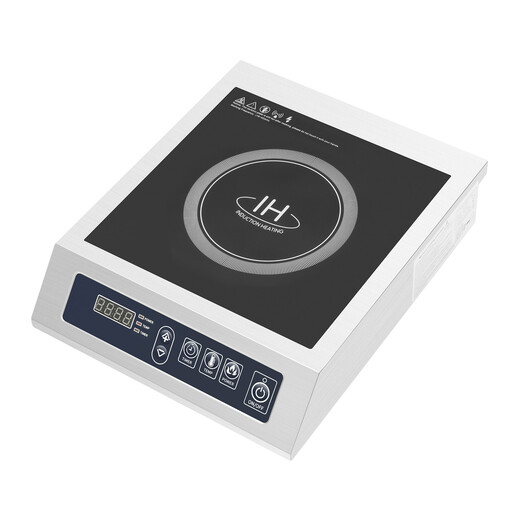 No image available
Described as an extra worktop cooking zone. Check that your pan has a suitable flat iron base.
The product title lists eleven power levels, a 24-hour timer and an EU plug.
 No image available
Described as a portable induction cooker for an extra cooking zone; magnetic cookware is required.
The product title lists touch controls and a safety lock.
Check whether the base of your pan is ferromagnetic, then compare its diameter with the hob’s specifications. CASO Design lists a pan diameter of 12 to 24 cm for the Touch 2000; Rommelsbacher requires a ferromagnetic base for the CT 2010/IN.
No, an appliance setting doesn’t measure the temperature of the fruit mixture in the pan. Choose controls that make it easy to turn the heat down, and keep an eye on the sauce as it simmers.
Follow the cleaning instructions for the specific model and let hot surfaces cool before cleaning. According to the manufacturer, the radiant Rommelsbacher CT 2200/E has a residual heat indicator. Check the model-specific guidance on surface temperature for induction hobs too.
Section 13 of the NAV sets out who may carry out work on the electrical installation beyond the main fuse at the property: apart from the network operator, this must generally be an installation company listed in its register of installers. According to the manufacturer, the Bosch PXX675DC1E has no plug and must be connected by a qualified electrician. This is different from plugging in a portable appliance designed to use a plug.
No, heating alone doesn’t automatically make coulis keep for a long time. The Federal Centre for Nutrition describes a specific method for making fruit spreads that keep well, using sugar, gelling agent, clean preparation and suitable jars. Its guidance on shelf life can’t automatically be applied to coulis made in a different way.