Gravy makers short on time
If you need to finish the gravy while getting on with other tasks, easy-to-reach heat settings and a clearly defined timer function are important things to check.


The key question is how many pans you need to heat at once. A portable single hob may be enough for an extra spot to make gravy, while cooking gravy and side dishes on the same appliance calls for separate cooking zones. Next, check how precisely you can adjust the heat and whether the timer simply reminds you or switches off the cooking zone. A timer is no substitute for keeping an eye on things or stirring; with induction, your pan’s material and base size must also be suitable.
If you need to finish the gravy while getting on with other tasks, easy-to-reach heat settings and a clearly defined timer function are important things to check.
If you prepare gravy and side dishes at the same time, check that the number, layout and size of the usable cooking zones suit your pans.
A portable hob can be put away when not in use. A built-in hob needs to fit the existing cut-out and be connected correctly.
A good fit if: Your gravy needs an extra cooking spot and other dishes are already being heated elsewhere.
Bear in mind: You can’t heat two separate pans at once; both the pan and cooking zone must be suitable for induction.
A good fit if: You want to cook gravy and another dish at the same time on a freestanding appliance.
Bear in mind: The available worktop space and power supply must suit the specific appliance. Two zones don’t necessarily mean both can reach their maximum individual power at the same time.
A good fit if: You regularly use several pans at once and the cut-out and connection are right for the model.
Bear in mind: You’ll need induction-compatible cookware, and electrical installation work must be properly planned.
A good fit if: You want two portable cooking spots and your existing pans aren’t suitable for induction.
Bear in mind: This heating technology is different from induction. Remember that residual heat remains when adjusting the settings and cleaning the hob.
| Priority | What to check before buying | Who should consider it? |
|---|---|---|
| Heat when reducing gravy | Check how easy it is to use the lower heat settings and look for information about simmering. A high boost setting alone doesn’t tell you how well the hob can maintain a low heat. | If I want to adjust the heat precisely after bringing the gravy to the boil, an easy-to-access setting matters. Around 28% of consumers put controlled gravy reduction first. |
| Timer and cooking schedule | Check whether the timer simply reminds you or switches off the active cooking zone. Siemens Hausgeräte Deutschland lists both types of timer for the EU611BEB6E. | If you want to coordinate the next step or switch off a zone after a set time, choose a function that does exactly that. Around 22% of consumers prioritise timing. |
| Several pans at once | Count the pans you need to use at the same time and compare their base sizes with the layout and usable area of the zones. | If I want to cook gravy and side dishes at the same time, I need genuinely separate cooking spots. Around 22% of consumers prioritise cooking zones that can be used in parallel. |
| Space and connection | For portable appliances, check the space available and the type of connection. For built-in hobs, check the cut-out dimensions and connection requirements for the specific model. | If you need to store a hob away or fit one into an existing kitchen, start by checking the space and installation requirements. Around 17% of consumers prioritise this fit. |
| Existing pans | For induction, compare the pan’s material and base size with the manufacturer’s information about the hob and cooking zone. | If I want to keep using my existing gravy pans, the heating technology needs to suit them. Around 11% of consumers prioritise pan compatibility. |
High power can help heat things quickly, but it doesn’t automatically mean you can control the heat well when you want to simmer. A cooking assistant advertised for boiling water doesn’t prove that it can automatically control gravy reduction.
Check the controls, the lower heat settings and the feature description for the specific model.
A reminder and automatically switching off a cooking zone serve different purposes. Even a shut-off timer can’t tell when your gravy has reduced to the consistency you want, and it’s no substitute for supervision.
Check the model description to see whether the function only gives a signal or actually switches off the active zone.
The required cut-out can vary between models, and you’ll also need to consider the type of connection. Work on electrical installations is subject to the requirements of § 13 NAV.
Compare the installation diagram and connection details with your kitchen, and arrange any necessary electrical work with an appropriately authorised installer.
A ceramic glass surface doesn’t tell you which heating technology the hob uses. Induction requires suitable cookware, while a radiant-heated hob works differently.
Check the heating technology specifically. For induction, compare your gravy pan’s material and base size with the manufacturer’s information.
Built-in induction hobs with different zone layouts, depending on the model, for one pan or several in use at once.
Built-in induction hobs with flexible zone options, useful if you want to use different-shaped cookware as well as a gravy pan.
Portable double hobs with induction or radiant-heated ceramic glass, offering two cooking spots without built-in installation.
A portable double induction hob that could be used to cook gravy and another dish without built-in installation.
Built-in induction hobs with cooking assistants, useful if you regularly have other cooking tasks to manage alongside the gravy.
This selection includes portable hobs and induction or ceramic glass hobs with one or more zones. Before buying, check that your cookware, available space or cut-out, and power connection are right for how you plan to use the hob.
 No image available
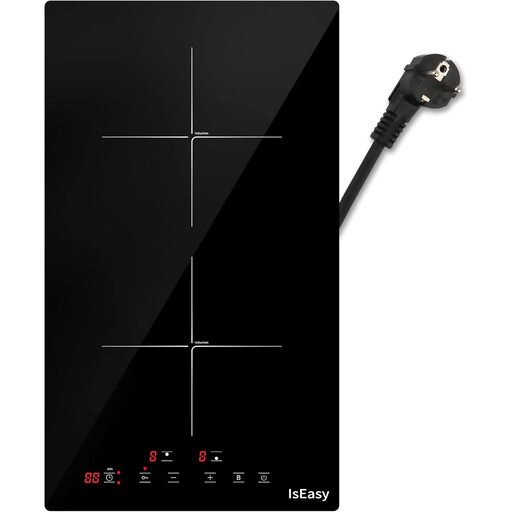
The two cooking zones are designed for heating gravy and another dish at the same time.
Described as suitable for built-in installation and plug-in use; 29,5 cm wide, with nine heat settings, a 1–99-minute timer and a child lock.
Induction requires suitable cookware. Check that the pan’s material and base size match the hob’s specifications.
 No image available
A portable single zone is worth considering if your gravy needs an extra cooking spot and you don’t need to heat a second pan on the same hob.
28 cm, glass surface, nine heat settings, touch controls and an 8-hour timer.
For induction, the pan’s material and base size must suit the cooking zone.
 No image available
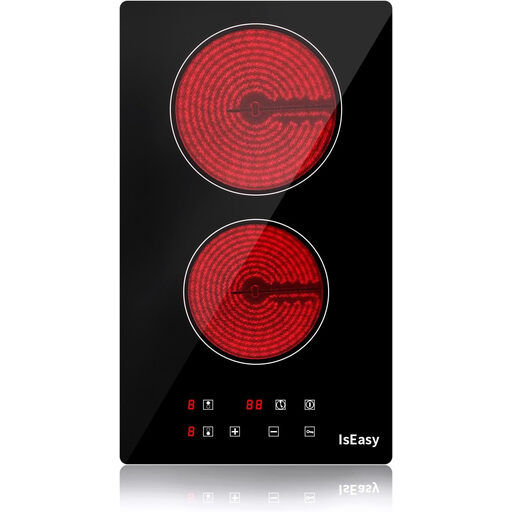
Two independently usable heating zones are designed for heating two dishes at once.
29,5 cm wide, with nine heat settings, touch controls, a 1–99-minute timer, automatic shut-off and a child lock.
 No image available
This portable double hob is designed for heating gravy and another dish at the same time.
The listed functions include keeping warm, boiling and simmering, as well as frying and slow cooking on a low heat.
Induction requires suitable cookware; the pan’s material and base size must suit the cooking zone.
 No image available
A portable single hob could be a good fit if one extra zone for the gravy is all you need.
Described as a tabletop hob with five power settings, one cooking zone and 1.000 W.
With induction, your cookware and the pan’s base must suit the cooking zone.
No. On the Siemens EU611BEB6E, one timer function can remind you and another can switch off the active cooking zone. Neither checks the consistency of the gravy or replaces supervision. The German Fire Service Association identifies food left unattended or forgotten on the hob as a common cause of fires.
Only if your existing pan isn’t suitable for induction or its base size doesn’t match the cooking zone. The Federal Office for Radiation Protection lists suitable material, size and positioning as important requirements. Check the information for both the pan and the hob.
§ 13 NAV sets out requirements for businesses carrying out work on electrical installations. Siemens specifies that the plug-free EU611BEB6E must be connected by a qualified electrician. This is different from using a portable hob designed to be plugged in.
Follow the instructions for the specific model. For its portable TILLREDA hob, IKEA recommends using a soft cloth with warm water and mild detergent, and advises against steel wool and abrasive or sharp utensils.
You can’t determine what’s right for you from the hob description alone. The Federal Office for Radiation Protection notes that electric and magnetic fields can affect electronic implants; your treating doctor should assess any individual risk.