Hosts with a full hob
You want to make the pear poaching liquid on an extra hob while preparing the rest of the meal on your existing one.


If you only need an extra hob for the pear poaching liquid, a portable single hob should be enough, provided your pan’s base and size are suitable. If you need to cook other dishes at the same time, separate cooking zones are more important. A built-in hob is mainly worth considering if you’re already replacing one. Before you buy, check your pan, available space and electrical connection. When cooking, make sure the liquid doesn’t continue to boil after it comes to the boil.
You want to make the pear poaching liquid on an extra hob while preparing the rest of the meal on your existing one.
You need room for the pears and other dishes at the same time, and are weighing up a portable double hob against a permanently installed multi-zone hob.
You want to keep using your pan for the poaching liquid, so you’re checking whether its base is suitable for induction or a radiant hob.
A good fit if: You only want to use one extra pan and a portable hob will do the job.
Keep in mind: With induction, your pan’s base and diameter must be suitable for the specific model. You’ll also have just one cooking zone.
A good fit if: You want to use a suitable pan you already own that isn’t induction-compatible.
Keep in mind: On a HiLight model, the residual heat indicator warns you that the hob stays hot after it’s switched off.
A good fit if: You want to cook another dish at the same time as the pear poaching liquid, on its own cooking zone.
Keep in mind: Two zones need more space. If you choose an induction model, your pans must be compatible.
A good fit if: You’re already replacing a hob and regularly need several cooking zones.
Keep in mind: The cut-out and electrical connection must suit the specific model. Some hobs need to be connected by a qualified electrician.
For poached pears, you need to be able to turn the heat down after bringing the liquid to the boil and keep an eye on it. NDR recommends poaching the pears for 20–25 minutes over a low heat, without letting the liquid boil.
| Buying criterion | What to look for | Who it matters to |
|---|---|---|
| Gentle, adjustable heat | Check the lower power settings and keep an eye on the liquid as it cooks. A timer is no substitute for watching it. | If the liquid needs to simmer after coming to the boil, I want to keep the heat low and adjust it easily. Around 34% of consumers prioritise gentle, controllable heat. |
| Cooking more than one dish at once | Check how many separate cooking zones you need, and whether you have the space or a suitable spot for a built-in hob. | If I’m cooking several dishes at once, I need another cooking zone alongside the pan of pears. Around 27% of consumers prioritise being able to cook more than one dish at a time. |
| Using a pan you already own | With induction, your pan’s base and diameter must be suitable for the specific model. | If I want to keep using my existing pan, I first check that its base and diameter are suitable for the hob. Around 20% of consumers put pan compatibility first. |
| Space and electrical connection | Measure the space available or the cut-out, and check the specified connection type for built-in models. | If there’s no safe space on the worktop or a hob needs replacing, the installation and connection must be suitable. Around 19% of consumers prioritise space and the work involved in connecting the hob. |
When poaching, the liquid needs to stay below boiling point after it comes to the boil. A high power rating tells you nothing about how well you can control the heat afterwards.
Look for easy-to-use low settings and keep an eye on the liquid as it cooks.
An induction model may require a ferromagnetic pan base and a suitable diameter. If your pan isn’t compatible, you won’t be able to use it on that hob as intended.
Before buying, compare your pan’s actual base and diameter with the specifications for the model. If necessary, you’ll need a different, compatible pan.
The Bosch NIF645CB5E requires a suitable cut-out. Bosch states that the model comes without a plug and must be connected by a qualified electrician.
Check the cut-out and electrical connection before choosing a built-in model instead of a portable hob.
Portable induction hobs. The TC 2400 comes with a temperature probe and one cooking zone.
Portable single hobs, including induction models such as the CT 2010/IN and HiLight radiant models such as the CT 2200/E.
Portable double hobs: the DK 1031 uses induction, while the product specifications say the DK 1014 has cast-iron hotplates.
Built-in induction hobs for households that need several permanent cooking zones. The NIF645CB5E is one example, with four zones.
Built-in induction hobs. The EX675LXC1E is one example, with four cooking zones, including two flexible zones.
This selection includes portable single induction hobs and two-zone hobs for cooking pear poaching liquid and other dishes.
 No image available
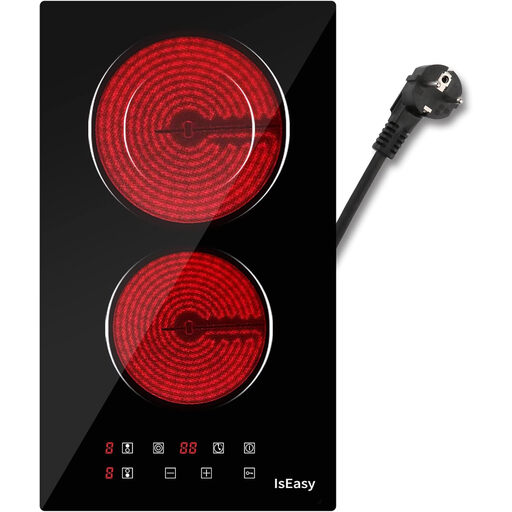
Two cooking zones give you room for the pan of pears and another dish.
3200 W; nine power settings; 1–99-minute timer; touch controls; child lock; residual heat indicator.
 No image available
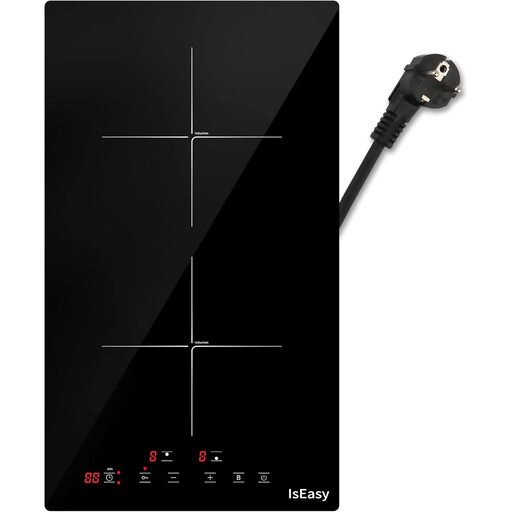
Two separate zones are designed for cooking at the same time. Check that your pans are suitable for induction.
3400 W; two zones at 1800 W each; nine heat settings; programmable timer; 29,5 cm; 220–240 V. Described as suitable for built-in or freestanding use.
 No image available
A portable single hob can provide an extra cooking zone for the pan of pears, provided its base is suitable for induction.
2100 W; 28 cm glass surface; nine heat settings; 8-hour timer; suitable for magnetic cookware with a diameter of 12–26 cm.
 No image available
Two cooking zones are designed for preparing pear poaching liquid and other dishes at the same time.
Five temperature settings; listed uses include keeping food warm, boiling, simmering, frying and slow cooking over a low heat.
 No image available
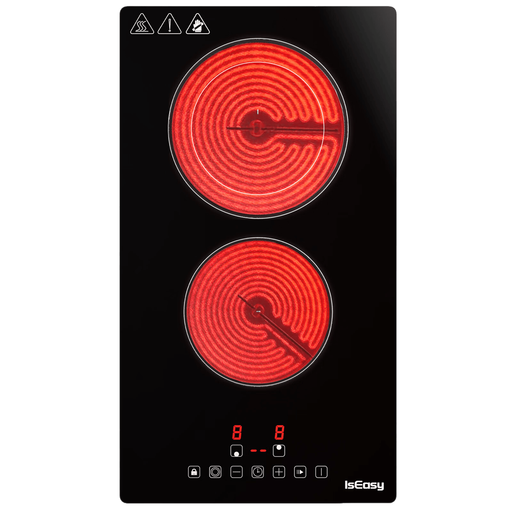
Two cooking zones let you cook the pan of pears and another dish at the same time.
3200 W; nine power settings; pause function; child lock; overheat protection; residual heat indicator. Described as suitable for worktop or built-in installation.
No. The NDR recipe referenced doesn’t give a universal setting for every appliance. Bring the liquid to the boil first, then poach the pears for 20–25 minutes over a low heat without letting the liquid boil. Keep an eye on the liquid rather than relying on a temperature setting alone.
No. For the Rommelsbacher CT 2010/IN, the manufacturer specifies a ferromagnetic pan base and a cookware diameter of 120–230 mm. Check the material and size against the specifications for your particular model.
Not necessarily. Bosch says the NIF645CB5E comes without a plug and must be connected by a qualified electrician. Check the connection requirements for your model. Work on the fixed electrical installation is also subject to the requirements set out in § 13 NAV.
The Bundesnetzagentur describes CE marking as a declaration of conformity for which the manufacturer is responsible, not as an independent quality mark. Check the information for the specific product; the marking alone is not an independent assessment of its quality.
Use designated collection or take-back schemes for waste electrical equipment. The Umweltbundesamt explains that the Electrical and Electronic Equipment Act governs take-back. The options available from retailers depend on factors including the retailer and the size of the appliance.