For curry cooks with limited space
If you usually cook with one pan and want to put the hob away after use, the appliance’s dimensions and the size of pan it accommodates matter more than having an extra cooking zone.


For making potato curry in a small kitchen, a portable single hob is a natural place to start if one pan is all you need. With induction, though, your pan must be compatible. If you want to keep using your existing pan and it isn’t suitable for induction, consider a cast-iron or radiant ceramic-glass hob. A double hob takes up more space, but lets you cook curry and rice at the same time. Manufacturers’ details about power settings and controls don’t show how evenly a particular appliance simmers on a low heat.
If you usually cook with one pan and want to put the hob away after use, the appliance’s dimensions and the size of pan it accommodates matter more than having an extra cooking zone.
If you want to keep using your curry pan, check its base first: induction requires compatible cookware.
If you want to cook curry and rice at the same time in separate pans, a second cooking zone can be useful. Weigh this against the space available and the connection requirements of the specific appliance.
A good fit if: Your pan is induction-compatible and you don’t need to cook the curry and side dish at the same time.
The trade-off: You’ll need to check that your pan’s base and diameter are compatible; one cooking zone isn’t enough for two pans.
A good fit if: You’d like a single cooking zone with a rotary control, without needing an induction-compatible pan.
The trade-off: The cooking surface heats up and stays hot after you switch the hob off.
A good fit if: You’d like a ceramic-glass surface with a rotary control, but don’t want to switch to induction.
The trade-off: Check the dimensions of the specific model; the cooking surface gets hot.
A good fit if: You regularly want to cook curry and rice at the same time in separate pans.
The trade-off: A double hob takes up more space; check the appliance’s connection requirements too.
| What matters to you | What to check | Who it matters most to |
|---|---|---|
| Space required | Compare the appliance’s width and depth with the space available, allowing room for the pan and safe positioning. | If I’m only using one curry pan, the hob and pan need to fit in the space I have. Space is the top priority for around 36 % of consumers. |
| Control when simmering | Check the controls, power settings and timer on the specific model; if needed, look for a reliable test carried out on a low heat. | When I turn the heat down from a high setting to simmer, I want to be able to adjust it appropriately. Around 29 % of consumers say controllability when cooking curry is their main concern. |
| Pan you already own | Check whether it’s suitable for induction and measure its base, then compare this with the stated pan size range. | If I want to keep using my current curry pan, it needs to be compatible with the type of hob I choose. Around 21 % of consumers are mainly looking to keep using their existing pan. |
| Two pans at once | Consider whether you really want to cook curry and a side dish at the same time; if choosing a double hob, check its dimensions and connection requirements. | If I want to cook curry and rice at the same time, I need two cooking zones and enough room for them. Around 14 % of consumers prioritise cooking two dishes at once. |
Ceramic glass describes the surface, not necessarily the heating technology underneath. Depending on the model, a ceramic-glass hob may use induction or a radiant heating element.
Check the heating technology and pan requirements for the full model name, rather than relying on the description of the surface alone.
If your pan isn’t compatible, you may need to replace your cookware.
The rated power tells you neither how much space the appliance needs nor whether it maintains an even temperature when simmering.
Compare the dimensions, pan size range and controls alongside the rated power. Treat claims about time saved as unverified unless they’re backed by independent evidence.
A second cooking zone is only useful if you really want to cook the curry and side dish at the same time in separate pans.
Plan how you’ll cook and measure the space available before you buy. Also check the connection requirements of the specific appliance.
A larger hob takes up more worktop space.
Portable single induction hobs with a choice of sizes and control features.
The EKP 3582 single hob is a conventionally heated option with a rotary thermostat control.
The PC-EKI 1062 is a single induction hob with touch controls and a timer.
The CT 2010/IN and CT 2200/E use different heating technologies.
The range includes single induction hobs and the conventionally heated DK 1014 double hob.
This selection includes portable single hobs with cast-iron, induction and infrared heating, suited to cooking with one pan in a small kitchen.
 No image available
For one pan and a kitchen where you can put the hob away after use.
With an 18-cm heating ring and rotary control; the stated appliance dimensions are 25 × 28,5 × 8 cm. The cooking surface gets very hot during use and immediately afterwards, so let the appliance cool completely before cleaning.
 No image available
For a curry pan if you’re looking for a portable induction hob with a range of settings.
With touch controls, nine heat settings and an 8-hour timer. The product description specifies magnetic cookware with a diameter of 12–26 cm; the stated dimensions are 35 × 28 × 4,4 cm.
 No image available
For one pan if you’re considering a portable radiant hob instead of an induction one.
The product description lists a ceramic cooking surface, a timer, and touch and rotary controls. It also specifies four preset modes and says the hob is suitable for heat-resistant cookware made from various materials.
 No image available
For one pan in a small kitchen if you’re looking for a portable single induction hob with several cooking functions.
With touch controls, ten power settings, six cooking functions and a safety lock. Requires suitable magnetic cookware; the product description says that aluminium or ceramic pans without a magnetic base won’t work properly.
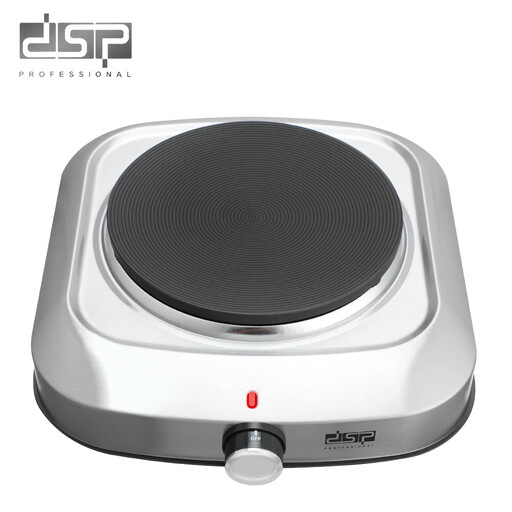 No image available
For one pan if you’re looking for a single cooking zone with adjustable temperature and a rotary control.
The product description lists a heating plate with a diameter of 185 mm and an adjustable temperature control.
Only if the pan isn’t induction-compatible or doesn’t fit the appliance’s stated pan size range. Check the markings or see whether the base is magnetic, then compare its diameter with the specifications for the specific hob.
No. Details about power or temperature settings describe the available controls, not the measured temperature stability of a particular appliance on a low heat. If an even simmer matters to you, look for a reliable test of that exact model.
A single hob can heat only one pan at a time. If you want to cook curry and rice at the same time in separate pans, consider a double hob and measure the space available in your kitchen first.
Let the appliance cool down first and follow the instructions in the manual, including any guidance on the residual heat indicator. An induction hob isn’t automatically safe to touch; with cast-iron and radiant ceramic-glass hobs, the cooking surface itself heats up.
The Federal Office for Radiation Protection notes that magnetic fields can affect electronic implants. Anyone affected should ask a doctor to assess their individual risk of interference; this doesn’t mean induction is unsuitable for all consumers.