People who make compote regularly
If you prepare apple compote regularly for the week ahead, power settings and a timer can make it easier to bring to the boil and then simmer. They won’t automatically stop the compote from sticking or burning.


If you make apple compote regularly, a portable hob could be a good fit, provided its heating technology, cooking zone and controls suit your saucepan and the space you have available. If your saucepan has an induction-compatible base, induction is an option. For other pans, consider a radiant ceramic-glass or cast-iron hob, bearing in mind that it will retain heat after being switched off.
If you prepare apple compote regularly for the week ahead, power settings and a timer can make it easier to bring to the boil and then simmer. They won’t automatically stop the compote from sticking or burning.
First, check the material and size of its base. For induction, your saucepan needs a suitable magnetic base. Radiant hobs and cast-iron hobs don’t require an induction-compatible base.
An extra hob that you can put away needs to fit on the worktop space available. Compare the dimensions of the specific appliance and allow room for it to cool down, too.
A good fit if: Your saucepan has an induction-compatible base that’s the right size for the model you choose.
Things to consider: Your choice of cookware is limited; induction hobs can also make a fan noise.
A good fit if: You want to keep using a non-induction saucepan and would like a smooth cooking surface that’s easy to clean.
Things to consider: A heating element warms the cooking surface, so be careful of residual heat when switching off and cleaning the hob.
A good fit if: You’re considering a simple rotary control and want to use a non-induction saucepan.
Things to consider: Rommelsbacher says cast iron takes longer to heat up than induction and retains heat for longer, so allow time for it to cool down.
| What matters when buying | What to look for | Who is it important to? |
|---|---|---|
| Controlling the heat while simmering | Check the lower power settings and type of controls; don’t rely on a timer instead of keeping an eye on the compote. | If I want to turn down the heat after bringing it to the boil, I pay particular attention to how well the hob can be controlled while simmering. Around 33% of consumers put this first. |
| Keeping my existing saucepan | For induction, check the saucepan base and compatible size; for other types of hob, compare the base size with the heating area. | If you want to keep using your current saucepan, first check which type of hob is suitable for its base. For around 27% of consumers, saucepan compatibility comes first. |
| Space for use and storage | Compare the appliance dimensions with the space available and follow the model’s instructions for positioning and cooling. | If I’m short on worktop space, I need a hob that fits there and can be put away once it’s cooled down. Around 20% of consumers prioritise the space available. |
| Purchase and servicing | Factor in any cookware you may need and distinguish information about repair services from your statutory rights if the appliance is faulty. | If you’re weighing up the purchase and the support available if a repair is needed later, consider both alongside saucepan compatibility. This is a priority for around 20% of consumers. |
A smooth ceramic-glass surface doesn’t tell you whether an appliance uses induction or radiant heat. The Rommelsbacher CT 2010/IN requires a ferromagnetic saucepan base, while the CT 2200/E uses a radiant heating element.
Check the heating technology and cookware compatibility listed for the specific model, not just the surface material.
The rated power alone doesn’t show how a particular appliance will perform at a low setting with your recipe.
Compare the controls and lower settings. Keep an eye on the compote and stir it the first time you make it.
Rommelsbacher says cast iron retains heat for a long time; the radiant-heated CT 2200/E has a residual heat indicator.
Follow the cooling and cleaning instructions in the manual for the model you choose.
A hob won’t cool the compote after cooking or keep it cool while it’s being transported or stored.
The German Federal Institute for Risk Assessment recommends cooling hot food quickly to below 7 °C for longer-term storage, and keeping perishable food cool when you’re out and about. Plan for cooling and, if necessary, refrigeration separately from the hob.
The Touch 2000 portable induction hob is an option for people with a compatible saucepan who want to use power settings and a timer.
The CT 2010/IN is an induction model; the CT 2200/E uses radiant-heated ceramic glass.
The KP 1091 is a single cast-iron hotplate with a rotary control, for people considering a non-induction type of hob.
The HK 30 is a radiant-heated ceramic-glass alternative with two selectable heating zones.
The EKP 3582 is an electric single hotplate with a traditional heating ring and stepless thermostat control.
This selection includes portable induction hobs for making apple compote. The key considerations are compatible magnetic cookware and the control options on each model.
 No image available
This portable induction hob is worth considering for bringing compote to the boil and then turning down the heat, as long as your saucepan has a suitable magnetic base.
Listed in the product name: 2100 W, 28 cm, 9 heat settings and an 8-hour timer.
 No image available
A portable single hob for people looking for a tabletop appliance with several power settings and who have an induction-compatible saucepan.
Listed in the product name: 5 power settings and 1000 W.
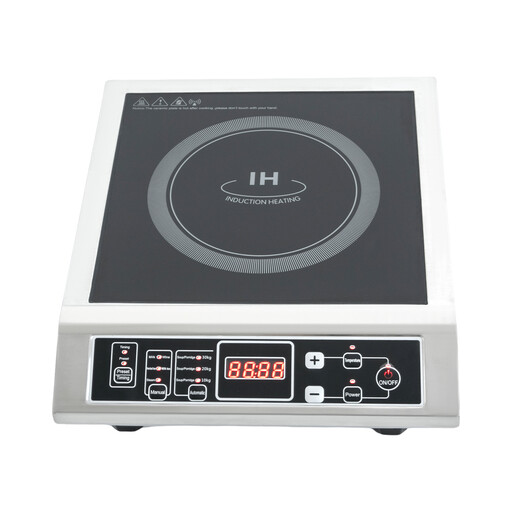 No image available
This portable induction model could suit you if you need an extra hob, provided your saucepan is induction-compatible.
Listed in the product name: 3500 W, timer and preset function.
 No image available
A portable induction option for people who want to use an extra hob with compatible magnetic cookware.
Listed in the product name: 3500 W.
 No image available
This portable induction model could be a good option if your cookware is compatible and you’re looking for an extra hob.
Listed in the product name: 3500 W.
No, that’s only a requirement for induction. According to the manufacturer, the Rommelsbacher CT 2010/IN needs a ferromagnetic saucepan base; the CT 2200/E uses a radiant heating element, and the Severin KP 1091 isn’t an induction hob. Also compare the size of your saucepan base with the specifications of the model you choose.
For longer-term storage, cool hot food quickly to below 7 °C and keep perishable food cool when you’re out and about. This is the advice of the German Federal Institute for Risk Assessment; it doesn’t mean you can make a general assumption about whether, or for how long, a particular compote can be stored without refrigeration. A hob doesn’t keep food cool.
CE is a conformity marking and shouldn’t be confused with an independent safety certification mark. According to the Federal Institute for Occupational Safety and Health, a GS mark requires testing and certification by a GS testing body; it’s up to the manufacturer whether to apply for one.
No. According to the European Union’s consumer information, faulty goods are generally covered by statutory rights against the seller for a minimum of two years from the date you receive them. An additional commercial guarantee can’t limit these rights. It’s also separate from any repair service offered.