If you already have a soup pan
If you want to keep using your own pan or one you share, first check that its base is compatible with the hob’s heating method.


First, check that the base of your soup pan is suitable for induction and that its size falls within the range specified for the appliance. Rommelsbacher and CASO list requirements for individual models. If your pan isn’t suitable for induction, consider a radiant ceramic-glass or cast-iron hob. If you do, pay particular attention to the surface, which stays hot after the hob is switched off. In a shared kitchen, you’ll also need a suitable power connection and to keep an eye on your cooking. The German Fire Service Association lists food left unattended or forgotten on the hob as a common cause of fires.
If you want to keep using your own pan or one you share, first check that its base is compatible with the hob’s heating method.
Compare the appliance dimensions and allow enough space for the pan, its handle and the controls.
Compare the controls on the specific model, such as power settings, a dial and, where available, a timer.
For carrot soup in a shared kitchen, first check that the hob works with your pan, then compare its controls, footprint and power connection.
| What matters when buying | What to check | Who should pay particular attention? |
|---|---|---|
| Pan compatibility | For induction, check that the pan base is suitable and compare its diameter with the appliance specifications. With the CASO Touch 2000, also bear in mind the maximum load of 6 kg. | If I want to keep using my existing soup pan without changing the heating method, I’ll check its base and size first. Around 33% of consumers put pan compatibility first. |
| Control when simmering | Compare the power settings or dial, and check whether the specific model has a timer. | Once the soup has come to the boil, I want to be able to turn the power down as needed rather than relying on the wattage alone. Around 27% of consumers prioritise simmering controls. |
| Worktop space and storage | Measure the available worktop space and storage area, and take the appliance dimensions into account alongside the pan and its handle. | If I want the worktop clear again after cooking, I’ll check the hob’s dimensions and allow space for the filled pan. Around 20% of consumers prioritise the space it takes up. |
| Power connection and shared use | Check the rated power and the manufacturer’s instructions for the specific appliance. Don’t use damaged appliances, and stay nearby while cooking. | In a shared kitchen, I want to plan the power connection and use of the hob with other appliances and people in mind. Around 20% of consumers prioritise the power connection and shared use. |
A ceramic-glass surface doesn’t tell you how the hob heats. The Rommelsbacher CT 2010/IN uses induction, while the CT 2200/E uses HiLight radiant heating.
Before buying, check the stated heating method and make sure your existing pan is compatible.
If the heating method isn’t compatible with your pan, you may need to buy a suitable pan or choose a different hob.
The rated power alone won’t tell you how easily you can turn the heat down once the soup has boiled, or whether the pan size and load are suitable.
For soup, also compare the controls, power settings and any model-specific pan size limits.
A timer doesn’t prevent food from being left unattended on the hob. The German Fire Service Association lists food left unattended or forgotten as a common cause of fires.
Keep an eye on the soup while it’s cooking, and remember that the hob surface may still be hot afterwards.
Rommelsbacher warns against connecting its powerful double hobs through multiway extension leads. This advice applies to the relevant appliances and isn’t a general wattage limit for every hob.
Check the manufacturer’s instructions, the power connection and any other appliances being used at the same time.
For your soup pan, the range includes a portable single induction hob and a HiLight single hob. The models use different heating methods.
The Touch 2000 is a portable single induction hob, documented for use with compatible soup pans.
The KP 1091 is a single cast-iron hob, while the KP 1026 is a single induction hob. The models differ in their heating method and controls.
A selection of Joybuy electric hobs for cooking in a shared kitchen.
 No image available
This model may suit you if you’re looking for a single hotplate for one pan. According to the product details, the temperature is infinitely adjustable.
1.500 W; 18 cm diameter heating ring.
The cooking surface gets very hot during use and immediately afterwards. Allow it to cool before cleaning or putting it away.
 No image available
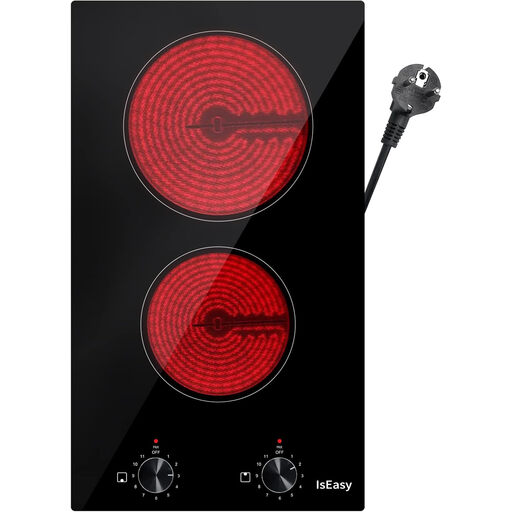
With two cooking zones, this may be a better option if you’ll actually be cooking several things at once in your shared kitchen. For a single pan of soup, the second zone takes up extra space.
11 power settings; 3.200 W; 29,5 cm; rotary control.
The product description lists 1.200 W and 2.000 W for the two zones.
 No image available
You can use one of the two cooking zones for your soup, provided the pan base is suitable for induction.
Five temperature settings; two independently adjustable cooking zones.
 No image available
The single cooking zone is suited to making soup in one pan. With induction, the pan base needs to be compatible.
Five power settings; 1.000 W; portable design.
 No image available
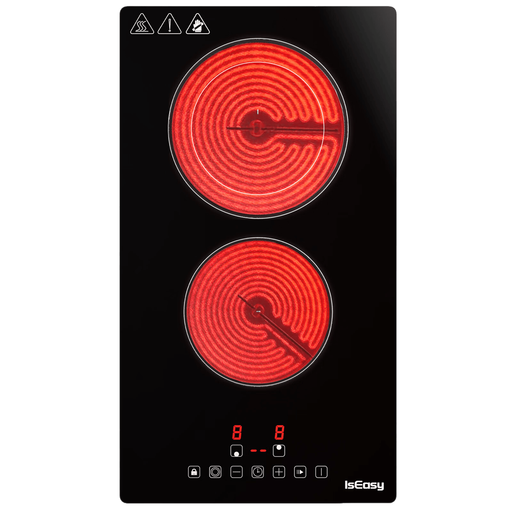
If you need a second cooking zone alongside the one for your soup, check in advance that the planned installation will work in your kitchen.
3.200 W; nine power settings; pause function, child lock and residual heat indicator.
For worktop installation, the product description specifies a cut-out of 49 × 26,2 cm.
Check that the pan base is suitable for induction, then compare its size with the specifications for the appliance. Rommelsbacher requires a ferromagnetic base for the CT 2010/IN. CASO lists a suitable pan size of 12–24 cm and a maximum load of 6 kg for the Touch 2000.
Wait until the cooking surface has cooled sufficiently, and follow the cleaning and safety instructions in the relevant manual. Rommelsbacher notes that the CT 2200/E has a residual heat indicator. In a shared kitchen, make sure others can also tell when the surface is still hot.
No. The consumer advice centre explains that an oven’s energy label applies to the oven, not the hob. Don’t use it to infer an efficiency rating for a portable hob.
No, they’re different things. According to the consumer advice centre, your statutory rights are against the seller, while a guarantee is a separate voluntary offer. If a product is faulty, the first step may be to have it repaired or receive a replacement.
No. The German Environment Agency advises disposing of electrical waste separately rather than putting it in household rubbish. Options include recycling centres and suitable take-back points at retailers.