For a single pot of soup, a portable hob may be enough, provided the pan base and, where specified, the maximum load are suitable for the filled pot. If you also want to heat a side dish at the same time, two cooking zones are more practical; if you need several zones to be available permanently, a built-in hob may be a good option. Induction requires compatible cookware, while radiant and solid hotplates can also be used with pans that are not suitable for induction.
Which hob is right for you?
Family cooks with a large soup pot
If you’re cooking a larger quantity in one pot, make sure the pan base matches the cooking zone. With portable hobs, also check the stated maximum load. The German Federal Office for Radiation Protection also points out that, with induction, the material, flat base and size of the pan must be suitable for the hob.
Cooks preparing a side dish at the same time
If you want to heat another pan alongside your soup, consider the number of cooking zones and the space available. Portable double hobs need room on your worktop; a built-in hob is one way to have several zones permanently available.
Cooks who already own a pan
If you want to keep using your existing cookware, first check whether it’s suitable for induction. TÜV SÜD explains that induction requires ferromagnetic cookware; radiant or solid hotplates are alternatives if your pan is suitable for them.
What to look for when buying
Start by checking your pan, then consider how many cooking zones you need at once, and finally look at the available space and connection type.
| What you need |
What to check before buying |
Who it matters most to |
| A suitable soup pot |
Check the pan base and the weight of the filled pan against the specifications for the specific appliance. |
If I want my filled pan to sit safely on the cooking zone, I check its diameter and the hob’s maximum load before buying. Around 36% of consumers prioritise finding a hob that suits their soup pot. |
| Cooking with two pans at once |
Check the number and layout of the zones, as well as the space needed for both pans, including their handles. |
If I want to heat soup and a side dish at the same time, I need room for two pans and suitable cooking zones. Around 29% of consumers prioritise being able to cook two dishes at once. |
| Using an existing pan |
Check whether the pan is suitable for induction; with other types of hob, make sure the cookware is compatible with the heating surface. |
If I want to keep using my existing pan, I first check whether it’s suitable for induction. Around 21% of consumers mainly want to continue using their existing cookware. |
| Space and connection |
Measure the worktop space and cable route; for built-in appliances, check the cut-out dimensions and connection type. |
If I want a hob that doesn’t need to be built in, I measure the available space and check the connection type. Around 14% of consumers particularly value a compact, straightforward set-up. |
Common buying mistakes
-
Comparing wattage alone
A high power rating on its own doesn’t tell you whether your filled soup pot is suitable for the cooking zone or within its maximum load.
Check the base diameter and the weight of the filled pot against the specifications for the exact model.
If your pan isn’t suitable, you may need different cookware or a different hob.
-
Choosing a double hob without checking the space
Two cooking zones need more room. ROMMELSBACHER also warns against connecting its high-powered double hobs through multi-socket extension leads.
Measure the available space and follow the connection instructions for the appliance you choose.
-
Assuming built-in hobs are ready to plug in
The Bosch PIE631HC1M is listed as being supplied without a plug; the manufacturer says it must be connected by a qualified electrician.
Before buying, check the cut-out dimensions and arrange for the appliance to be connected correctly by a qualified professional. Section 13 of the NAV governs work on electrical installations; the specific installation should comply with the applicable requirements.
-
Assuming the cooker’s energy label applies to the hob
The Verbraucherzentrale explains that the EU energy label on a combined cooker applies to the oven, not the hob.
Compare hobs using their own technical specifications and how you plan to use them.
Suitable brands and models
CASO Design
Portable single induction hobs for an extra cooking zone when worktop space is limited.
- For the ProSlim 2000, the manufacturer lists 10 power levels, a timer of up to 240 minutes and a compatible pan diameter of 12–22 cm.
- The stated maximum load of 6 kg should be considered alongside the weight of your filled soup pot. These specifications apply to this model, not every appliance from the brand.
ROMMELSBACHER
Portable radiant and solid hotplates as alternatives when your cookware isn’t suitable for induction.
- According to the manufacturer, the CT 2200/E has heating zones of 140 and 210 mm, as well as a residual heat indicator. The THL 2597/A has two solid hotplates.
- The larger cooking zone on the THL 2597/A measures 180 mm. With radiant heating, bear in mind that the surface gets hot and retains heat.
SEVERIN
Portable induction hobs with one or two cooking zones.
- According to the manufacturer, the DK 1031 has two zones, a stated total power output of 3,400 W and a timer of up to 180 minutes.
- With stated dimensions of 59 × 35.5 cm, this model takes up more space than a compact single hob and requires induction-compatible pans.
Bosch
Built-in induction hobs for cooking zones that are always available.
- Bosch lists the PIE631HC1M as a 60 cm model with four cooking zones.
- The model is listed as being supplied without a plug; the manufacturer says it must be connected by a qualified electrician. These specifications apply to this model.
MEDION
Portable single induction hobs for an extra cooking zone.
- For the MD 17595, MEDION lists a power output of 2,000 W, automatic pan detection and eight automatic programmes.
- Check the pan diameter and make sure your cookware is compatible with the specific appliance. These features alone don’t tell you whether a particular large soup pot will fit.
Joybuy products at a glance
The products below include portable single and double hobs, as well as built-in hobs. The key considerations are whether your pan is compatible, how many cooking zones you need and how much space you have for installation or placement.
 No image available
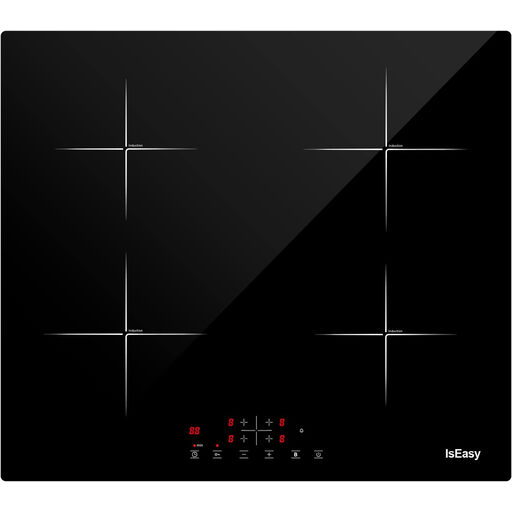
IsEasy built-in induction hob, 4 zones, 60 cm
For a permanent cooking set-up with several pans in use at once.
4 zones, 60 cm, 6,800 W, 9 power levels, 1–99-minute timer and boost function. Induction requires compatible cookware.
View at Joybuy
 No image available
Induction hob with two cooking zones
For heating soup and another dish at the same time, provided there’s enough room for both pans.
2 cooking zones and 5 temperature settings. Induction requires compatible cookware.
View at Joybuy
 No image available
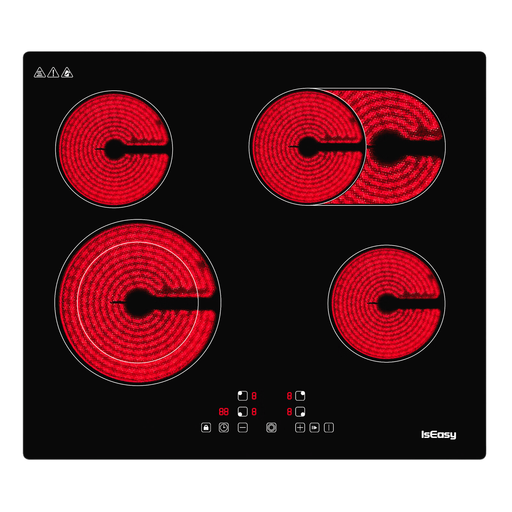
Ceramic glass hob, 60 cm, 4 zones
For a permanent cooking set-up with several zones and cookware that doesn’t have to be induction-compatible.
4 zones, 6,600 W, touch controls, plus oval and dual cooking zones. Described as a built-in hob with a fixed connection; the stated cut-out size is 56 × 49 cm.
View at Joybuy
 No image available
Portable induction hob, 3,500 W
For a single portable cooking zone; first check that your pan is suitable for induction.
3,500 W and 10 temperature settings. Induction requires compatible cookware.
View at Joybuy
 No image available
Portable infrared hotplate, 3,500 W
For a portable cooking zone if you’re considering an infrared hotplate instead of induction.
3,500 W, timer, touch controls and rotary knob; according to the product name, it’s suitable for heat-resistant pans made from various materials.
View at Joybuy
Frequently asked questions
How can I tell if my soup pot is suitable for induction?
Check the label or the manufacturer’s information for your pan, then make sure its material and base size are suitable for the hob. TÜV SÜD says induction requires ferromagnetic cookware, so not every pan will work automatically.
Can I connect a built-in hob myself?
For the Bosch PIE631HC1M, the manufacturer specifically states that it must be connected by a qualified electrician. Section 13 of the NAV generally requires work on electrical installations to be carried out by the network operator or an installation company listed in an installer register; this is different from simply plugging in a portable hob designed for that purpose.
How can I cook soup using less electricity?
Cook with the lid on and add only as much water to the pan as you need. These are the energy-saving tips recommended by the Verbraucherzentrale; the rated power alone doesn’t tell you how much electricity a particular batch of soup will use.
What should I do if the appliance is faulty or needs disposing of?
Your statutory consumer rights are separate from any voluntary guarantee; contact the seller if there’s a fault. A discarded electrical appliance should be taken to an authorised collection point, such as a local council recycling centre.
What should I know if I have an electronic implant?
Ask your doctor to assess whether using an induction hob is suitable for you. The German Federal Office for Radiation Protection points out that electric and magnetic fields can affect electronic implants; the assessment depends on the implant and its settings.


