Households with staggered mealtimes
If you’re not all eating at the same time, plan ahead for how you’ll keep the later portion safely hot or cool it promptly. The BfR recommends keeping food at 60 °C or above throughout while it’s being kept hot.


Choose your hob based on whether your tagine is approved for use with it: induction requires a suitable pan, while radiant or cast-iron hobs may be an alternative if the pan’s manufacturer allows it. When people are eating at different times, a keep-warm function alone isn’t enough. The German Federal Institute for Risk Assessment (BfR) recommends keeping food at 60 °C or above throughout while it’s being kept hot. Otherwise, cool the later portion promptly if you plan to store it for longer.
If you’re not all eating at the same time, plan ahead for how you’ll keep the later portion safely hot or cool it promptly. The BfR recommends keeping food at 60 °C or above throughout while it’s being kept hot.
If you want to keep using your existing pan, check that its manufacturer approves it for the specific hob. Le Creuset advises checking the induction symbol and ensuring the pan has a suitable base.
If you want to heat your tagine and a side dish at the same time, the number of cooking zones you need is a key consideration. CASO and Severin product specifications include examples of portable appliances with one or two zones.
For staggered mealtimes, plan separately for keeping food hot and cooling it: the BfR recommends keeping it at 60 °C or above throughout while it’s being kept hot, and rapidly cooling hot food to below 7 °C if you plan to store it for longer.
| What you need | What to look for when buying | Who is this important to? |
|---|---|---|
| Store a later portion safely | Check the temperature of the food itself or plan how you’ll cool it promptly. | If we’re not all eating at the same time, I want to store the later portion reliably; around 36% of consumers put this top of their list. |
| Continue cooking gently after bringing it to a simmer | Check how low the settings go and the permitted pan size. When you first cook with it, see how the sauce simmers in your pan. | If the tagine needs to keep cooking after it’s brought to a simmer, I want to be able to turn the heat down appropriately; around 29% of consumers prioritise a gentle simmer. |
| Keep using an existing tagine | Check the pan manufacturer’s approval, the induction symbol and that the base is suitable for the hob’s heating zone. | If I want to keep my tagine, the hob needs to suit its material and base; around 21% of consumers prioritise this compatibility. |
| Available space and cooking more than one dish at a time | Measure your available worktop space and consider whether you regularly need to heat a tagine and a side dish at the same time. | If I want to cook a tagine and a side dish at the same time, I need enough zones without overcrowding the worktop; around 14% of consumers put this combination top of their list. |
A setting on the appliance or a timer won’t tell you whether the tagine has reached and maintained at least 60 °C throughout.
Check the temperature of the food itself or plan to cool the later portion promptly.
Maximum power tells you little about how a low setting will perform with your pan.
Check how the lower settings work and, while cooking, see whether the sauce simmers gently in your tagine.
A cast-iron hob or a ceramic glass radiant hob works differently from an induction hob. Whether your pan is suitable depends on the type of hob.
Check the hob type in the product details and compare it with your pan’s instructions.
Portable induction hobs, including the TC 2400 with a temperature probe.
The CT 2200/E is a ceramic glass radiant hob and an alternative to induction, provided your pan is approved for use with it.
The range includes a cast-iron hob and a portable double induction hob.
Built-in induction hobs are an option if you’re planning a fitted kitchen.
This selection includes induction and ceramic glass hobs, including models with several cooking zones. Before you buy, check that your tagine is approved for use with the relevant type of hob.
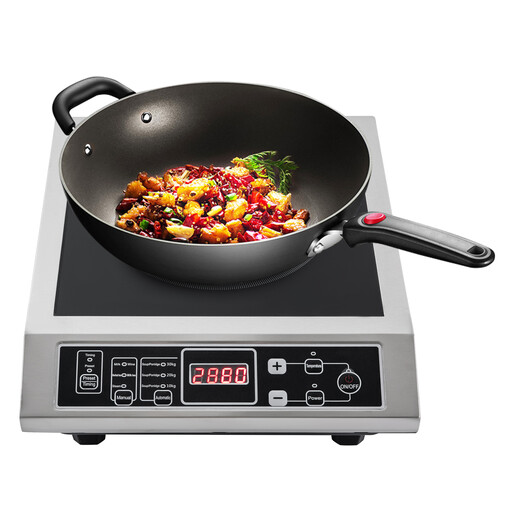 No image available
For a tagine in an induction-compatible pan. The product name lists 800–3500 W, a timer and overheat protection. These specifications don’t prove that the food will stay safely hot throughout the pan.
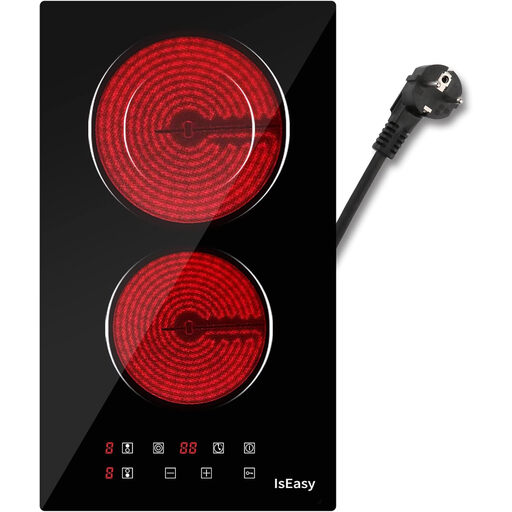 No image available
For a tagine and a side dish when you need two cooking zones. The product name also lists 9 power levels, touch controls, a child lock and a 1–99-minute timer. Check that your pan is approved for use with this hob.
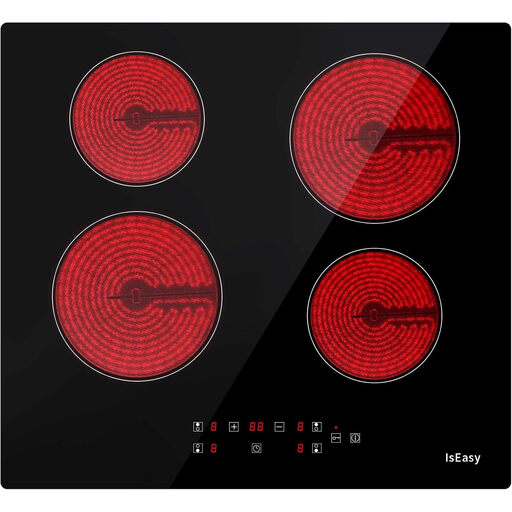 No image available
For a planned built-in setup with several pans. The product name lists 6000 W, touch controls, a child lock and 9 heat settings. According to the product information, installation requires a 57 × 49,5 cm cut-out and a fixed electrical connection.
 No image available
For a tagine and a side dish when you want to heat both at the same time. The product name also lists keep warm, boil, simmer, fry and slow cook functions. If you want to keep food hot, check its temperature yourself.
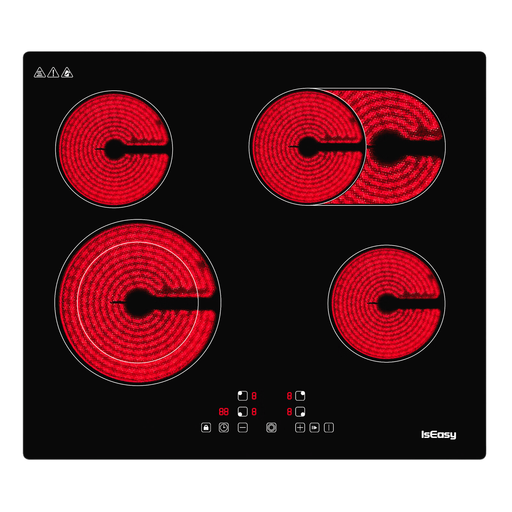 No image available
For cooking with several zones at once. The product name lists touch controls, an oval zone and a dual-circuit zone. Check the dimensions and whether it’s suitable for your pan as part of your kitchen planning.
No. What matters is the temperature of the food: the BfR recommends keeping food at 60 °C or above throughout while it’s being kept hot. A setting on the appliance or a timer doesn’t prove that the whole tagine is at this temperature.
For longer storage, the BfR recommends rapidly cooling hot food to below 7 °C. Don’t simply leave the later portion on a switched-off hob.
You can’t tell from the shape or name of the pan alone. Check the manufacturer’s approval, the induction symbol and the base of your specific pan. It must be suitable for induction.
A double hob is a good choice if you regularly want to heat a tagine and a side dish at the same time and have enough space for it. If you only cook one dish at a time, a single cooking zone may be enough.
It depends on the specific appliance. For the Bosch NXX675CB5E built-in hob, Bosch specifies that it must be connected by a qualified electrician. This doesn’t apply to portable hobs.