
Lieferung heute & morgen

Qualitätsgarantie

Willkommens-Angebote freischalten: KOSTENLOSE Lieferung | Bis zu 80 % RABATT | Kostenlose 30-Tage-JoyPlus-Testphase
App herunterladen
An electric hot plate can be a practical solution for small kitchens, student accommodation, offices, holiday lets or camping. Before buying, however, it is important to distinguish between a portable single hot plate, an electric double hot plate and a permanently installed hob. Not every compact model is suitable for every household.
Specifications such as a 3000-watt hob or 3500-watt induction hob initially describe only the maximum connected load. They do not automatically show how evenly heat can be distributed or how convenient the temperature control is.
With two cooking zones, the total power is also divided between the zones, depending on the model. If you regularly heat water and fry food in a second pan at the same time, pay attention to how the power is distributed rather than looking only at the total figure.
A hob with touch control requires a smooth control surface. Wet fingers, spilled liquids or dirt can make it more difficult to operate. Clearly visible displays, a child lock and separate control of the cooking zones are therefore useful features.
Portable appliances with rotary controls are often easier to operate, while touch controls on built-in hobs provide a flat, easy-to-clean surface.
A 2-zone built-in hob requires a suitable cut-out in the worktop. The important measurements are not just the external dimensions, but also the cut-out dimensions, installation depth and the clearance required for ventilation.
Before ordering, compare the details in the installation instructions with your existing worktop. The electrical connection and installation should be carried out by a qualified professional in accordance with the manufacturer’s instructions.
A traditional single hot plate with a metal heating surface uses an electric heating element. It is usually straightforward to use and suitable for many types of cookware. However, the surface may remain hot for longer, and ease of cleaning depends on the design.
A ceramic glass hob has a smooth surface with electric heating zones underneath. It can be used with pans made from various materials, provided the pan base is flat and clean. The surface remains hot for a while after switching off, so a residual heat indicator is an important safety feature.
An induction hot plate generates heat in suitable cookware. The base of the pan must therefore be magnetic. A simple magnet test provides an initial indication of compatibility before purchase. Induction models often respond quickly to power changes and commonly feature automatic pan detection. Cookware that is not suitable for induction will generally not be heated.
A portable single-zone hot plate is sufficient for simple dishes, side dishes or as an additional cooking option. A double hot plate is more practical for households that cook regularly, as two pans can be used at the same time.
Pay attention to the diameter of the zones. A zone that is too small for a large frying pan can result in uneven heating. With built-in appliances, you should also check whether both zones can be operated at full power simultaneously.
Useful features of an electric hot plate include:
A timer is no substitute for supervision when heating oil or fat. Hot plates should not be left unattended while in use. If the ceramic glass surface is damaged or cracked, disconnect the appliance from the mains and stop using it.
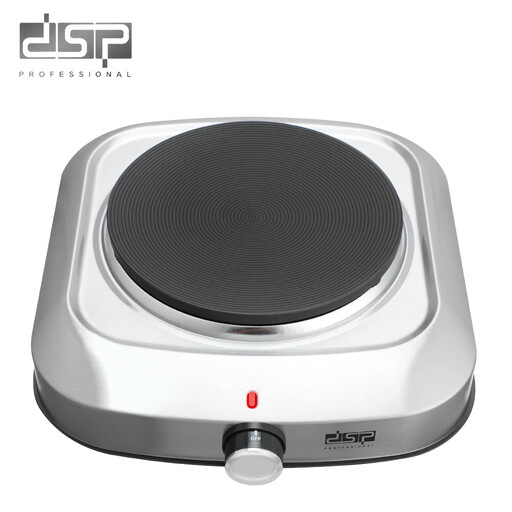
Why this product suits the profile: This portable single hot plate requires no permanent installation and is suitable for small kitchens, student accommodation or as an additional cooking station.
The 1500-watt rating is clearly stated, while the continuously variable temperature control replaces imprecise individual settings.
Compact design, 185-mm cooking surface, indicator lights and stainless steel housing.
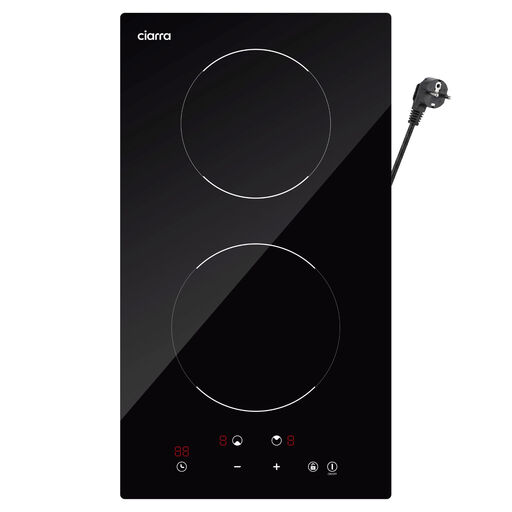
Why this product suits the profile: This built-in induction hob combines two cooking zones with touch control, nine power levels and a timer of up to 99 minutes.
The cut-out dimensions, installation depth and total power are specified, making it easier to check suitability before installation.
Two induction zones, automatic pan detection, child lock, residual heat indicator and overheating protection.
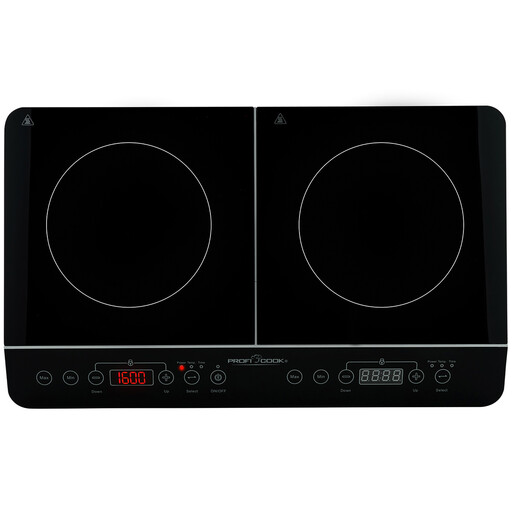
Why this product suits the profile: This portable double hot plate offers two zones, several power and temperature settings, plus a timer of up to 180 minutes.
Automatic switch-off when a pan is removed, together with pan detection, helps reduce operating errors when changing cookware.
3500 watts maximum power, LED display, 16 function levels per hob and overheating protection.
Electricity consumption depends on actual usage, not just the maximum wattage. A 1500-watt hot plate running at full power for one hour theoretically uses 1.5 kWh. At an electricity price of, for example, 0.35 euros per kWh, this would amount to around 0.53 euros. In practice, cooking is often done for less time or at reduced power.
Once cool, a smooth ceramic glass surface can be cleaned with a soft cloth and mild cleaning product. Abrasive cleaners, hard sponges and moving heavy pans across the surface can cause scratches. With induction, you must also use only suitable cookware.
We have put together a complete, regularly updated list of products that fully meet these strict selection criteria and the safety regulations applicable in the EU.
For occasional use, a portable single hot plate is often sufficient. If you regularly prepare two components at the same time, you can choose a double hot plate or a compact built-in hob with two zones. Before buying, check the available space, connected load and storage options.
Yes. The base of the pan must be magnetic. A magnet should stick to the base. Aluminium, copper and some stainless steel pans will work only if they are specifically designed for induction. The product description and the cookware markings provide this information.
Service life depends on frequency of use, cleaning, ventilation and careful operation. Avoid getting liquid into the control area, do not block any ventilation openings and use only suitable cookware. For permanently installed appliances, you should also follow the installation instructions and ensure that the electrical connection is carried out professionally.