
Lieferung heute & morgen

Qualitätsgarantie

Willkommens-Angebote freischalten: KOSTENLOSE Lieferung | Bis zu 80 % RABATT | Kostenlose 30-Tage-JoyPlus-Testphase
App herunterladen
An electric hot pot promises a straightforward and versatile solution for the modern kitchen, especially when space is limited. Whether for dorm students, young professionals in their first apartment, or a quick dinner for two, these appliances are known as true all-rounders. However, the market is flooded with models of widely varying quality. Before you make a purchase, it's crucial to understand the common pitfalls that often only become apparent after a few weeks of use.
Many buyers report three core problems that can quickly render a once-promising appliance useless:
To avoid these issues, you should carefully examine a few technical specifications before buying.
A good electric cooking pot is more than just a container with a heating element. The following three parameters are crucial for functionality, durability, and everyday safety.
The power, measured in watts (W), determines how quickly your pot reaches the desired temperature. For more than just keeping soup warm, models with at least 800W are recommended. For rapidly boiling water for pasta or searing meat, over 1000W is ideal.
Even more important than the raw wattage, however, are adjustable heat levels. An appliance with only "On" and "Off" settings offers little versatility. Look for models with at least two settings (e.g., a low setting for simmering and a high setting for boiling) or, ideally, stepless or multi-level temperature control. This gives you the control you need for various dishes—from gently simmering a stew to rapidly boiling for a hot pot.
The pot's inner surface is a critical factor. A high-quality non-stick surface is the most practical choice for most users. It prevents foods like rice or eggs from sticking and makes cleanup significantly easier. Look for claims like "food-grade" or "PTFE-free" if these are important to you. A good coating should be durable and scratch-resistant.
Alternatively, there are stainless steel models. These are extremely durable and resistant to scratches but require more cooking experience and often more oil or fat to prevent sticking. For a versatile electric multi-cooker, a quality non-stick coating is usually the better all-around solution.
Consider how many people you regularly cook for. The size of the pot should match your household:
Also, pay attention to the shape. A deep, round pot is excellent for soups, stews, and hot pot. A model with a wider, flatter base works better as an electric skillet and offers more surface area for searing.
Based on the criteria above, we have identified a few models that represent a smart choice for different user profiles and use cases.
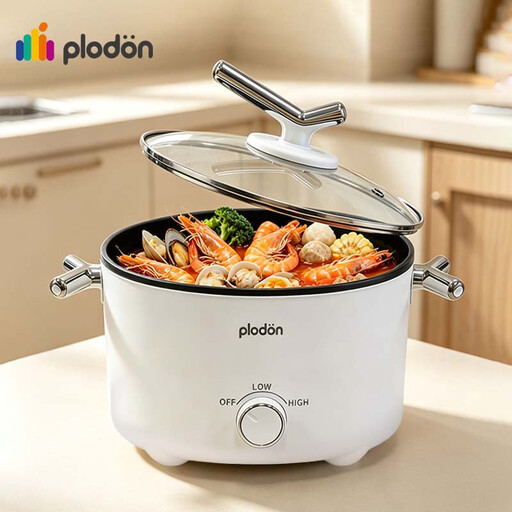
Why This Fits Their Persona: With its 2.0-litre capacity and small footprint, this model is ideal for students, singles, or small kitchens. It focuses on the basic functions of boiling and simmering and is very beginner-friendly due to its simple operation.
The two power levels (LOW/HIGH) allow for better temperature control than simple on/off devices, reducing the risk of burnt food from uneven heat.
The combination of 1000W of power for rapid heating and a non-stick coating for easy cleaning makes it a practical everyday tool.
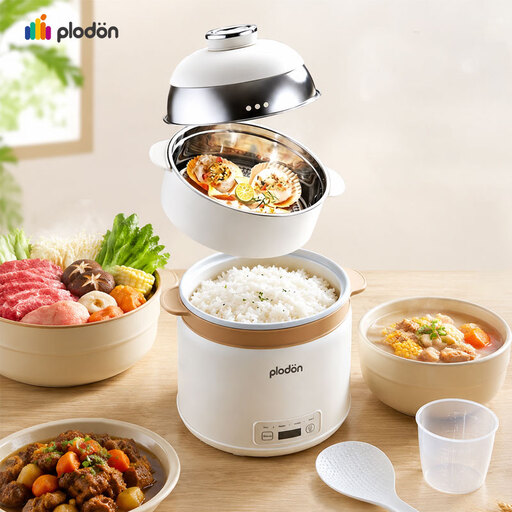
Why This Fits Their Persona: For users looking for more than just a simple pot. This appliance functions as a rice cooker, soup pot, and steamer all in one. The preset programs take the guesswork out of cooking for beginners.
The smart cooking programs control the temperature more precisely than manual switches, preventing boiling over or burning. The "steam above, cook below" function makes efficient use of its capacity.
The one-touch operation with automatic programs and the integrated keep-warm function offer a high level of convenience for a busy lifestyle.

Why This Fits Their Persona: This model is designed for big appetites. With a 7-litre capacity, it's the right choice for family meals, parties, or hot pot nights with friends where you want to ensure no one goes hungry.
It solves the problem of misleading capacity claims with a true 7-litre volume. The high power of 1600W ensures that even this large quantity is heated quickly and evenly.
Its very large capacity combined with high power makes it a specialist for cooking in large batches, especially for hot pot and stews.
We have compiled a complete, up-to-date list of products that fully meet these strict selection criteria and safety regulations.
Allow the appliance to cool completely after use. Always unplug it from the power outlet before cleaning. Wipe the pot with a soft sponge, warm water, and a little mild dish soap. Never use steel wool, abrasive scouring pads, or harsh cleaning agents, as these will damage the non-stick coating. Models with a detachable power cord are easier to handle during cleaning. The base of the unit containing the electronics must never be submerged in water.
Power consumption depends on the wattage and the duration of use. Compared to cooking on a large stovetop burner, an electric hot pot can be more energy-efficient because it heats only the pot's contents directly. An appliance with 1000W (1 kW) running at full power for half an hour consumes 0.5 kilowatt-hours (kWh) of electricity. For heating smaller portions, this is often more economical than using a large stove.
Yes, this is possible with many models, provided a few conditions are met. The appliance should have sufficient power (over 1000W recommended) and a high heat setting to reach the temperatures needed for searing. Models marketed as an electric skillet or those with a wide, flat base are better suited for this than deep, narrow pots. Always check the manufacturer's instructions to see if the appliance is designed for frying with oil.