
Lieferung heute & morgen

Qualitätsgarantie

Willkommens-Angebote freischalten: KOSTENLOSE Lieferung | Bis zu 80 % RABATT | Kostenlose 30-Tage-JoyPlus-Testphase
App herunterladen
An electric hot pot can be a practical alternative to several kitchen appliances in a student halls, office, small flat or motorhome. You can prepare ramen, soups, pasta, shabu-shabu and simple one-pot meals right at the table or on a small worktop. However, models vary considerably in capacity, power, cleaning requirements and safety features.
The stated capacity usually refers to the pot’s total volume, not the amount you can actually use. You shouldn’t fill it right to the brim. With a 1.6-litre model, for example, you’ll have less room once you allow for boiling, ingredients and a safe margin.
A mini electric cooker with a capacity of around 1.2 to 1.6 litres is often enough for one person. Couples, or anyone who also wants to cook vegetables, meat or side dishes, may prefer a model with a capacity of 2.0 to 2.4 litres. For several people, consider a larger electric soup pot, provided you have enough space to put it.
Higher power can speed up heating, but it doesn’t tell you anything about temperature control, ease of use or cleaning. A 1,000-watt model can bring water to the boil quickly, but it needs a suitable, heat-resistant surface and a safe power supply. A 600-watt pot may be enough for ramen, eggs, soups and smaller portions.
That’s why it’s important to look beyond wattage and check for multiple heat settings, overheat protection and clear instructions.
A non-stick coating makes it easier to remove noodles and helps prevent food from sticking. However, it needs proper care: metal utensils can scratch the surface, so silicone or wooden utensils are a better choice. With electrical appliances, never immerse the housing, including the connection and controls, in water.
Before you buy, also check whether the inner pot is removable, whether the cable can be detached and whether the lid can be cleaned separately.
When making hot pot with broth, don’t fill the pot completely. This reduces the risk of liquid boiling over.
A 600-watt electric multi-cooker is suitable for slow cooking and everyday dishes in smaller quantities. Models with 1,000 watts are designed to bring food to the boil quickly. Two heat settings are useful if you want to switch between a rapid boil and a gentle simmer.
An automatic shut-off or boil-dry protection doesn’t replace supervision. While in use, the pot should be placed on a stable, dry and heat-resistant surface.
For coated appliances, check the information about the non-stick surface and recommended cleaning. A stainless steel cooking pot is generally more resistant to kitchen utensils, but starchy or burnt-on food may take more effort to clean.
Extra features such as a glass lid, cool-touch handles, steaming insert or detachable power cable should suit the way you’ll use the pot. For a compact cooker for small flats, cupboard space matters too, not just the appliance’s weight.

Why this product suits these needs: Its 1.6-litre capacity is designed for individual portions and limited worktop space. With 600 watts of power, this ramen cooker is suitable for noodles, eggs, soup and simple meals in student halls or the office.
The stated capacity and power are clearly specified. The automatic shut-off and boil-dry protection help address common safety risks, but don’t replace supervision.
1.6 litres, 600 watts, one-button operation, non-stick interior and compact dimensions.
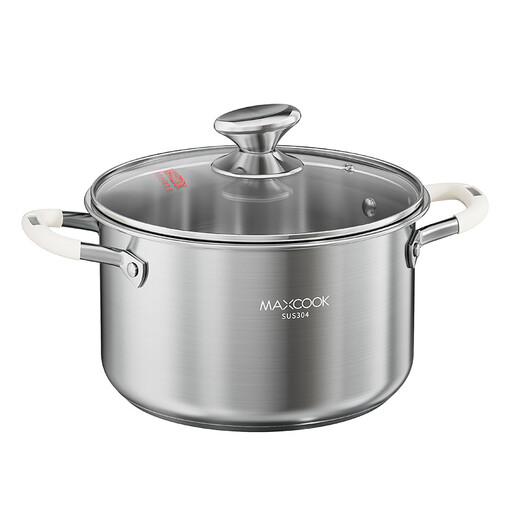
Why this product suits these needs: This pot, made from 304 stainless steel, is suitable for gas, electric, ceramic and induction hobs. It’s a good choice for households that don’t need a separate electric cooker but want a versatile soup pot.
The 304 material specification and compatibility with several types of hob are clear points to consider. As there’s no non-stick coating, there’s no coated interior surface to scratch.
3.2-litre capacity, glass lid, encapsulated base and suitable for use on induction hobs.
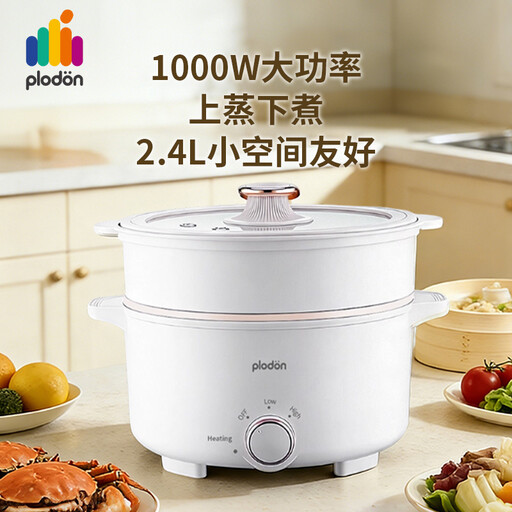
Why this product suits these needs: This 2.4-litre pot comes with a steaming insert and is designed for couples, small households and regular one-pot meals. Two heat settings let you cook quickly or simmer gently.
The two power settings mean you don’t have to cook everything on the highest heat. The steaming insert gives you more ways to use the pot without needing a second appliance.
1,000 watts, 2.4 litres, removable steaming insert, glass lid and non-stick interior.
An electric hot pot becomes more versatile when you choose ingredients to suit its size. An Asian soup base for oden, udon or clear broth can be heated straight in the pot with water. The Xiaoyeqingzhu product contains ingredients including soy sauce, bonito seasoning and kelp extract. The label lists soya, wheat and fish as allergens. Once opened, the soup base should be refrigerated and used promptly.
Spicy hot pot noodles, instant noodles and rice noodles are also handy for a quick meal. For ready meals, check the allergens, salt content, portion size and cooking time before you buy. Always follow the information on the packaging.
We’ve put together a complete, regularly updated list of products that meet these strict selection criteria and fully comply with the safety regulations in force in the EU.
Running costs depend on the power rating, how long you use it and your electricity tariff. Here’s a rough calculation: wattage ÷ 1,000 × operating hours × electricity price per kilowatt-hour. A 600-watt appliance running at full power for half an hour uses 0.3 kilowatt-hours, according to this calculation. In practice, the heating element switches off from time to time, depending on the model and temperature control.
It depends on the accommodation rules and fire safety requirements. Place the appliance on a stable, clear surface, with enough space around it and away from textiles. Before buying, check the plug, instruction manual and information about using the appliance in Germany. Don’t leave the pot unattended while it’s cooking.
There’s no set lifespan that applies to every model. It depends on how often you use it, how well you care for it, the condition of the cable and the coating. Don’t use metal utensils with non-stick models. Keep the housing and power connection out of water. If the coating is damaged, the cable is loose or the appliance becomes unusually hot, stop using it.