
Lieferung heute & morgen

Qualitätsgarantie

Willkommens-Angebote freischalten: KOSTENLOSE Lieferung | Bis zu 80 % RABATT | Kostenlose 30-Tage-JoyPlus-Testphase
App herunterladen
An electric juicer can make preparing juice much easier. However, centrifugal juicers, slow juicers, juice presses and electric citrus juicers differ considerably in terms of ingredients, cleaning, noise and processing speed. If you focus only on wattage or claims such as “maximum juice yield”, you may end up buying a machine that does not suit your everyday routine.
Motor power initially describes only the electrical input. An 800-watt appliance can process fruit and hard vegetables quickly, while a 150-watt slow juicer works more slowly and processes ingredients using a pressing auger. Citrus fruit often requires considerably less power.
The key factors are therefore design, feed chute, pressing system and intended ingredients – not wattage alone.
An electric orange press is designed for oranges, lemons, mandarins and similar fruit. It does not replace a juicer for fruit and vegetables. Conversely, a centrifugal juicer is not automatically the most practical solution for whole apples or carrots if you only want to prepare orange juice every day.
Look for specific manufacturer information:
Juice residue dries quickly on the sieve, pressing cone and spout. A complicated design can mean that the appliance is used less often after just a few uses. Removable parts, a cleaning brush supplied with the appliance and, where specified by the manufacturer, dishwasher suitability are all practical features.
A juicer with a drip stop also helps to reduce drips on the worktop, but it does not replace cleaning the spout and juice channels.
First, consider which juices you will actually be making at home. For occasional orange juice, an orange press with a pressing cone is sufficient. For carrots, apples, cucumbers and a variety of vegetables, a centrifugal juicer or slow juicer is more suitable.
With a slow juicer, check whether fine and coarse sieves are included and whether an attachment for frozen fruit is provided. With a citrus juicer, different pressing cones for large and small fruit are useful.
A juice container with a capacity of between 400 millilitres and 1.25 litres suits different usage scenarios. A small container is enough for a single glass. Families benefit from a larger juice jug and a spacious pulp container.
A large feed chute can reduce preparation time. However, it must not tempt you to put your hands or unsuitable objects into the chute. Only use the pusher provided.
Look out for:
Electrical kitchen appliances should only be used in accordance with the operating instructions. Unplug the appliance before dismantling and cleaning it. The filter sieve on centrifugal juicers has sharp edges and should be handled with care.
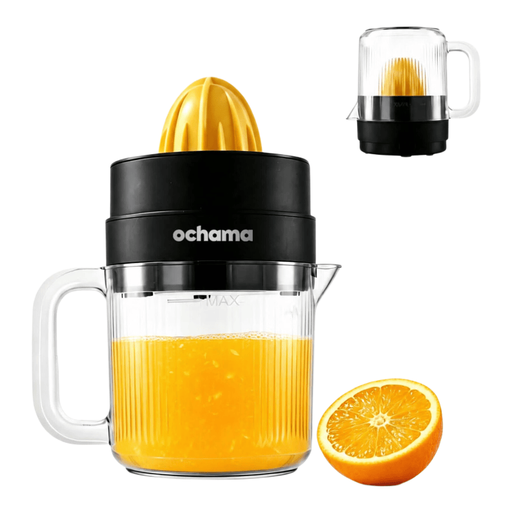
Why this product suits this profile: With a 1.4-litre capacity, this electric citrus juicer is designed for oranges, lemons and other citrus fruit for everyday household use.
Its clear specialisation prevents unrealistic expectations about processing hard vegetables. According to the product information, the design is detachable and has no blades.
30-watt motor, 1.4-litre container and removable accessories; the motor unit must not come into contact with water.
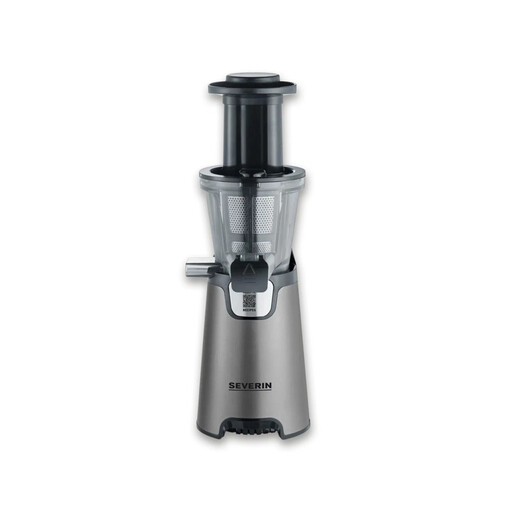
Why this product suits this profile: According to the product description, this slow juicer processes soft and hard fruit as well as vegetables, and offers additional uses with frozen fruit.
The specifications explicitly refer to a slow pressing method rather than making vague high-performance claims. Nevertheless, you should allow for the longer preparation time before buying.
150 watts, 1-litre juice container, two sieve inserts, Easy-Clean concept and drip stop; according to the specifications, some parts are dishwasher-safe.

Why this product suits this profile: This centrifugal juicer is designed for regular juices made from soft and hard fruit or vegetables, and features a 75-millimetre feed chute.
Two speed settings help match the appliance to soft and hard ingredients. The anti-drip system limits residual juice when removing the jug.
800 watts, 1.25-litre juice jug, 2-litre pulp container, foam separator and four-part safety system.
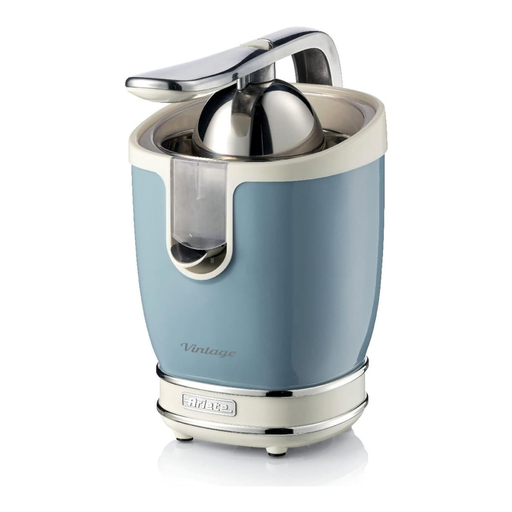
Why this product suits this profile: This lever-operated citrus press is designed for large and small citrus fruit, making it ideal for anyone looking for a compact appliance with straightforward operation.
The two pressing cones make the intended range of uses clear. The drip-free spout tackles the common problem of juice ending up on the worktop.
85-watt motor, lever operation, two pressing cones, compact dimensions and spout with drip protection.
We have put together a complete, regularly updated list of products that fully meet these strict selection criteria and the safety regulations applicable in the EU.
For versatile use, consider a centrifugal juicer or a slow juicer. A centrifugal model often processes hard ingredients quickly. A slow juicer uses a pressing auger and is designed for a slower pressing process. An electric citrus juicer, on the other hand, is mainly suitable for oranges, lemons and similar fruit.
Clean the sieve, pressing auger, pressing cone and juice channels as soon as possible after use. Models with few removable parts, a cleaning brush and clearly stated dishwasher suitability reduce the amount of manual work. The motor unit should only be wiped with a damp cloth.
In addition to the purchase price, the main costs are electricity and, where applicable, replacement parts such as sieves, pressing cones or seals. The actual electricity costs depend on the power rating, usage time and electricity tariff. With an electric juicer, it is therefore not just the wattage that matters, but also the daily operating time.