
Lieferung heute & morgen

Qualitätsgarantie

Willkommens-Angebote freischalten: KOSTENLOSE Lieferung | Bis zu 80 % RABATT | Kostenlose 30-Tage-JoyPlus-Testphase
App herunterladen
An electric kettle is a staple in almost every kitchen. Whether for your morning tea, a quick coffee, or preparing baby formula, it heats water significantly faster and more energy-efficiently than a pot on the stove. However, the selection of models is vast, and the differences are in the details. This guide is designed to help you understand the key features and make an informed decision that fits your needs.
We'll outline objective criteria for your selection and present a range of models for different uses, from the compact mini kettle to the high-performance family-sized model.
To find the right appliance, it's helpful to consider a few technical and material aspects. The following points will provide you with some guidance.
The material of the kettle affects not only its appearance but also its durability and maintenance.
The capacity should be based on your household size. For singles or couples, a 1-litre kettle or a small kettle is often sufficient. Families will benefit from models with 1.7 litres or more. For on-the-go use, a special travel kettle with a small volume and compact design is ideal.
A kettle's power is measured in watts and determines how quickly the water heats up. Appliances with 2000 to 3000 watts bring water to a boil very quickly. Models with lower wattage take a bit longer but often consume less energy per cycle.
For tea lovers, a kettle with temperature control is a valuable feature. Different types of tea, such as green or white tea, release their best flavour at temperatures below 100°C. A temperature selection setting allows you to heat water to the exact degree. Other useful features include a keep-warm function, a concealed heating element for easier cleaning, and a removable limescale filter.
Here is a curated selection of four models that cater to different needs and design preferences.
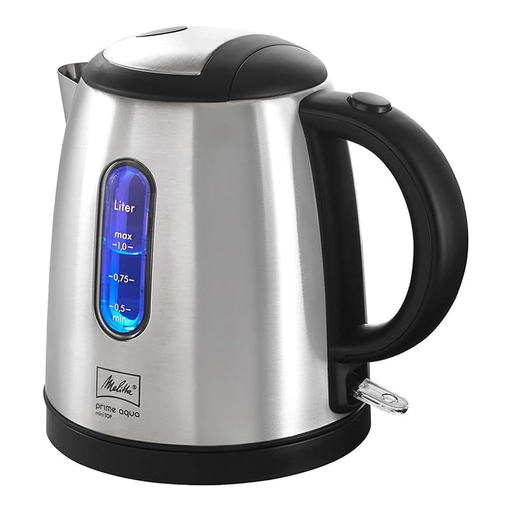
What makes it stand out: The Melitta Prime Aqua Mini Top combines a compact design with high performance. Its stainless steel body and one-litre capacity make it a practical solution for smaller kitchens or households.
Advantages:
Who it's for: Those with limited space, singles, and couples looking for a fast, reliable appliance with a classic stainless steel design.
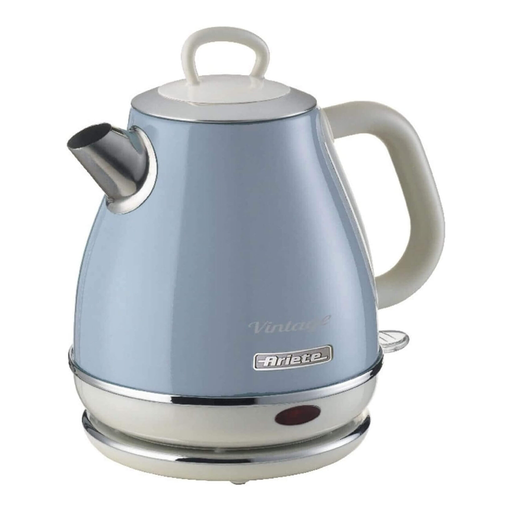
What makes it stand out: This retro kettle from Ariete is an eye-catcher in any kitchen. Its 1950s-style design is combined with modern functionality. The painted stainless steel body provides a premium feel.
Advantages:
Who it's for: Design-conscious buyers who want a functional kitchen helper that also serves as a stylish accessory.
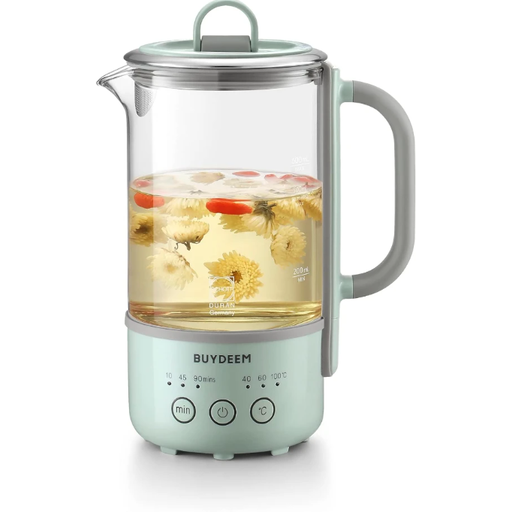
What makes it stand out: The BUYDEEM K314 is designed as a multifunctional travel kettle. It is extremely lightweight and compact, yet offers features like temperature control and a keep-warm function, making it exceptionally versatile.
Advantages:
Who it's for: Travellers, students, or office workers who don't want to miss out on perfectly tempered beverages on the go. A quintessential mini kettle with advanced features.
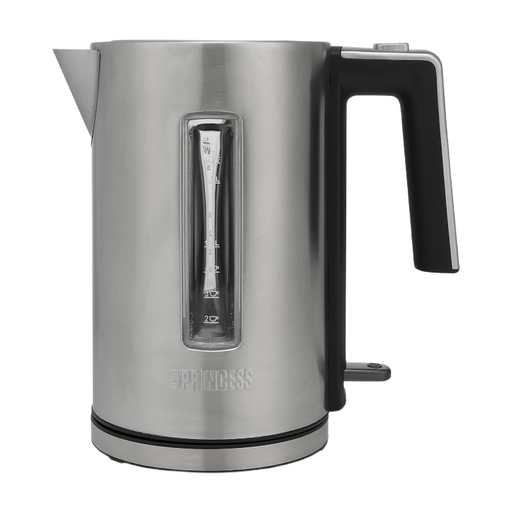
What makes it stand out: With its very high power and large capacity, the Princess Deluxe kettle is designed for speed and efficiency in a busy family household. The simple stainless steel design is both timeless and functional.
Advantages:
Who it's for: Families and heavy users for whom speed and a large capacity are top priorities.
If our recommendations don't include the perfect model for you, or if you're looking for other options made from a specific material, you can find a wider selection in our category. Discover more stainless steel kettles here.
The frequency of descaling depends on the water hardness in your area. For hard water, descaling every one to two months is recommended. For softer water, every three to four months is usually sufficient. Regular descaling ensures proper functionality, reduces energy consumption, and extends the appliance's lifespan.
Each material has its own specific properties. Stainless steel is very durable, hygienic, and taste-neutral. Glass is also taste-neutral and visually appealing, but it makes limescale build-up highly visible. BPA-free plastic is lightweight and often more affordable, but it can be more prone to discolouration if not properly maintained. The choice depends on your personal priorities, such as durability, aesthetics, and budget.
With a concealed heating element, the heating coil is hidden beneath a stainless steel plate at the bottom of the kettle and does not come into direct contact with the water. This offers two key advantages: cleaning the interior is much easier as there are no hard-to-reach corners, and limescale cannot build up directly on the heating coil, which improves the appliance's efficiency and lifespan.