
Lieferung heute & morgen

Qualitätsgarantie

Willkommens-Angebote freischalten: KOSTENLOSE Lieferung | Bis zu 80 % RABATT | Kostenlose 30-Tage-JoyPlus-Testphase
App herunterladen
An electric kettle is a staple in almost every kitchen, but the market is vast, and not every model delivers on its promises. The wrong choice not only leads to daily frustration but can also compromise the quality of your beverages and unnecessarily drive up your electricity bill. Before you make a decision, it's crucial to understand the common pitfalls that often only become apparent after a few weeks of use.
The three most common problems that arise when choosing a kettle are:
To avoid a bad purchase, you should focus on a few crucial technical specifications. These determine the durability, safety, and ease of use of your appliance.
The material of the inner container is critical for taste neutrality and hygiene.
The choice of capacity depends directly on your household and your habits.
Modern kettles offer more than just heating water.
Here are some models tailored to specific needs that successfully avoid the pitfalls mentioned.
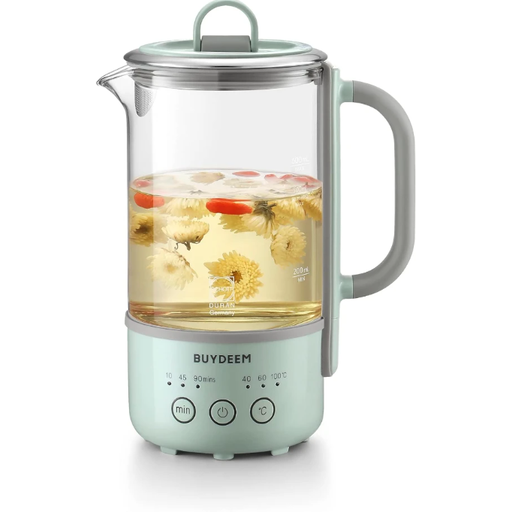
Why it's a good fit: With a 0.6-litre capacity and a lightweight design, this small kettle is ideal for travel, the office, or a single-person household. It combines portability with high-quality materials.
It relies on high-quality, taste-neutral materials like Schott Duran glass and 18/10 stainless steel, thus avoiding the trap of subpar materials.
Compact design and precise temperature control with a keep-warm function, making it a versatile travel kettle and tea maker.
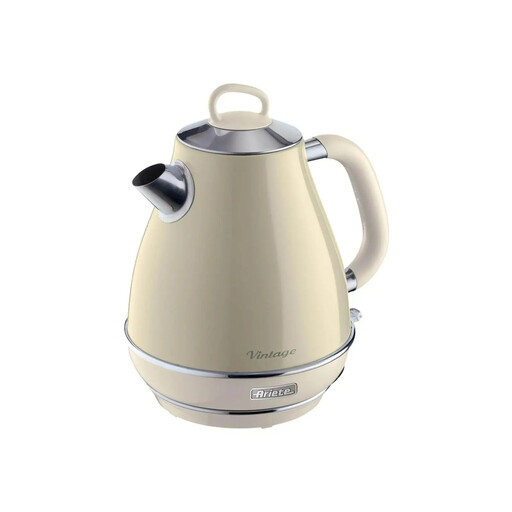
Why it's a good fit: This retro kettle combines a striking design with the functionality of a modern appliance. With a 1.7L capacity, it's ideal for families who value kitchen aesthetics.
Despite its retro look, it features an external water level indicator and a 360° base, avoiding the ergonomic pitfalls of cluttered or unwieldy models.
Large capacity and a unique design. The removable limescale filter and automatic shut-off ensure convenience and safety.
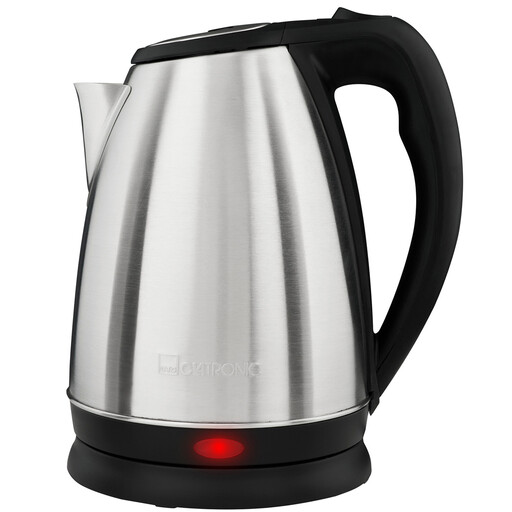
Why it's a good fit: This model focuses on the essentials: a large 1.7-litre volume, a robust stainless steel body, and a high power rating of 2200 watts for rapid boiling. A reliable workhorse for daily use.
It is explicitly certified as BPA-free and features a concealed stainless steel heating element. This directly addresses the pitfalls of material quality and difficult cleaning (limescale trap).
Excellent value for money for a large stainless steel kettle with all necessary safety features and simple handling.
We have compiled a complete, up-to-date list of products that fully meet these strict selection criteria and rigorous safety standards.
The frequency of descaling depends on the water hardness in your area. With hard water, it is advisable to descale the kettle every one to two months; with softer water, every three to four months is sufficient. You can use commercial descalers based on citric acid or acetic acid. Regular descaling not only ensures hygiene but also maintains the full heating performance and energy efficiency of the appliance.
BPA (Bisphenol A) is an industrial chemical used to make certain plastics. The BPA-free label guarantees that plastic parts that come into contact with water (e.g., in the lid or water level indicator) do not contain this substance. This is an important quality mark for consumers who want to ensure that no chemicals from the material leach into their drinking water.
Not necessarily for a single boiling cycle. A kettle with a higher wattage (e.g., 3000 W) heats water significantly faster than a device with lower power (e.g., 1500 W). Although the power consumption during operation is higher, the shorter boiling time often results in a comparable total energy consumption (in kilowatt-hours, kWh) for heating the same amount of water. The main difference, therefore, lies in speed and convenience.