Joybuy Insights

Electric Kettle Buyer's Guide: Find Your Perfect Match

An electric kettle might seem like a simple purchase. However, choosing the right one involves navigating several pitfalls that often only become apparent after you've bought it. From materials that can affect the taste of your water to oversized models that waste electricity, it's easy to make the wrong choice.

This guide will help you identify the crucial features and distinguish marketing hype from genuine benefits. We'll show you what to look for to find a kettle that perfectly suits your needs.

The Most Common Pitfalls When Buying a Kettle

Before we dive into the important specifications, let's look at two common issues that can lead to dissatisfaction:

  1. Subpar Materials: Many inexpensive plastic models can leach a plastic taste into the water over time. Furthermore, it's not always clear whether the parts that come into contact with water are BPA-free. On the other hand, poorly constructed metal casings can become extremely hot on the outside, posing a safety hazard.
  2. Mismatched Capacity and Power: A 1.7-litre kettle is often oversized for a single-person household and consumes more energy than necessary. Conversely, a small kettle with just a one-litre capacity is impractical for a multi-person family, as it requires constant refilling. While a high wattage promises a fast-boiling kettle, it can be inefficient for small amounts of water.

What Really Matters: Key Features in Detail

To buy the right electric kettle, you should examine three central aspects. These determine the appliance's durability, safety, and everyday convenience.

1. The Material: Stainless Steel, Glass, or Plastic?

The choice of material has a direct impact on water quality, cleaning, and safety.

  • Stainless Steel Kettles: This material is robust, durable, and flavour-neutral. Stainless steel models are easy to clean, although fingerprints can be visible on shiny surfaces. Look for double-walled designs that keep the exterior cool to the touch.
  • Glass Kettles: Glass kettles are also flavour-neutral and, thanks to their transparency, allow you to easily monitor the water level and boiling process. They often feature LED lighting, which adds a modern touch. However, the material is more fragile than stainless steel.
  • Plastic: Plastic models are typically lighter and more affordable. Quality is key here: always look for the "BPA-free" label to ensure no unwanted substances get into your water.

2. Balancing Capacity and Power

The ideal size and power depend on your household.

  • Capacity: For individuals or couples, a small kettle with a capacity of 1.0 to 1.25 litres is usually sufficient and energy-efficient. Families or tea enthusiasts who often need larger quantities are better served with a standard 1.7-litre model.
  • Power (Wattage): A higher wattage (e.g., 2200W or more) results in shorter boiling times. This is particularly advantageous for large volumes. For smaller quantities, an extremely high power rating is not essential and can unnecessarily increase electricity consumption.

3. Safety and Convenience Features

Modern kettles offer important functions that make daily life safer and easier.

  • Automatic Shut-off and Boil-Dry Protection: These two features are essential. The automatic function switches the device off as soon as the water boils. Boil-dry protection prevents the kettle from being switched on without water and overheating.
  • Removable Limescale Filter: A fine mesh filter in the spout that traps limescale particles is especially important in regions with hard water. A removable filter is easy to clean and ensures clear water.
  • 360-Degree Base: A cordless kettle that can be freely rotated on its base station makes handling easier for both right- and left-handed users.

Our Top Picks for Different Needs

Here are some models that represent a considered choice for different user profiles, based on objective features.
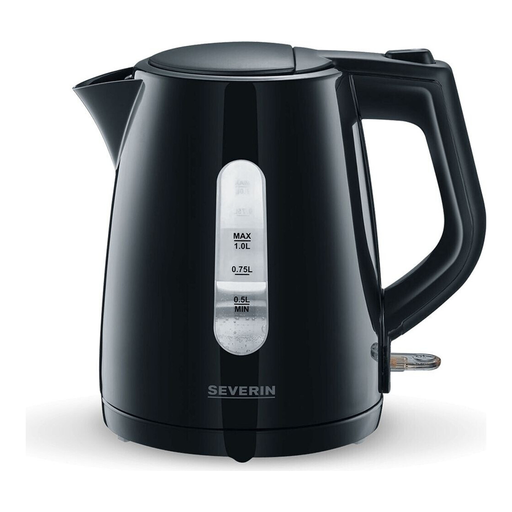
IDEAL FOR: THE PRACTICAL SINGLE HOUSEHOLD
Severin Wasserkocher, 2200W, 1l, Schwarz

Severin Kettle, 2200W, 1L, Black

Why it's a great fit: Perfect for students, singles, or small kitchens. The compact 1-litre volume is ideal for one or two cups, preventing unnecessary water and energy waste.

How It Avoids the Pitfall

This model avoids the trap of being oversized. Instead of a large 1.7-litre kettle that consumes too much energy for daily individual use, it offers a size tailored to your needs.

Key Advantage

A compact design and 2200-watt power ensure small amounts of water are heated quickly. Includes overheat protection and a removable limescale filter.
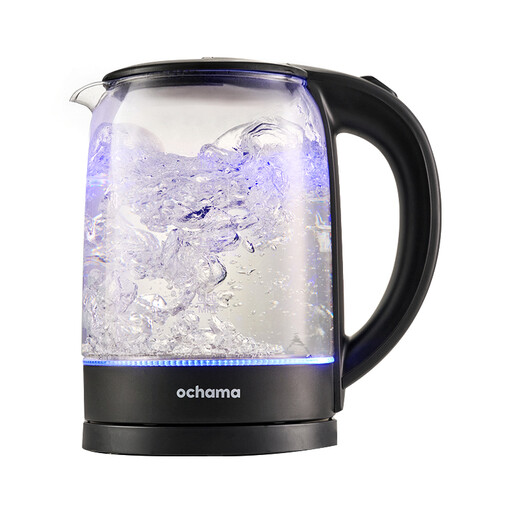
IDEAL FOR: THE MODERN FAMILY KITCHEN
Ochama Glas-Wasserkocher, 1,7L, mit blauer LED-Beleuchtung

Ochama Glass Electric Kettle, 1.7L, with Blue LED Illumination

Why it's a great fit: With a 1.7-litre capacity, it's perfect for families or when guests visit. The borosilicate glass body is an eye-catching feature, and the blue LED light indicates its operating status.

How It Avoids the Pitfall

The glass body is flavour-neutral, avoiding the risk of a plastic taste. The automatic shut-off and boil-dry protection provide the necessary safety for a busy family household.

Key Advantage

Large 1.7-litre capacity combined with a modern design. The 2200-watt power ensures fast boiling, even when the kettle is full.
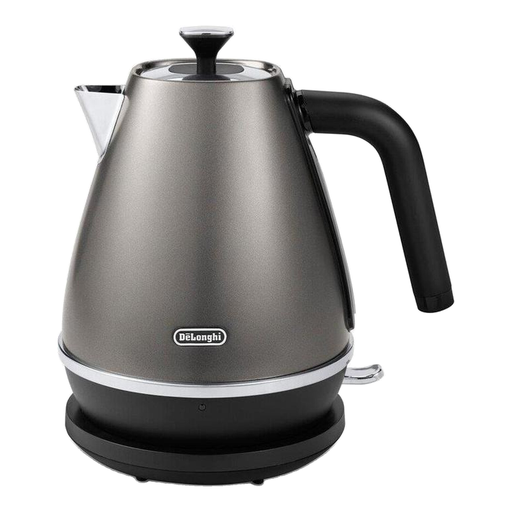
IDEAL FOR: FANS OF DESIGN AND DURABILITY
De'Longhi Distinta Titanium KBIN2001.TB Wasserkocher

De'Longhi Distinta Titanium KBIN2001.TB Kettle

Why it's a great fit: For those who value exclusive design and high-quality materials. The stainless steel body with a matte metallic finish and chrome details makes this kettle a statement piece in the kitchen.

How It Avoids the Pitfall

This model relies on a robust stainless steel body and a 3-level safety system. It thus avoids the trap of short-lived appliances and offers a durable, safe solution.

Key Advantage

A combination of Italian design and comprehensive safety features (automatic shut-off, overheat protection). The washable anti-scale filter ensures pure taste.

Looking for more options?

We've compiled a full, up-to-date list of products that fully meet these strict selection criteria and UK safety regulations.

Frequently Asked Questions (FAQ)

How often should you descale an electric kettle?

The frequency depends on the water hardness in your area and how often you use it. As a rule of thumb, with daily use and hard water, descaling every four to six weeks is recommended. With soft water or less frequent use, descaling the appliance every few months is often sufficient. Visible limescale deposits at the bottom are a clear sign that cleaning is necessary.

What is the best material for an electric kettle?

There is no one-size-fits-all answer, as each material has its pros and cons.

  • Stainless steel is very durable, robust, and flavour-neutral.
  • Glass is also flavour-neutral and visually appealing, but more fragile.
  • Plastic is lightweight and often less expensive, but it's crucial to look for BPA-free materials. The choice depends on your personal priorities regarding durability, design, and budget.

How much electricity does an electric kettle use?

Power consumption depends on the wattage, the amount of water, and the initial water temperature. A typical 2200-watt kettle requires about 0.1 kWh of electricity to heat 1 litre of water from 15°C to 100°C. To save energy, you should always heat only as much water as you actually need.