
Lieferung heute & morgen

Qualitätsgarantie

Willkommens-Angebote freischalten: KOSTENLOSE Lieferung | Bis zu 80 % RABATT | Kostenlose 30-Tage-JoyPlus-Testphase
App herunterladen
An electric kids' motorcycle is a big hit with many children. The idea of riding their own bike around the garden or yard, just like the grown-ups, is a thrill. But the selection is vast, and not every model lives up to its promise. As a Joybuy Product Recommendation Officer, I'm here to help you identify the key features and avoid common purchasing pitfalls, ensuring the joy of the new vehicle lasts.
Before you make a decision, it's important to know the typical weaknesses that often only become apparent after the purchase.
To avoid these traps, you should carefully examine three technical parameters. These are the primary determinants of the vehicle's safety, enjoyment, and durability.
The battery's voltage is the decisive factor for speed and where the motorcycle can be used.
The number and arrangement of the wheels have a direct impact on stability.
A good electric ride-on motorcycle is made of durable, non-toxic plastic (e.g., ABS plastic). Look for a sturdy frame, a clean finish with no sharp edges, and sufficient material thickness. The CE mark is mandatory in the EU and confirms that the product meets applicable safety requirements.
Instead of a one-size-fits-all recommendation, we've put together models for different needs and age groups.

Why This Fits Their Persona: Ideal for toddlers aged 3 and up who are having their first experience with an electric vehicle. The three-wheel design offers maximum stability, and the speed is safely limited.
It avoids the trap of overpowering performance with an age-appropriate design and a stable three-wheel construction that minimises the risk of tipping.
Integrated music, LED headlights, and a storage box provide extra play value beyond just riding.
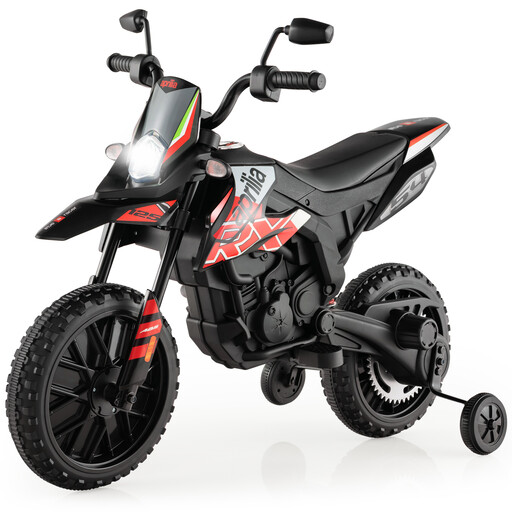
Why This Fits Their Persona: Perfect for older kids (3-6 years) looking for a "real" motorcycle experience. The 12V power provides more muscle for outdoor rides, and the sporty design is a real eye-catcher.
Unlike unstable models, this kids' motorcycle with training wheels offers a robust construction and a strong 12V battery for extended fun and performance, even on grass.
Officially licensed Aprilia design for an authentic feel; training wheels safely help develop balance and can potentially be removed later.
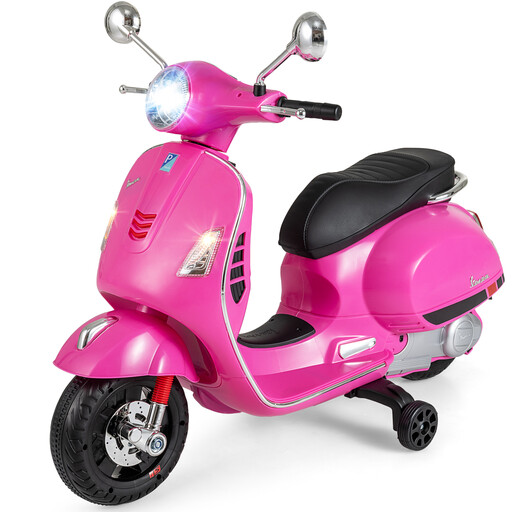
Why This Fits Their Persona: For families who value aesthetics and iconic design. This Vespa-style electric kids' scooter is a stylish vehicle that also delivers on performance, thanks to its 12V system.
It sidesteps the trap of short-lived products with high-quality, officially licensed construction and a reliable 12V battery that ensures lasting performance.
Authentic licensed Vespa product with extra features like music, a horn, and stories; the combination of main and training wheels ensures high stability.
We've compiled a complete, up-to-date list of products that fully meet these strict selection criteria and rigorous safety standards.
1. How long does the battery of an electric kids' motorcycle last, and how is it charged? The battery life varies depending on the model, the child's weight, and the riding surface, but it typically ranges from 45 to 90 minutes on a full charge. The charging time is usually 8 to 12 hours. To ensure a long lifespan, it's important to charge the battery regularly, even when not in use for extended periods, to prevent deep discharge.
2. Is a 6V or a 12V kids' electric motorcycle better for my child? This depends on the child's age and the intended use. For toddlers (2-4 years) and for use on smooth surfaces, a 6V model (approx. 3 km/h) is a safe choice. For older children (3-6+ years) who also want to ride on the lawn, a 12V model (up to approx. 7 km/h) offers more power and longer-term enjoyment.
3. How safe is a kids' motorcycle with training wheels compared to a trike? An electric trike for kids is inherently more stable and resistant to tipping, making it ideal for the youngest riders with no experience balancing. A ride-on toy motorcycle with training wheels helps develop balance but requires the training wheels to be especially sturdy and securely attached to ensure safety in turns. The choice should be based on the child's motor skills and confidence level.