
Lieferung heute & morgen

Qualitätsgarantie

Willkommens-Angebote freischalten: KOSTENLOSE Lieferung | Bis zu 80 % RABATT | Kostenlose 30-Tage-JoyPlus-Testphase
App herunterladen
Electric kitchen appliances can make food preparation at home easier. Whether you are looking for an electric knife, food slicer, kitchen chopper or meat grinder with sausage stuffer, high wattage is not the only deciding factor. The design, accessories, safety features, cleaning requirements and intended use all determine whether an appliance will be a practical long-term addition to your kitchen routine.
Manufacturers often quote maximum or peak power. This figure does not necessarily represent the power delivered during normal operation. When comparing products, check whether a rated power figure is also provided. For example, the Adler AD 4803 is listed with a rated power of 800 watts and maximum power of up to 2,000 watts. The ADLER Mesko MS 4809 has a rated power of 350 watts and maximum power of up to 1,500 watts.
For occasional slicing or chopping, a compact appliance may offer sufficient power. If you regularly process larger quantities of meat, you should also look for a suitable duty cycle, overheating protection and a reverse function.
Several mincing discs, sausage-filling tubes or specialist attachments can be useful. However, they also increase cleaning requirements and need storage space. Before buying, be clear about whether you actually want to prepare fine, medium and coarse textures, sausages or, for example, kubbe.
An electric meat grinder with sausage stuffer is suitable for making sausages at home, while an electric knife is primarily used to slice bread, roasts or frozen food. An appliance that promises numerous functions does not automatically replace every specialist kitchen machine.
Food residue can build up particularly around cutting mechanisms, mincing discs and joins. Removable parts that come into contact with food make cleaning easier. Whether these parts are dishwasher-safe must be explicitly stated in the product description.
You should also look for a safety switch, a supplied pusher and a secure blade-locking mechanism. Motor and control units must generally not be immersed in water. Always unplug the appliance before assembly, disassembly and cleaning.
Wattage is only one part of the assessment. The intended working quantity, size of the feed opening and drive construction are also relevant. A stated processing capacity, such as 1 kilogram per minute, is a product specification, but it is not a universal figure for every type of meat or operating process.
For powerful kitchen machines, it is worth checking:
With an electric knife, different blades for fresh and frozen food are practical. With a food slicer, the adjustable cutting thickness, carriage guidance and ability to remove the carriage for cleaning are the key considerations.
According to the product details, the Ritter sono¹ offers a cutting thickness ranging from wafer-thin to approximately 20 millimetres, an 18-centimetre cutting path and a removable food carriage. The Ritter serano⁷ is described as offering a cutting thickness of up to 23 millimetres, a 24-centimetre cutting path, plus a smooth and a serrated blade. These details help with comparison, but they do not replace checking the space required and ease of use.
Stainless steel kitchen appliances are not automatically made entirely from stainless steel. Often, only the blades, mincing discs or specific housing components are made from this material. Check which components are actually manufactured from stainless steel and which are made from plastic, aluminium, glass or coated metal.
A glass bowl can make the filling level visible when using a kitchen chopper. The Haier HCH5B1 011 is listed with a 0.5-litre glass bowl, four stainless steel blades, two speed settings and a pulse function. According to the product details, the bowl and blades are dishwasher-safe. The 0.5-litre capacity is intended for smaller portions and should not be equated with the performance of larger choppers.
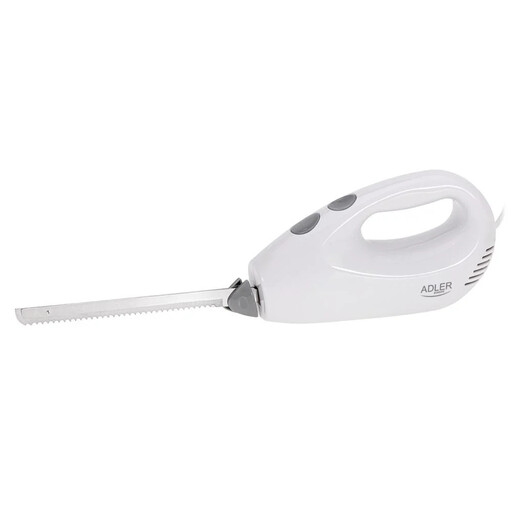
Why this product suits the profile: This electric knife is designed for occasional slicing of bread, fresh food and frozen products. Two blade sets cover different applications.
The product details distinguish between the general-purpose blade and the frozen-food blade. A safety switch and the described blade-changing system address key operating risks.
180 watts rated power, up to 200 watts maximum power, two stainless steel blade sets and a 27.5-centimetre standard blade.
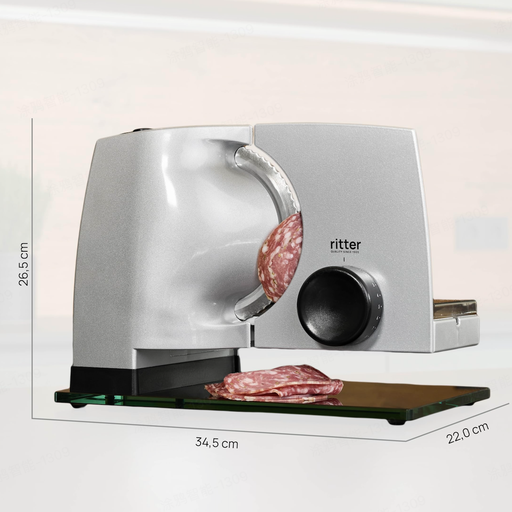
Why this product suits the profile: This electric food slicer is designed for bread, fruit and vegetables, combining a glass base plate with a removable food carriage.
The cutting thickness of up to approximately 20 millimetres is clearly specified. The removable guide supports easy cleaning, rather than relying on the number of accessories as a selling point.
Suspended metal construction, safety glass base, ECO motor, plus momentary and continuous switches, according to the product description.
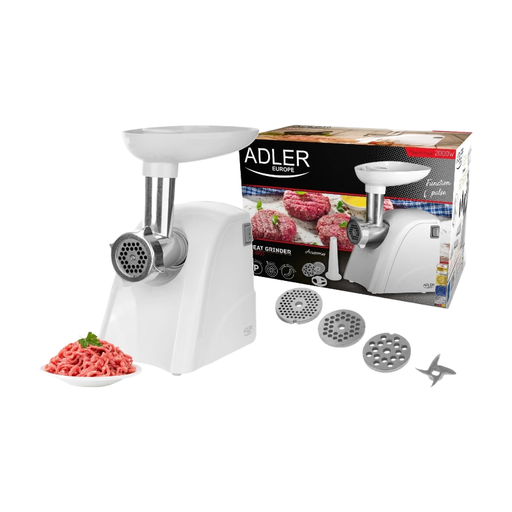
Why this product suits the profile: This meat grinder with sausage stuffer is aimed at households that want to prepare mince and homemade sausages using different mincing discs.
Three mincing discs, a sausage-filling attachment and a pusher are clearly listed. The pusher reduces the temptation to feed food into the machine by hand.
800 watts rated power, up to 2,000 watts maximum power, three mincing discs and accessories for making sausages.
With electric kitchen appliances, energy consumption depends on power and operating time. A 550-watt appliance running for ten minutes uses approximately 0.092 kilowatt-hours in theory. In practice, kitchen choppers and meat grinders often run only for short intervals. Cleaning can therefore take more time than the appliance’s actual electricity consumption.
For a longer service life, we recommend:
We have put together a complete, regularly updated list of products that fully meet these strict selection criteria and the safety regulations applicable in the EU.
An electric knife with a blade specifically designed for frozen food is suitable for this purpose. Not every meat grinder or kitchen chopper is approved for processing frozen ingredients. Always check the relevant manufacturer’s instructions before use.
Service life depends on material quality, workload, care and the availability of spare parts. Metal construction, removable assemblies and repairable product designs can be important for regular use. It is not possible to give a reliable general lifespan in years without knowing the specific operating conditions.
The cost is calculated from the power rating, operating time and your electricity tariff. The formula is: wattage divided by 1,000, multiplied by the operating time in hours and the price per kilowatt-hour. Short operating intervals keep the electricity consumption of many appliances manageable; cleaning and care should nevertheless be considered when making your purchase.