
Lieferung heute & morgen

Qualitätsgarantie

Willkommens-Angebote freischalten: KOSTENLOSE Lieferung | Bis zu 80 % RABATT | Kostenlose 30-Tage-JoyPlus-Testphase
App herunterladen
Anyone looking for electric kitchen machines will find appliances designed for very different tasks: a multifunctional kitchen machine can knead, blend, slice and grind, while a food processor, chopper or electric meat mincer is specialised for specific jobs. The biggest challenge is distinguishing marketing claims from features that genuinely suit your needs.
A high wattage rating does not automatically indicate how well an appliance performs in everyday use. Motor control, blade design, gearing, operating time and suitability for the type of food being processed are also important. With an electric meat mincer, you should also distinguish between rated power and maximum power consumption. Maximum power is often reached only for short periods.
Many electric kitchen machines are supplied with numerous discs, blades and attachments. Before buying, check whether you really need these functions. A chopper is usually sufficient for occasional chopping. However, if you regularly prepare bread or pizza dough, you will need a dough machine with a suitable dough hook. A sausage filler is only worthwhile if you actually want to fill sausage casings.
Appliances with many individual parts can be time-consuming to clean in everyday use. Look for removable components, dishwasher-safe parts and dry, space-saving storage. A food slicer also requires sufficient room for the carriage and the food being sliced. With all appliances, remember that the motor housing must not be immersed in water.
Do not compare wattage alone. Also consider the recommended operating time and any necessary cooling breaks. A compact chopper is often sufficient for short tasks such as chopping onions. Kneading firm doughs or grinding meat places greater and longer-lasting demands on the motor and gearing. Overheating or overload protection can provide an additional safety feature.
The capacity should suit the size of your household. A small container is practical for individual portions, while families may need to plan several batches when preparing larger quantities. With a food slicer, the carriage travel is important: a longer travel distance makes it easier to process larger pieces of bread or sausage. The maximum slicing thickness should also suit your intended use.
Stainless-steel blades are standard for many slicing and chopping tasks. It is important to check whether the blades and discs can be removed and how they should be cleaned. A vegetable slicer needs suitable cutting discs for slicing, grating or cutting into strips. For hard foods, follow the relevant manufacturer's instructions. Not every chopper is suitable for ice, coffee beans or very hard spices.
Also look out for:
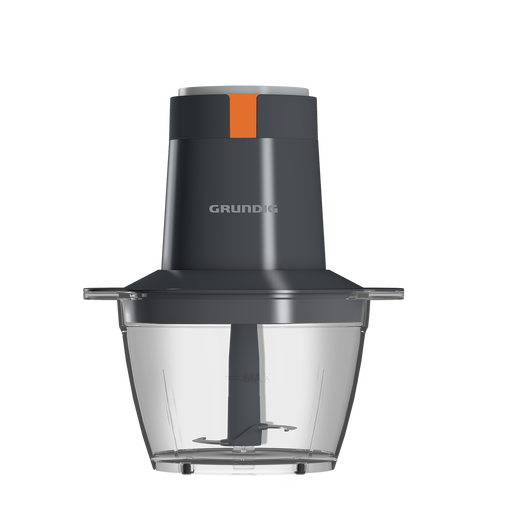
Why this product suits this profile: The compact multi-cutter is suitable for smaller quantities of fruit, vegetables or nuts. Its 0.5-litre glass container also takes up little storage space.
The two speed settings and transparent glass bowl make it easy to monitor portion sizes. The appliance is not designed for coffee, ice or very hard foods.
500-watt motor, removable stainless-steel double blade and dishwasher-safe glass container according to the product description.
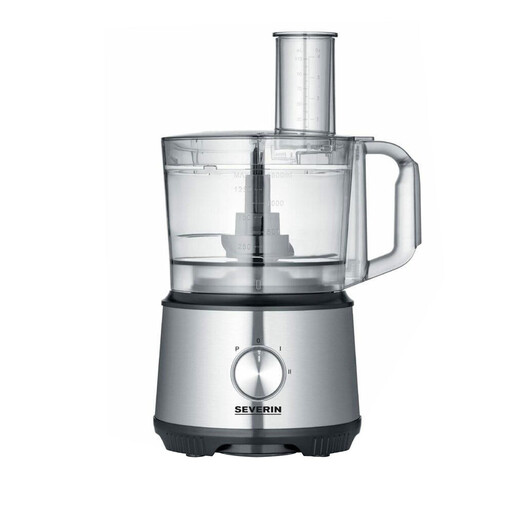
Why this product suits this profile: The combination of kneading, grating, slicing, grinding, blending and emulsifying covers several common kitchen tasks in one appliance.
The range of functions is defined by specific attachments: three slicing inserts, a dough hook, grinding attachment and emulsifying disc. This makes it possible to check before buying whether the accessories meet your needs.
1200 watts, 1.5-litre bowl and partly dishwasher-safe parts according to the manufacturer's specifications.
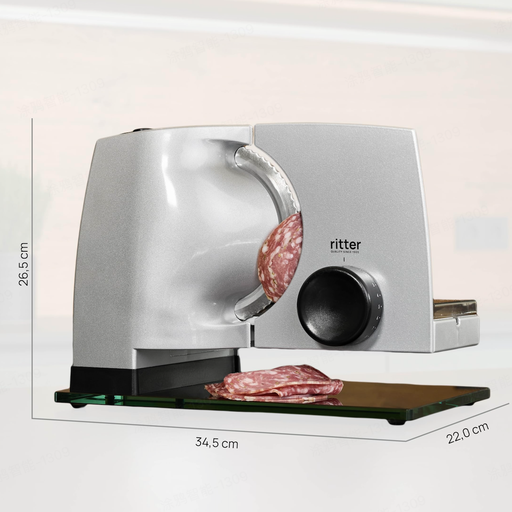
Why this product suits this profile: This food slicer is designed for households that regularly want to slice bread, fruit, vegetables or cold meats to a controlled thickness.
The product description specifies a removable carriage, 18-cm cutting travel, as well as safety and continuous-operation switches. These details can be checked before buying more easily than general claims about precision.
Slicing thickness from wafer-thin to approximately 20 mm, safety glass base plate and made in Germany according to the product details.
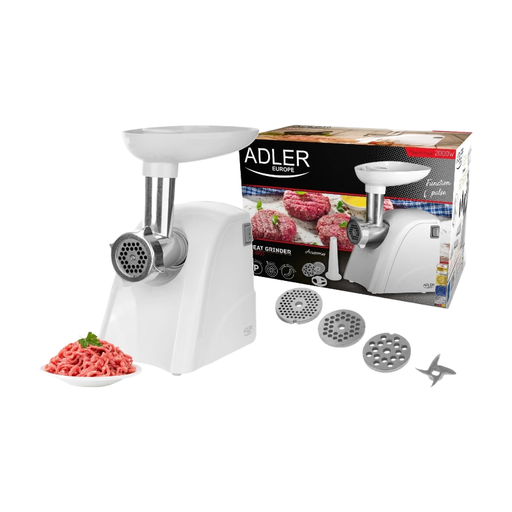
Why this product suits this profile: If you want to prepare mince and homemade sausages, this meat mincer is designed for these tasks and includes a sausage filler.
The three perforated discs allow you to choose different grinding grades. The supplied pusher supports safe feeding; hands and cutlery must never be placed in the feed tube.
800-watt rated power, up to 2000 watts maximum power, three perforated discs and sausage-filling attachment according to the product data.
We have put together a complete, regularly updated list of products that fully meet these strict selection criteria and the safety regulations applicable in the EU.
The ongoing costs of electric kitchen appliances depend mainly on power, operating time and frequency of use. For a rough estimate:
Power in kilowatts × operating time in hours × electricity price per kilowatt-hour = electricity costs.
An appliance rated at 500 watts that runs for ten minutes uses approximately 0.083 kilowatt-hours in theory. The exact amount depends on your electricity tariff. For short tasks, electricity costs are usually lower than the cost and effort involved in cleaning, replacing parts or replacing worn accessories.
For a long service life, we recommend:
For bread and pizza dough, you need a kitchen machine with a dough hook, a suitable bowl and a manufacturer-confirmed suitability for firm doughs. A small chopper or food processor is not automatically suitable for this. Also check the maximum dough quantity and permitted operating time.
That depends on how you plan to use it. If you regularly prepare fresh mince, burgers or homemade sausages, several perforated discs and a sausage filler can be useful. For occasional small quantities, a multifunctional appliance with a grinding attachment may be sufficient. Cleaning all parts that come into contact with meat should be factored in before buying.
Important criteria include the slicing thickness range, cutting travel, blade type, removable carriage, stability and safety controls. Check whether the appliance is designed for your usual foods, such as bread, cheese, vegetables or cold meats, and whether the removable parts are easy to access and clean.