
Lieferung heute & morgen

Qualitätsgarantie

Willkommens-Angebote freischalten: KOSTENLOSE Lieferung | Bis zu 80 % RABATT | Kostenlose 30-Tage-JoyPlus-Testphase
App herunterladen
An electric kitchen mixer can take a lot of the work out of baking and everyday kitchen tasks. However, hand mixers, stand mixers and milk frothers differ considerably in design, attachments and intended use. If you focus only on wattage or a long list of features, you could end up buying an appliance that isn’t right for your kitchen.
A high wattage sounds impressive, but on its own it says little about how suitable an appliance really is. Power transmission, speed control, permitted running time and the attachments supplied are important too. A 300-watt hand mixer may be enough for cream, whisking egg whites and light batters, while a stand mixer with a bowl has a design advantage if you knead dough regularly.
A multifunction appliance with a mincer, blender attachment and mixing mechanism can be versatile, but it takes up more space and requires more cleaning. If you mainly bake cakes, you may not need an electric stand mixer with lots of extra attachments. For occasional mixing, a hand mixer is often easier to store and quicker to get ready.
Before you buy, check whether whisks, beaters and dough hooks are actually included. It’s also worth checking which attachments are dishwasher-safe, whether the release mechanism is secure and whether the maximum dough quantity is clearly stated. With stand mixers, don’t confuse the stated bowl capacity with the amount you can actually use.
Wattage is a useful guide, but it isn’t the only measure of quality. Lower power ratings are often enough for light mixtures. If you regularly make yeast dough, bread dough or larger quantities, look for a suitable kneading function, several speed settings and a stable base.
A turbo function can provide a higher speed for short bursts. For delicate ingredients, a slow start is useful to stop flour or liquids from splashing out of the bowl. Variable speed controls allow finer adjustments, while clearly defined settings are simple and easy to use.
A mixer with whisks and dough hooks can handle several classic baking tasks:
Stainless steel attachments are robust and dishwasher-safe on many models. Always follow the manufacturer’s cleaning instructions. The motor housing of a hand mixer should generally never be immersed in water.
A hand mixer is used directly in a bowl you already own. This gives you flexibility, but you’ll need to hold the appliance while it’s running. A stand mixer with a mixing bowl stays in place and leaves your hands free. It takes up more room, though, so it should be easy to reach when you need it.
With stand mixers, tilt-head design, a splash guard, non-slip feet and a safety lock are also useful features to consider. The stated bowl size should suit your typical household needs. A large bowl can be impractical for small portions, while families and keen home bakers may benefit from the extra capacity.
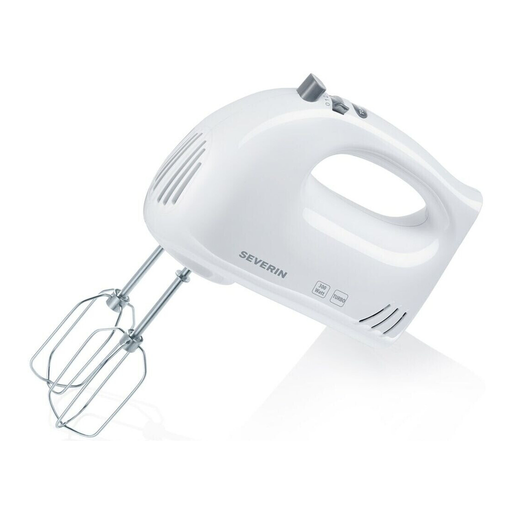
Why this product suits this profile: With five speed settings, a turbo function, whisks and dough hooks, this hand mixer is equipped for everyday baking tasks.
The attachments are clearly listed, and the mixer focuses on beating, whisking and kneading rather than adding features you may not need.
300 watts, five settings plus turbo, an ergonomic handle and removable stainless steel attachments.
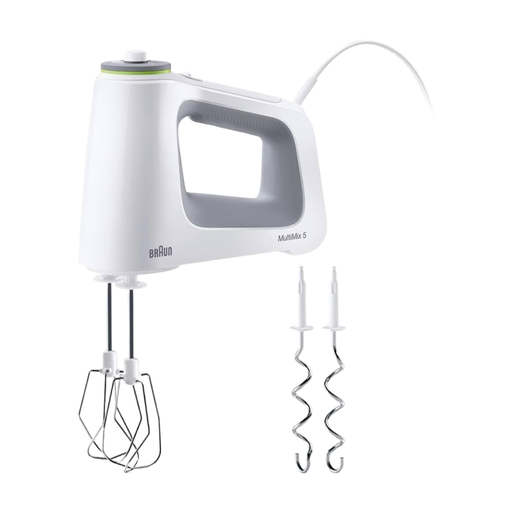
Why this product suits this profile: A 700-watt motor, nine variable speeds, a turbo function and an EasyClean design make this a good choice for households that bake regularly.
Adjust the speed smoothly with the thumb control. The attachments are removable and, according to the product details, dishwasher-safe.
According to Braun’s product details: SmartMix technology, 700 watts, two stainless steel whisks and two dough hooks.
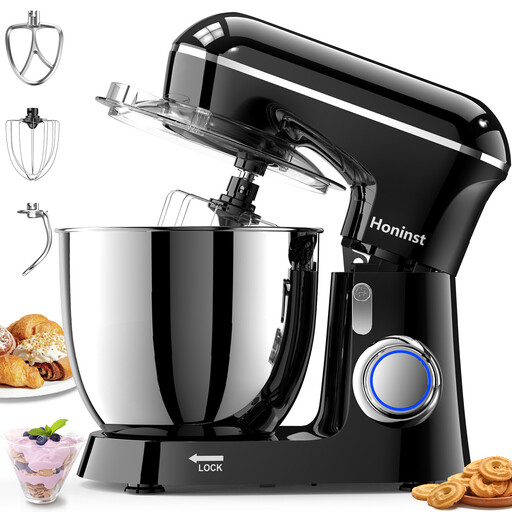
Why this product suits this profile: The 6.5-quart stainless steel bowl, ten speed settings and 3-in-1 attachments make this a practical choice for households that regularly bake larger batches.
The tilt-head design, splash guard and non-slip feet address common concerns around handling and stability with stand mixers.
A 6.5-quart stainless steel bowl, ten speed settings, plus dough hooks, whisks and beaters.
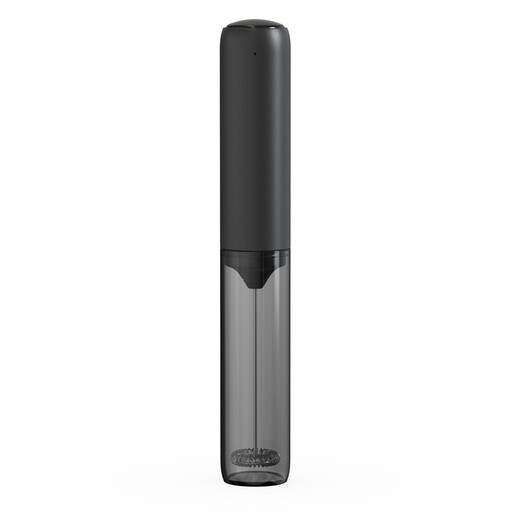
Why this product suits this profile: This rechargeable milk frother is designed for individual portions of hot or cold milk. It complements an electric kitchen mixer when you’re making coffee drinks.
It’s designed specifically for milk and frothing, so you don’t need to use a large mixer for a single coffee-making task.
Cordless operation, according to the product name, and a design suited to small quantities and flexible use around the kitchen.
We’ve put together a complete, regularly updated list of products that meet these strict selection criteria and fully comply with the safety regulations in force in the EU.
For occasional baking and small to medium quantities, a hand mixer is usually compact and straightforward to use. A stand mixer is a good choice if you regularly make heavy doughs or larger quantities and have space to leave the appliance on your worktop.
Its lifespan depends on how you use, clean and store it, and whether you stick to its operating limits. Overloading the mixer, using too much dough or running it continuously for too long can put strain on the motor. Always follow the instructions, recommended quantities and rest periods specified by the manufacturer.
A higher wattage can mean greater electricity use when the mixer is running at full load. Actual costs also depend on how long you use it, the quantity you’re preparing and the speed setting you choose. An appliance that’s right for the task and gets it done quickly may be more practical day to day than an oversized model.