Portafilter users short on time
If you want to grind quickly in the afternoon and dose your coffee straight into the portafilter, how easy the specific electric model is to use and dose will make all the difference.


For a quick espresso break, an electric grinder is a better fit if you regularly want to grind straight into the portafilter and cut down on manual steps. A hand grinder suits single servings if you don’t mind turning the handle. The key is whether the specific model can be adjusted finely enough for your beans and portafilter – not simply how many grind settings it has overall. Information about individual models comes from their respective manufacturers and does not apply to an entire brand.
If you want to grind quickly in the afternoon and dose your coffee straight into the portafilter, how easy the specific electric model is to use and dose will make all the difference.
If you switch beans or adjust your shot by changing the grind size, pay particular attention to the finer end of the adjustment range – not just the number of settings.
If you grind one serving at a time, you can weigh up the space an electric grinder takes against the extra manual effort of using a hand grinder.
For consumers in Germany choosing a burr grinder for espresso made with a portafilter, the right features depend on what matters most to them in their routine.
| Priority | What to look for when buying | Who this matters most to |
|---|---|---|
| Fine grind adjustment | Check the espresso range and adjustment mechanism of the specific model. Baratza lists settings 1–20 for espresso on the Encore ESP; Eureka describes the Mignon Specialità as stepless. | If I want to dial in my shot by adjusting the grind size, the usable espresso range matters more than a high total number of settings. Around 36% of consumers say fine-tuning is their top priority. |
| Quick workflow and dosing | Check how the model starts and doses, and whether its portafilter holder or grounds container suits your routine. Eureka describes the Mignon Specialità as having programmable doses; Sage lists a programmable grind time for the Smart Grinder Pro. | If I want to use my grinder during a short break, I want to avoid unnecessary steps. Around 29% of consumers say a quick workflow matters most to them. |
| Counter space and noise | Compare the dimensions with the space you have available. Eureka promotes the Mignon Specialità’s noise-reducing design; without comparable testing conditions, manufacturer claims like this cannot be used to rank products. | If I have limited space or am mindful of noise while grinding, I check the exact space needed and how the grinder performs in my home. Around 21% of consumers say space or quiet operation is their main priority. |
| Cleaning and changing beans | Check the model-specific cleaning instructions and how easily you can access the burrs. 1Zpresso advises against cleaning the J-Ultra with water; Baratza lists a compatible ring burr as a replacement part for the Encore ESP. | If I switch beans, I want to know how to clean the grinder and what care the instructions recommend. Around 14% of consumers say maintenance and changing beans matter most to them. |
Manufacturers describe different adjustment systems: fixed ranges, stepless adjustment or fine click increments. A high total number alone does not tell you whether the grinder covers the range you need for your portafilter.
Check the details of the espresso range and how you adjust the grind size. For the J-Ultra, the 8 micrometres per click quoted by 1Zpresso refer to burr movement, not the size of the coffee particles.
With a hand grinder, you have to turn the handle yourself. Depending on the model, electric grinders offer direct grinding or dosing functions.
Choose based on how many servings you grind and how much manual effort you’re happy to put in during your break.
For the German Encore ESP, Baratza lists a power supply of 220–240 V AC. You can’t automatically assume another version has the same power supply.
Before buying, compare the full model number and power supply details. The Bundesnetzagentur’s product checks include the product labelling, manufacturer information and German-language instructions with the necessary warnings.
The Mignon Specialità is an electric option for espresso made with a portafilter, with fine adjustment and programmable dosing.
The Encore ESP is an electric option if you want one grinder for espresso and the occasional coarser brew.
The J-Ultra is a hand grinder for grinding individual espresso servings.
With this model, the Smart Grinder Pro combines direct electric grinding with a programmable grind time.
The CM800 is an electric option for espresso and coarser brewing methods.
The following Joybuy models are selected for espresso grinding and different workflows. For each grinder, check that its settings suit your beans and portafilter.
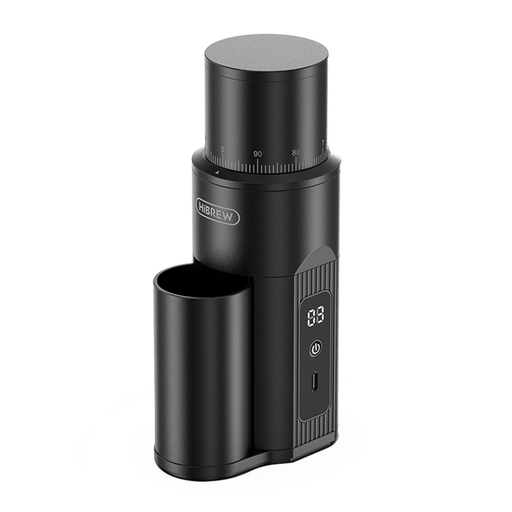 No image available
This model is worth considering if you want finely adjustable espresso grinding; check that its adjustment range works for your beans and portafilter.
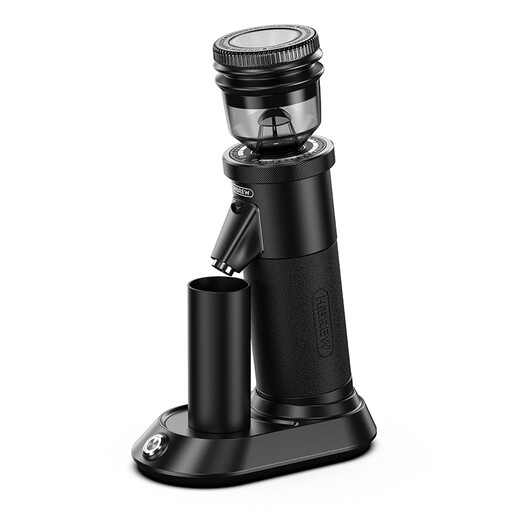 No image available
If you’re looking for a grinder for espresso and other brewing methods, check that its adjustment range works for your portafilter and preferred brewing method.
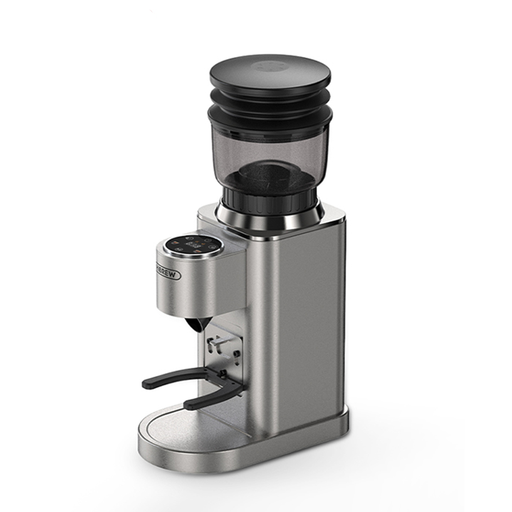 No image available
This model is worth considering for a regular espresso routine; check that the holder fits your portafilter.
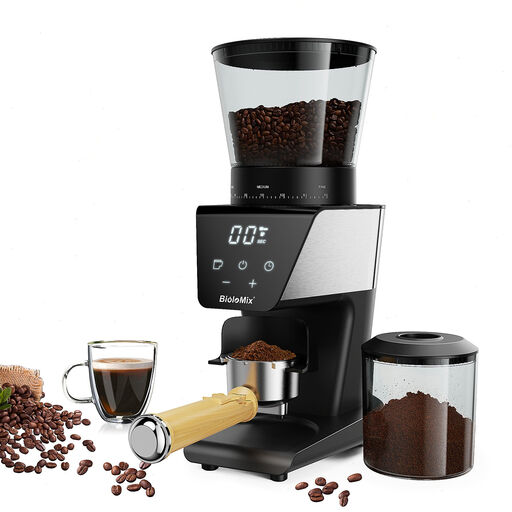 No image available
If you want one appliance for espresso and coarser grind settings, check that the settings listed are suitable for your portafilter.
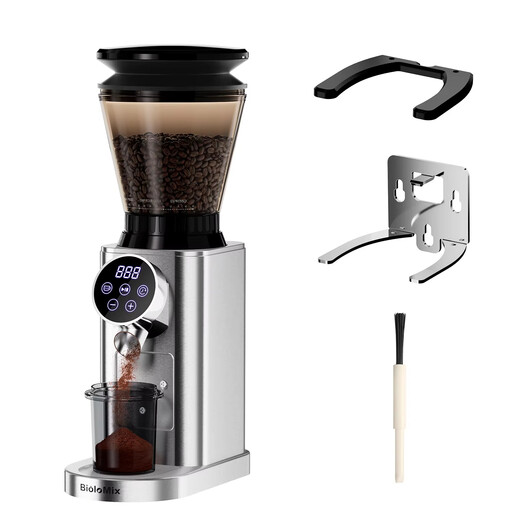 No image available
This model is worth considering for espresso and other grind settings; check that its adjustment range suits your beans and portafilter.
No. What matters is the fine adjustment range of the specific model: Baratza assigns settings 1–20 to espresso on the Encore ESP, while Sage lists 60 settings in total for the Smart Grinder Pro. You’ll need to dial in the right setting for your beans and portafilter as part of your routine.
For the J-Ultra, 1Zpresso recommends using a brush and a blower, and advises against cleaning it with water, according to the model instructions. Follow the relevant instructions for other grinders.
No. If a product is faulty, your statutory rights are against the seller; a manufacturer’s guarantee is an additional voluntary benefit with its own terms. The Verbraucherzentrale recommends keeping your purchase and guarantee documents in case you need to check whether you can make a claim.
Check the power supply details, product labelling and manufacturer information, and make sure it comes with German-language instructions containing the necessary warnings. The Bundesnetzagentur lists these points in its product checks; the information must match the specific version.
An electric coffee grinder must not go in household waste. The German Federal Ministry for the Environment advises that electrical waste should be collected appropriately; check your local return or collection point.