Hosts making several pots
If you regularly grind larger quantities when you have guests, easy dosing and the amount ground per cycle are important considerations. Electric models vary in their programmes and containers.


When you have several guests, an electric grinder with a suitable filter grind setting and easy-to-adjust quantities is usually more practical. For the occasional smaller batch, a hand grinder may be enough. What matters is how much coffee you need to grind each time, and the effort involved in measuring, grinding and cleaning. A large bean hopper alone doesn’t tell you how much ground coffee you can prepare in one go.
If you regularly grind larger quantities when you have guests, easy dosing and the amount ground per cycle are important considerations. Electric models vary in their programmes and containers.
If you want a consistent amount of beans for a pour-over or filter coffee machine, check whether the grinder has a suitable dosing function. Built-in scales can be helpful, but they aren’t essential for filter coffee.
If you only grind coffee for guests now and then, you can weigh up the space needed against the manual effort. A hand grinder doesn’t need to be plugged in, but you’ll have to turn the handle.
| Priority | What to check | Who it matters to |
|---|---|---|
| Grinding several portions quickly | Check the amount ground per cycle and how easily the grounds can be removed. | If you’re making several pots for guests, you’ll want to grind the coffee without spending ages turning a handle. Around 36% of consumers put preparing several portions quickly at the top of their list. |
| Adjusting the filter grind and quantity | Check that the instructions cover your brewing method and that you can measure out a consistent quantity. | If you use a pour-over or filter coffee machine, you’ll need a suitable grind and a consistent amount of beans. Around 29% of consumers prioritise this precise approach to filter coffee. |
| Saving space and avoiding complicated features | Compare the dimensions, grounds container capacity and number of grinding cycles needed for your usual pot. | If you only have guests occasionally, you may prefer to save space and be happy to do the grinding by hand. Around 21% of consumers prioritise a compact solution for occasional use. |
| Cleaning and ease of use | Check whether grinder parts can be removed, the care instructions and whether replacement parts are available for the specific model. | After hosting, you’ll want to remove leftover grounds without a fiddly clean-up and keep using your grinder. Around 14% of consumers prioritise easy cleaning and long-term usability. |
The amount of beans the hopper holds doesn’t automatically tell you how much the grinder can grind in one cycle. For the Rommelsbacher EKM 500, the manufacturer specifies a 400 g bean hopper and weight-controlled grinding of up to 100 g per cycle.
Compare the amount you need for each brew with the quantity you can actually set the grinder to process and the capacity of the grounds container.
Melitta lists 39 grind settings for the Calibra, while Baratza lists 40 for the Encore. The number of settings alone doesn’t tell you whether the grinders produce comparable results.
Check whether the grinder suits your brewing method and how easy the specific model is to use, rather than comparing the number of settings alone.
According to HARIO, the Hario Skerton Plus holds up to 100 g of ground coffee, but it’s operated by hand. Its capacity doesn’t tell you how long it will take to grind the quantity you need.
Think about how often and how much you’ll be grinding for guests before choosing a manual grinder.
These brands take different approaches to electric and manual grinders. The features mentioned apply to the specific models or ranges listed.
The Calibra is designed for users who want to set the filter grind and quantity using a cup, weight or manual programme.
The EKM 500 combines electric portion control with a bean hopper for different brew sizes.
The Encore is an electric grinder with an adjustable grind setting for filter coffee.
The Skerton Plus is a hand grinder for occasional portions and use where there’s no power socket.
The Chestnut C3S range includes compact hand grinders. When buying, take care to distinguish between the standard, Pro and Max versions.
The Joybuy products below include electric coffee grinders and a filter coffee machine with a built-in grinder. To find the right option for you, compare the stated amount ground per cycle, the dosing options and the available grind settings.
 No product image available
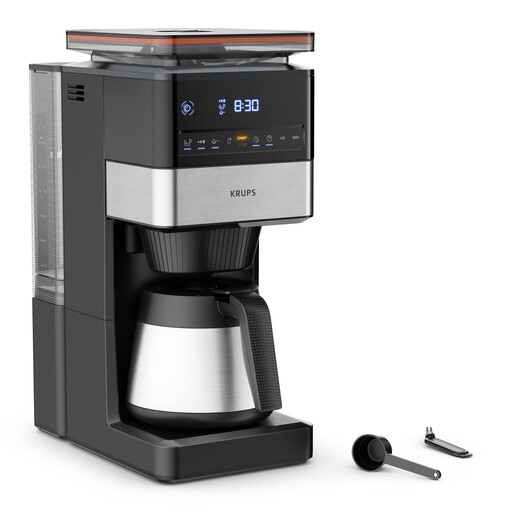
For brewing several cups of filter coffee at once: this machine has a built-in coffee grinder.
1.25 l for 10–15 cups; three grind settings; removable conical burr grinder; thermal carafe.
Allow hot parts to cool before cleaning, and never immerse electrical parts in water.
 No product image available
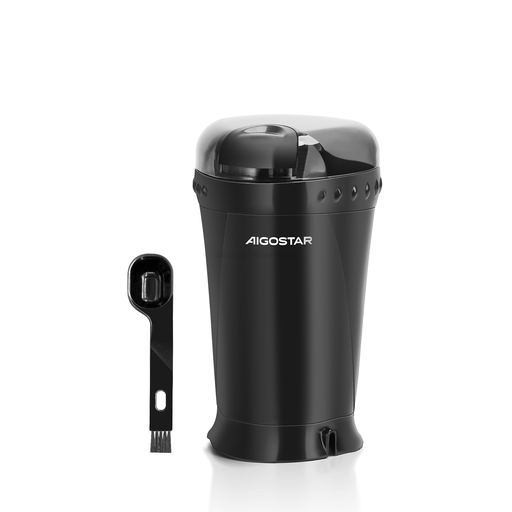
For electric bean grinding, if the stated capacity of 60 g per cycle suits the quantity you need.
200 W; stainless steel blade; according to the product description, you can adjust the grind fineness by changing the grinding time.
Designed for dry coffee beans only. Unplug before cleaning and never immerse the main unit in water.
 No product image available
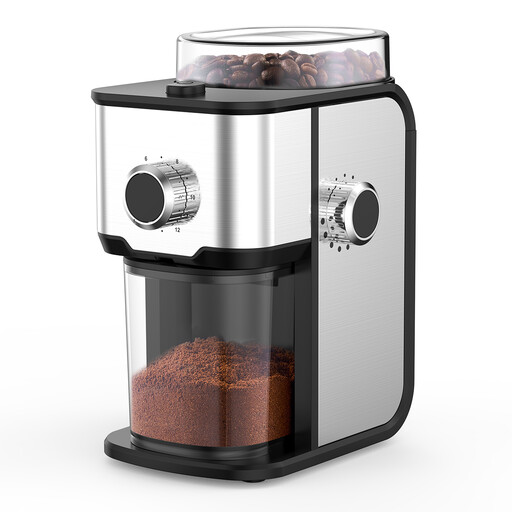
For different pot sizes, if the dosing for 2–12 cups and the available settings suit your filter coffee needs.
Flat burr grinder; 14 grind settings; dosing for 2–12 cups.
 No product image available
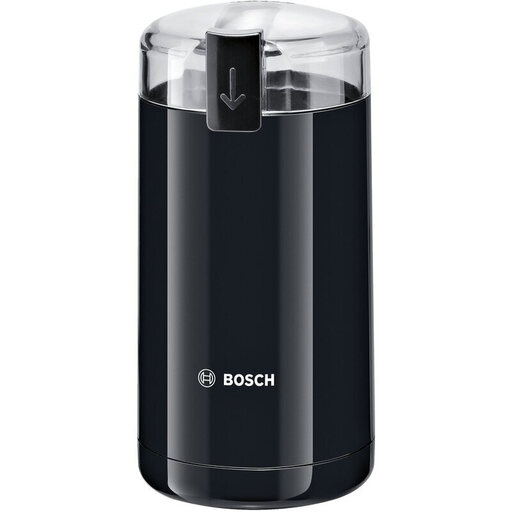
For grinding in batches, if up to 75 g of beans per cycle is enough for your pot. Larger quantities will need to be ground in several cycles.
180 W; stainless steel blade; safety lock engages when the lid is fitted correctly.
The blades are sharp. Unplug before cleaning and never immerse the motor housing in water.
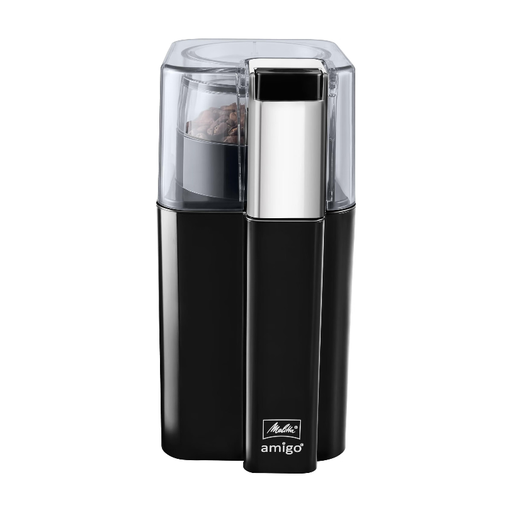 No product image available
For different quantities, up to the stated capacity of 60 g, which the product description says is enough for 2–8 cups.
Stainless steel blade; according to the product description, you can adjust the grind fineness by changing the grinding time.
The maximum fill is 60 g. Larger quantities will need to be ground in several cycles.
Start with the range recommended in the instructions for your specific grinder and brewing method. For the Calibra, Melitta recommends settings 6–26 for filter coffee. This scale applies to that model and can’t be transferred to other grinders.
Follow the instructions for your specific model. Melitta lists a removable burr ring for the Calibra, while Rommelsbacher describes the EKM 500 as having a modular grinder. Check the care instructions for each model to find out whether individual parts can be cleaned with water.