
Lieferung heute & morgen

Qualitätsgarantie

Willkommens-Angebote freischalten: KOSTENLOSE Lieferung | Bis zu 80 % RABATT | Kostenlose 30-Tage-JoyPlus-Testphase
App herunterladen
Long hours at the office, physical exertion, or daily stress often lead to painful tension in the neck, shoulder, and back. An electric massager promises quick relief at home. However, the market is overwhelming, and many products don't live up to their claims. Before you make a decision, it's crucial to understand the common pitfalls that often lead to a bad purchase.
This guide will help you separate the wheat from the chaff. We'll highlight the most common shortcomings and show you which technical features truly matter to find the right device for your muscle tension.
Many devices advertise impressive features but prove to be inadequate in practice. Pay attention to these three critical points to avoid a poor investment:
To find the right device, you should focus on the technical fundamentals that ensure an effective application.
The type of massage is the most important criterion and should match your specific needs.
A good electric massager must be able to adapt to your body.
The choice between a corded and a cordless device depends on your usage habits.
Based on the criteria above, we have identified a few models that are suitable for different user profiles.
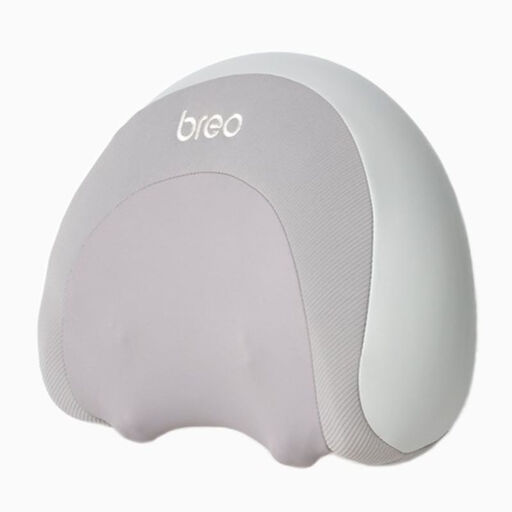
Why it's a good fit: Ideal for those seeking a flexible solution for the neck and lumbar region. The wave-like design can be used as a neck support while lying down or as a lumbar support while sitting.
The device bypasses the "one-size-fits-all" trap with its flexible tilting mechanism, offering a 15° range of motion. This adaptive technology allows the massage nodes to conform to the unique contours of the shoulders, neck, and back.
Dual-Function: Can be used as both a neck and lumbar pillow. Smart Heat: Two-stage heating system with an NTC sensor for precise temperature control between 40°C and 45°C.
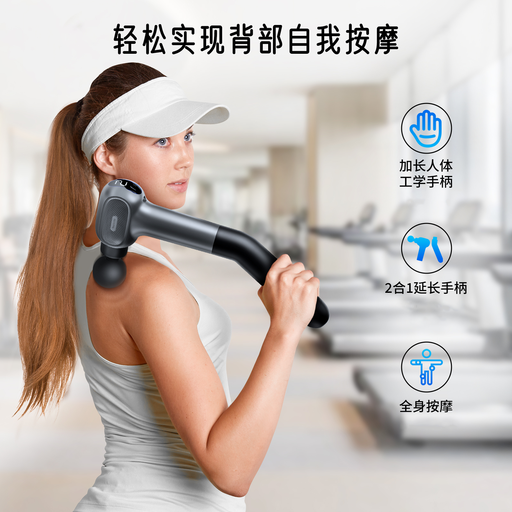
Why it's a good fit: Perfect for athletes or individuals with stubborn tension who need a powerful deep-tissue massage. The extended handle is the key feature for reaching the upper and lower back independently.
This device solves the ergonomic problem of many massage guns, which are impossible to use on your own back. It also addresses the pitfall of loud operating noise with its brushless motor, allowing for a quiet session.
Extended Handle: Enables easy self-massage of the entire back. Long Battery Life: Offers 5-6 hours of continuous operation on a single charge, according to the manufacturer.
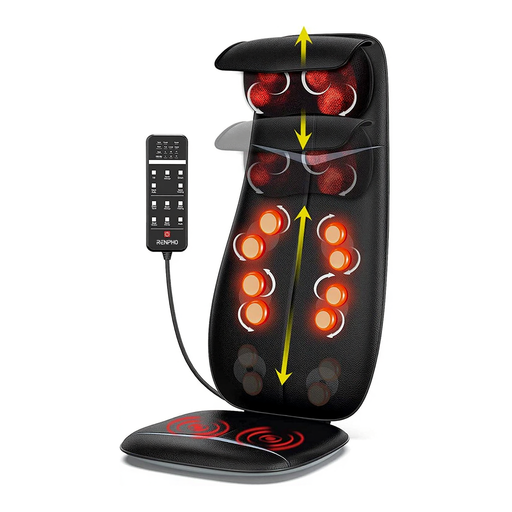
Why it's a good fit: A comprehensive solution for office workers or anyone who sits for long periods. The pad massages the neck, upper back, and lower back simultaneously and can be easily used on an office chair or armchair.
This model tackles the ergonomic problem of rigid pads with a vertically adjustable neck pillow and an S-shaped back design. This allows it to adapt better to different body heights than many standard models.
Height-Adjustable Neck Area: Ensures a precise neck and shoulder massage. Comprehensive Features: Combines Shiatsu, rolling, vibration, and heat for a versatile experience.
We have compiled a complete, up-to-date list of products that fully meet these strict selection criteria and all relevant safety standards.
Most manufacturers recommend a session of 15 to 20 minutes per body area. Many devices are equipped with an auto-shutoff feature to prevent over-straining the muscles. For chronic tension, daily use can help promote relaxation. However, it's important to listen to your body's signals and stop the session if you experience pain or discomfort.
The main difference lies in the massage technique. Shiatsu massagers, such as pillows or chair pads, use rotating nodes to simulate a kneading and pressure massage. They are well-suited for relaxing broad muscle groups. Massage guns, on the other hand, work with percussion—rapid, vertical strokes. These penetrate deep into the tissue and are ideal for the targeted treatment of muscle knots and for recovery after intense training.
Yes, an optional heat function can support the effects of a massage. The warmth helps to promote local blood circulation. This allows muscles to loosen more easily, making the massage feel even more pleasant and effective. However, this function should be seen as a supportive measure for relaxation and does not replace a medically necessary heat treatment. Always follow the manufacturer's safety instructions, especially if you have pre-existing conditions or reduced sensitivity to heat.