
Lieferung heute & morgen

Qualitätsgarantie

Willkommens-Angebote freischalten: KOSTENLOSE Lieferung | Bis zu 80 % RABATT | Kostenlose 30-Tage-JoyPlus-Testphase
App herunterladen
An electric meat grinder makes it far easier to prepare minced meat, burger blends, fillings and homemade sausages. However, the selection ranges from classic electric meat grinders to multifunctional food processors with meat-grinder attachments. Not every power rating or accessory bundle offers the same practical value in everyday use.
As a Joybuy Product Recommendation Officer, I filter the most important product data and explain what households in Germany should consider before buying.
Many product pages quote a maximum motor output of 1,500 or 2,000 watts, for example. This figure does not necessarily reflect performance during continuous operation. More meaningful factors include rated power, permitted operating time and recommended breaks.
A device with 300 watts of rated power and 1,200 watts of maximum power should be assessed differently from a model advertised with a 2,000-watt motor. Anyone who regularly processes larger quantities should also look for overload protection, a reverse function and clear operating instructions.
A multifunctional meat grinder may also blend, juice or crush ice. This can save space if these functions are genuinely needed. For frequent sausage making, however, a sturdy feed hopper, suitable grinding plates and a sausage stuffer are more important than an additional blender attachment.
An electric food chopper with a blade also works differently from a classic auger-based meat grinder with a grinding plate. It is suitable for smaller portions, but may not always produce the same texture as a dedicated meat grinder for minced meat.
Meat residues can become lodged in the auger, blade and grinding plate. Before buying, you should therefore check whether the removable parts are easy to access and how they may be cleaned. The motor housing must never be immersed in water.
For stainless-steel components, it is also important to check whether they are dishwasher-safe. The manufacturer’s instructions take precedence, as not every metal or plastic part is suitable for dishwasher cleaning.
For occasional portions, compact appliances or a small food processor with a meat-grinder function may be sufficient. Families and home cooks should look for clearly stated rated power, adequate intervals between operating cycles and overload or overheating protection.
The reverse function is helpful when sinews or larger pieces become caught in the cutting mechanism. However, it does not replace cutting the meat into smaller pieces beforehand. Bones, very hard cartilage and unsuitable frozen ingredients should only be processed if the instructions expressly permit it.
A meat grinder with different grinding plates allows you to achieve different consistencies. Common sizes include:
Anyone planning to make sausages will need a suitable sausage stuffer or sausage-filling attachment. For kibbeh or filled dough specialities, a dedicated attachment may also be useful. The included accessories should be listed clearly in the product description.
A classic meat grinder is designed specifically for processing meat. A stand mixer with a meat-grinder attachment also offers kneading and mixing functions, but requires more counter space and only makes sense if the base appliance is already available.
An electric food chopper with a bowl usually works in batches. Capacities such as 0.5, 2 or 3 litres refer to the bowl size and do not automatically indicate the recommended quantity of meat. The manufacturer’s guidance is particularly important when operating times are short.
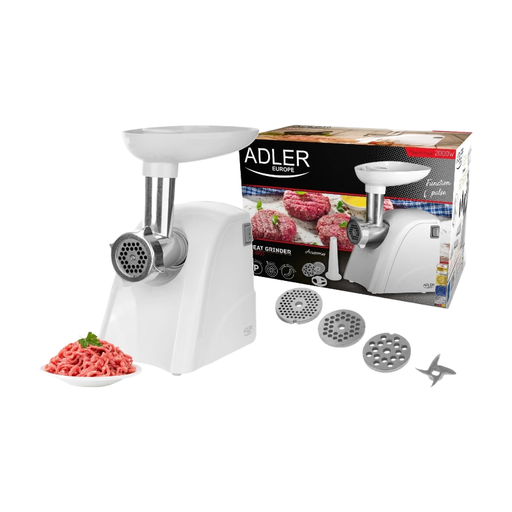
Why it’s suitable: For households that occasionally prepare minced meat or sausages and want a classic appliance with a manageable range of accessories.
The product data distinguishes between 800 watts of rated power and 2,000 watts of maximum power, making it easier to assess the performance figures realistically.
Three grinding plates, a sausage-filling attachment and a pusher; according to the product details, the removable parts can be cleaned with warm water.
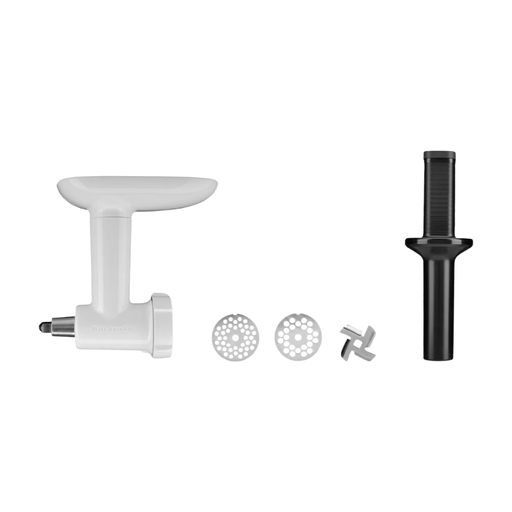
Why it’s suitable: This solution is designed for owners of a compatible KitchenAid stand mixer who want to add meat-processing and puréeing capabilities.
Compatibility is crucial: the set is intended for KitchenAid stand mixers and is therefore not a standalone meat grinder.
Two attachments for grinding and puréeing; according to the product description, suitable for meat, vegetables, hard cheese, sauces and baby food.

Why it’s suitable: This model is designed for regular grinding, sausage making and kibbeh preparation, making it a good fit for households with higher processing volumes.
Rather than focusing solely on wattage, the product clearly specifies three grinding plates, two sausage-filling attachments and a reverse function.
Advertised power of 2,000 watts, three stainless-steel grinding plates measuring 3, 4.5 and 8 mm, plus a kibbeh attachment; according to the product data, the housing is made from brushed aluminium.
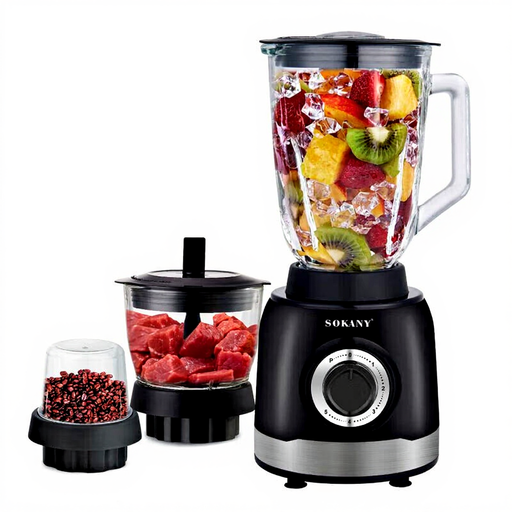
Why it’s suitable: For users who want to blend, juice, crush ice or prepare sauces and soups in addition to making minced meat.
The buying decision here is based not only on motor power, but also on the range of tasks and the available counter space.
1,000-watt motor according to the product description; combines a blender, meat grinder, ice crusher, juicer and mixing function in a single appliance.
Our complete selection includes electric meat grinders, food choppers and multifunctional kitchen appliances with different power ratings and accessory bundles.
For consistent results, cut the meat into smaller pieces and process it while thoroughly chilled. Use the pusher in the feed chute; never use your fingers or kitchen utensils. Unplug the appliance before attaching or removing accessories and before cleaning.
When handling raw meat, thorough cleaning after every use is essential. The auger, blade, grinding plate, feed tray and sausage-filling attachment should be cleaned according to the instructions and dried completely. Wipe the motor housing only with a damp cloth.
Electricity costs depend on rated power, actual operating time and the electricity tariff. Since a meat grinder generally runs for only a few minutes per preparation, operating time is often more relevant than maximum wattage. Appliances with long intervals between operating cycles may take more time when processing larger quantities, even if each individual cycle is efficient.
For occasional small portions, compact appliances may be sufficient. For frequent minced-meat preparation, sausage making or larger quantities, rated power, overheating protection, a reverse function and operating intervals matter more than a high maximum rating alone.
There is no reliable one-size-fits-all estimate for service life. It depends on the materials, processing volume, correct use, cleaning and compliance with recommended breaks. Avoiding bones and unsuitable hard ingredients, while maintaining the cutting components properly, reduces mechanical strain.
Yes, provided the instructions are clear and the accessories are assembled correctly. The sausage casing should be filled evenly without being stretched too tightly. For occasional use, a basic attachment is often sufficient; for regular sausage making, several grinding plates and a reverse function are practical.