
Lieferung heute & morgen

Qualitätsgarantie

Willkommens-Angebote freischalten: KOSTENLOSE Lieferung | Bis zu 80 % RABATT | Kostenlose 30-Tage-JoyPlus-Testphase
App herunterladen
Choosing to buy your own electric meat grinder is a clear commitment to freshness and quality. Whether for homemade minced meat, perfectly seasoned burger patties, or traditional bratwurst – having control over the ingredients is invaluable. But the market is flooded with appliances whose marketing promises often outshine their motor's performance. As your Joybuy Product Recommendation Officer, I'll help you navigate the common pitfalls and find a model that truly fits your needs.
Before we dive into the important features, let's highlight the three most common reasons why many buyers are dissatisfied with their appliance. Knowing these is the first step toward making a better purchasing decision.
To avoid these traps, focus on the following objective parameters. These will determine whether your electric meat grinder becomes a long-term, useful investment or a short-term disappointment.
As mentioned, the nominal power (in watts) is the most reliable indicator of the motor's grinding power.
For all parts that come into direct contact with food, stainless steel is the best choice. Ensure that the following components are made from high-quality stainless steel:
A stainless steel meat grinder often refers to the housing, which is robust, but the quality of the internal components is far more important.
A good mincer becomes a versatile sausage maker with the right accessories. Pay attention to:
Here are some recommendations tailored to different needs that meet the quality criteria mentioned above.

Why it's a great fit: Ideal for those who occasionally want to make small amounts of fresh minced meat for one or two people. The compact design has a small footprint, and operation is incredibly simple. Perfect for getting started in the world of fresh meat processing.
This device avoids the material deception trap with a visible glass bowl and 304 stainless steel blades. There are no hidden plastic parts in the grinding mechanism, as it is an open chopping system.
The 300W nominal power is honestly declared for its intended task (chopping). The simple disassembly and hygienic glass bowl make cleaning straightforward.
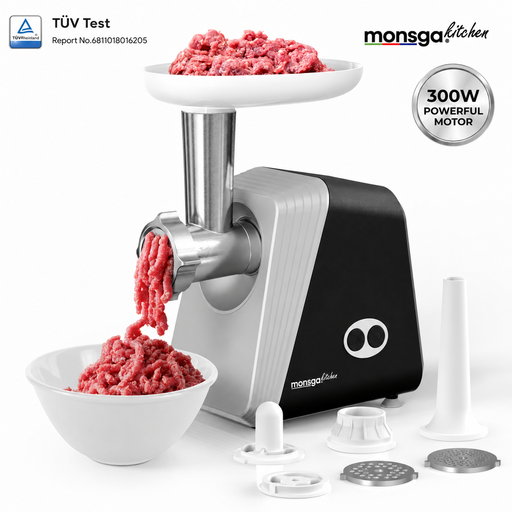
Why it's a great fit: For those who want more than just minced meat. This appliance lets you make your own sausages and kebbe and experiment with different meat textures, thanks to its extensive accessories. The reverse function makes it a reliable partner.
This model avoids the useless accessories trap. It provides a complete, functional set with three grinding plates, a sausage stuffer, and a kebbe attachment. The reverse function prevents frustration from blockages.
The combination of 300W nominal power, a reverse function, and a complete accessory kit for sausages and kebbe offers excellent value for money for creative cooks.
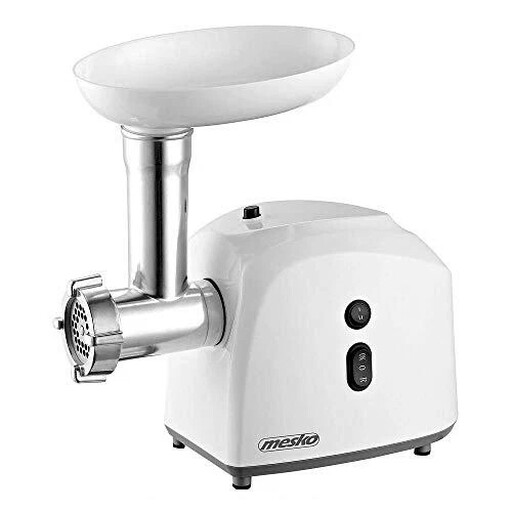
Why it's a great fit: For hunters, families, or anyone who regularly processes large quantities of meat. With a strong nominal power of 600W and a capacity of up to 1 kg per minute, this device is designed for continuous use and demanding tasks.
This model avoids the inflated power rating trap by clearly stating a nominal power of 600W. This power, combined with stainless steel components and a reverse function, ensures reliable, high performance.
The high processing capacity of 1 kg per minute and the robust construction make the device efficient and durable, even when processing tougher cuts of meat or larger quantities.
We have compiled a complete, up-to-date list of products that fully meet these strict selection criteria and safety regulations.
1. How do I properly clean an electric meat grinder? Proper cleaning is crucial for hygiene and longevity. After each use, disassemble all removable parts like the auger, blade, grinding plates, and feeding tray. Wash them by hand in warm, soapy water. Never submerge the motor unit in water; only wipe it with a damp cloth. Dry all metal parts immediately and thoroughly to prevent rust. Some parts may be dishwasher-safe, but always check the manufacturer's instructions.
2. Can I make sausages with any electric meat grinder? No, for that you need a special sausage stuffer attachment (also called a sausage nozzle), which should be included with the grinder. Additionally, sufficient motor power (a nominal power of 400W or more is recommended) is advantageous to press the sausage filling into the casing evenly and without overloading the motor.
3. What is the difference between nominal power and maximum power? The nominal power is the regular, continuous power that the motor can deliver under a normal load. It is the most important value for everyday performance. The maximum power (or locking power) is a theoretical peak value that the motor only reaches for a fraction of a second before it stalls or gets damaged. Always rely on the specified nominal power when making your purchasing decision.