
Lieferung heute & morgen

Qualitätsgarantie

Willkommens-Angebote freischalten: KOSTENLOSE Lieferung | Bis zu 80 % RABATT | Kostenlose 30-Tage-JoyPlus-Testphase
App herunterladen
The decision to buy an electric meat grinder is often the first step toward fresher, more flavourful, and more controlled meals. Whether for homemade ground meat, custom sausage creations, or healthy baby food—having control over the ingredients is an invaluable advantage. However, the market is flooded with appliances whose marketing promises often outshine the motor's performance. Many buyers invest in a device that ends up gathering dust in a cupboard after just a few months because it fails the real-world test.
As your Joybuy Product Recommendation Officer, I'll help you identify the common pitfalls and make an informed decision. We'll focus on the facts that truly matter, ensuring your new kitchen assistant becomes a long-term asset.
Before we dive into the important features, let's highlight the three most common reasons for a bad purchase. Knowing these will help you buy more consciously.
The Wattage Trap: Max Power vs. Continuous Power Many manufacturers advertise impressively high wattage figures like "2000W Max Power" or "Max Block Power." However, this number only describes the power the motor can deliver for a few seconds before it jams or overheats. The crucial metric is the Nominal Power (continuous power), which indicates how powerfully the device operates during normal use. An appliance with low nominal power will quickly reach its limits with tougher cuts of meat or larger quantities.
The Material Misdirection: Shiny Look, Weak Core An appliance advertised with a "stainless steel look" is not necessarily made of high-quality material. Often, only a few exterior panels are metal, while critical components like the auger, the grinder head housing, or the feeding tray are made from plastic or coated cast aluminium. These materials can discolour, are often not dishwasher-safe, and can corrode or chip if handled improperly.
The Accessory Dilemma: More Isn't Always Better An extensive set of attachments, such as for Kebbe, pastries, or as a sausage stuffer, seems tempting. But if the base unit's motor power is insufficient, these extras are useless in practice. In particular, using a meat grinder for sausage making requires a consistently strong motor to press the sausage meat evenly into the casing. A weak motor will quickly lead to frustration.
To avoid a bad purchase, you should check three core aspects before buying an electric meat grinder. These determine its durability, functionality, and safety.
As mentioned, Nominal Power is the most reliable indicator of a meat grinder's performance.
sausage stuffer attachment. A reverse function is also an important feature. It helps to clear jams caused by sinew or meat scraps easily and safely, without having to dismantle the unit.Stainless Steel Meat GrindersThe quality of the materials directly impacts hygiene, stability, and cleaning.
Meat Mincer to Food ProcessorConsider what you primarily want to use the device for.
food processor with meat grinder). This can be a space-saving and powerful solution if you already own a compatible machine.meat mincer with sharp blades can be an alternative, although it won't produce the typical texture of a ground product.Here are some recommendations tailored to different needs and budgets.
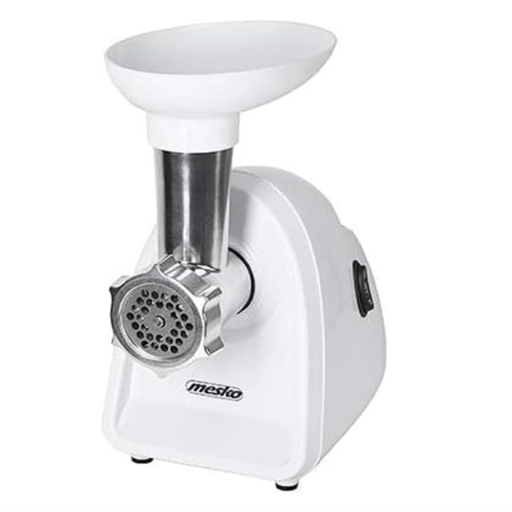
Why This Fits Their Persona: Ideal for home cooks who want to try out grinding and sausage making without immediately investing in an expensive professional-grade machine. It provides the essential equipment to get started.
The device bypasses the "Wattage Trap" by transparently stating a nominal power of 350W alongside its max power. It also features a practical reverse function, which is not a given in this price range.
Complete accessory set with 3 grinding plates (3, 5, 7 mm) and a sausage stuffer attachment. The forward and reverse function makes handling significantly easier.

Why This Fits Their Persona: For users who regularly process large quantities of meat and value durability, high performance, and a robust build. This appliance is designed for demanding, continuous use.
This model avoids the material trap with its solid housing made of brushed aluminium and the included stainless steel grinding plates. Its heavy weight of 9.4 kg indicates a solid motor and durable mechanics.
Very high motor power (2000W) for effortless processing. Comprehensive accessories, including 2 sausage stuffer attachments and a Kebbe attachment for versatile culinary projects.
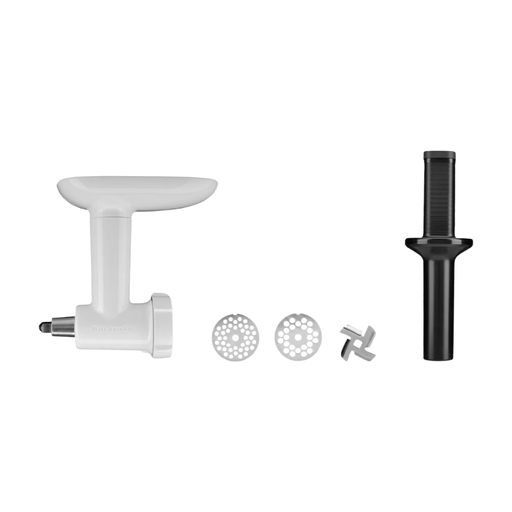
Why This Fits Their Persona: Perfect for owners of a KitchenAid stand mixer who want to expand its functionality without adding another bulky appliance to their kitchen. A space-saving and powerful solution.
This attachment avoids the weak motor trap by leveraging the powerful drive unit of the KitchenAid stand mixer. It is designed as a high-quality accessory that is perfectly matched to the base machine.
2-in-1 functionality: Serves as a meat grinder and purée attachment. The functional parts are made of stainless steel, ensuring durability and hygiene.
We have compiled a complete, up-to-date list of products that fully meet these strict selection criteria and German safety regulations.
1. How do you properly clean an electric meat grinder? Proper cleaning is crucial for hygiene and longevity. Always unplug the appliance from the power source. Disassemble all removable parts such as the feeding tray, auger, blade, grinding plates, and locking ring. Wash these parts by hand in warm, soapy water unless the manufacturer explicitly states they are dishwasher-safe (be careful with aluminium parts, as they can discolour). A little trick: at the end of the grinding process, run a slice of dry bread through the machine to push out any remaining meat scraps from the auger. Dry all parts thoroughly before reassembling.
2. How many watts of nominal power does a good meat grinder need for home use? For most household applications, such as making ground meat from softer cuts, a nominal power of 350 to 500 watts is sufficient. If you plan to regularly make sausage, process tougher meat, or grind larger quantities, a model with a nominal power of 500 watts or more is a better choice, as it offers more power reserves and puts less strain on the motor.
3. Can you also process vegetables or dough with a meat grinder? Yes, many meat grinders are also suitable for mincing firm vegetables like carrots or celery for soups and sauces. Some models also come with a cookie press attachment that can be used to shape biscuit dough. However, a meat grinder is not designed for kneading dough; a food processor with a dough hook is the right choice for that task.