
Lieferung heute & morgen

Qualitätsgarantie

Willkommens-Angebote freischalten: KOSTENLOSE Lieferung | Bis zu 80 % RABATT | Kostenlose 30-Tage-JoyPlus-Testphase
App herunterladen
An electric meat grinder can make preparing mince, burgers, sausages and kebbe much easier. However, a high wattage alone does not automatically mean you are making the right choice. For home cooks, families and meal-prep users, the mincing plates, accessories, materials, cleaning requirements and how often the appliance will actually be used are all important too.
Many product descriptions state a maximum power rating that can only be achieved for a short time. The rated power is more meaningful, as it gives a better indication of the intended continuous operation. An appliance with 800 watts of rated power and a maximum output of 2,000 watts is therefore not directly comparable with a model that only specifies a maximum output.
For occasional mincing, a compact kitchen meat grinder is often sufficient. If you regularly process larger quantities, you should also look for overheating protection, a reverse function and clear information about the recommended operating time.
An electric meat grinder with a sausage filler, kubbe attachment and several mincing plates is versatile. However, every additional part takes up space, must be fitted correctly and needs to be cleaned after use. So check whether the accessories really suit the recipes you want to prepare.
An electric meat grinder with 3 mincing plates, for example, offers different textures for fine mince, burgers or coarser sausage meat. For making sausages, however, a suitable sausage attachment is essential. A kubbe attachment is useful if you want to prepare filled dough specialities or kebbe.
Meat remnants can become trapped in the feed screw, blade, mincing plate and sausage attachment. Look for components that can be dismantled and clear cleaning instructions. The motor housing must not be immersed in water. After every use, all surfaces that come into contact with food should be cleaned thoroughly, rinsed and dried completely.
The mincing plates have a major impact on the consistency. Small holes are suitable for finer mince, while larger holes create a coarser texture. Some appliances specify sizes such as 3, 4,5 and 8 millimetres. Also check whether replacement plates are available and what material the cutting components are made from.
An stainless steel meat grinder can offer benefits in terms of cleaning and corrosion resistance where key components are concerned. However, you should check whether only the blades and mincing plates are made from stainless steel, or whether the housing and hopper are too. 304 stainless steel is often described as rust-resistant; its specific suitability for contact with food should be confirmed in the manufacturer’s information.
A pusher is part of the basic equipment, ensuring that meat is not pushed into the feed chute by hand. A reverse function can help if fibres or sinews become caught in the mechanism. The appliance must be unplugged before changing attachments, dismantling it or cleaning it. Bones, frozen meat and very hard cartilage are generally not suitable for processing in the household appliances described here, unless the instructions state otherwise.
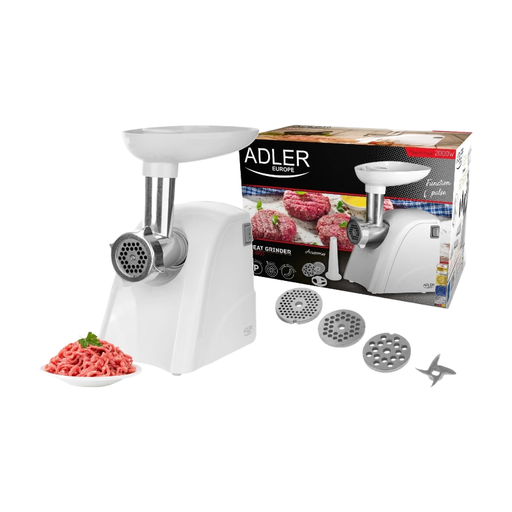
Why this product suits the profile: The specifications state 800 watts of rated power, up to 2,000 watts of maximum power, three mincing plates and a sausage filler. This makes the model suitable for occasional mincing and for making your own sausages for the first time.
Separating rated power from maximum power makes comparisons easier. The supplied pusher supports safe operation.
Three mincing plates, a sausage-filling attachment and a stated weight of 3,90 kg.

Why this product suits the profile: This model combines a 2,000-watt motor, three stainless steel mincing plates, two sausage fillers and a kubbe attachment. The features are aimed at users who want to prepare mince, sausages and kebbe with one appliance.
The three stated plate sizes of 3, 4,5 and 8 mm make it easy to understand the texture you can achieve. A reverse function is provided for blockages.
Three stainless steel mincing plates, two sausage attachments, kubbe accessories and a cable storage compartment.
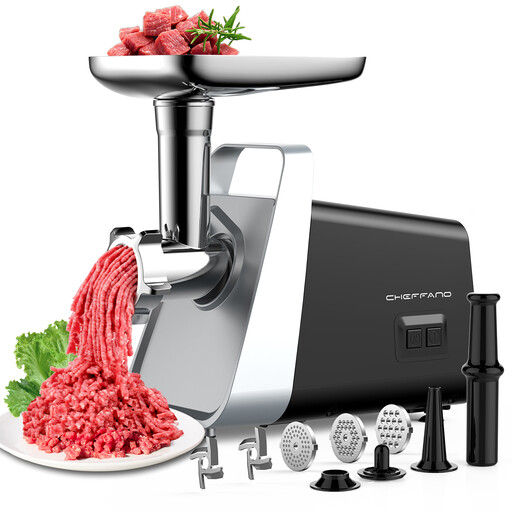
Why this product suits the profile: Three mincing plates, two stainless steel blades, a sausage-filling tube and a kubbe kit make it suitable for a wide range of kitchen tasks and for regularly preparing larger quantities.
The features are clearly matched to different uses: fine, medium and coarse processing, plus separate attachments for sausages and kubbe.
Three texture settings, two blades and accessories for sausages and kubbe.
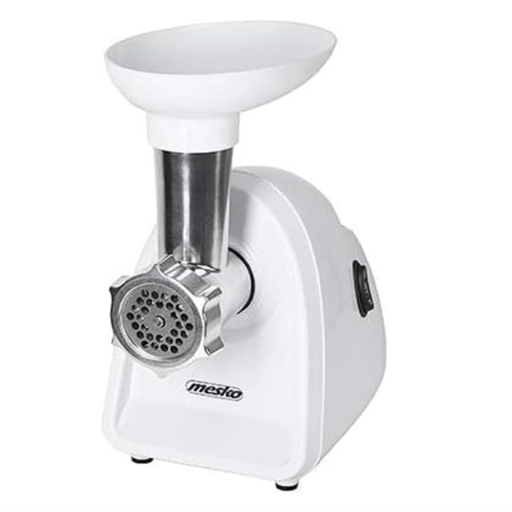
Why this product suits the profile: The appliance is described as having 350 watts of rated power, 1,500 watts of maximum power and a stated processing capacity of 1 kg per minute. Three plates measuring 3, 5 and 7 mm cover a range of recipes.
Rated power and maximum power are listed separately. The reverse function can be used if the mechanism becomes blocked.
Three mincing plates, a sausage filler, pusher, plus forward and reverse functions.
Not every task requires an electric meat grinder. A meat tenderiser with a ridged and a smooth side is suitable for working with and evenly shaping cuts of meat. For portioning small dumplings, a meatball maker or rice dumpling maker may be useful. Models made from 304 stainless steel are described in the product specifications as rust-resistant and easy to clean.
For onions, herbs and soft ingredients, a separate food chopper is often more practical. According to the product specifications, the Haier HCH5B1 011 has 550 watts, four stainless steel blades, a 0.5-litre glass bowl and a pulse function. This equipment does not replace a meat grinder, but it complements it when preparing spices and ingredients.
We have put together a complete, regularly updated list of products that fully meet these strict selection criteria and the safety regulations applicable in the EU.
Maximum power is not the only factor that matters. Compare the rated power, mincing plates, recommended operating time and features. A smaller appliance may be sufficient for occasional portions, while robust components and a reverse function are more relevant for frequent meal preparation.
Yes, provided that a suitable sausage filler or sausage-filling tube is included. The sausage casing must be filled evenly without overloading the appliance. Follow the operating instructions and clean all parts that come into contact with food immediately after use.
Its lifespan depends on how it is used, cleaned and loaded. Do not process frozen meat or bones, use only the pusher and allow the appliance to cool down in accordance with the instructions. Dry, thoroughly cleaned attachments and proper storage can help reduce wear.