
Lieferung heute & morgen

Qualitätsgarantie

Willkommens-Angebote freischalten: KOSTENLOSE Lieferung | Bis zu 80 % RABATT | Kostenlose 30-Tage-JoyPlus-Testphase
App herunterladen
An electric milk frother should make it easy to complement cappuccinos, latte macchiatos and milky coffee. In practice, however, unclear product specifications, unsuitable materials and unrealistic expectations can quickly lead to a disappointing purchase. Compact devices are particularly often confused with automatic milk frothers: an electric handheld milk frother usually creates the foam directly in its own container, but does not necessarily heat the milk itself.
The following criteria will help you assess marketing claims objectively and choose a suitable device for your household.
The term 3-in-1 milk frother can refer to different functions depending on the manufacturer. It may mean different speed settings, attachments, or suitability for hot and cold foam. Before buying, you should therefore check:
A product name is no substitute for a technical description. For hot drinks, it is particularly important to know whether the device heats the milk itself or merely froths milk that has already been warmed.
With an electric handheld milk frother, the result depends on more than just power consumption. The shape of the whisk, rotational speed, immersion depth and amount of milk used are also important. A powerful stick blender may be suitable for soups or sauces, but it is not automatically a specialist milk-frothing device.
A compact device is often sufficient for the occasional cappuccino. If you regularly prepare larger quantities, however, you should look for a suitable container, sufficient operating time and easy cleaning.
The whisk comes into direct contact with milk and, where applicable, acidic drink ingredients. Stainless steel is therefore a practical choice, provided the material is clearly specified. Buyers should also check whether the handle is splash-resistant and which parts may be cleaned with water.
The motor housing of an electric milk frother must generally not be fully immersed. Removable attachments make cleaning easier, but they are no substitute for checking the instruction manual.
An electric handheld milk frother takes up very little space and can be used directly in a glass, cup or small container. This suits households that want to prepare individual portions for cappuccino or latte macchiato.
A countertop model, on the other hand, often works with its own container and may also heat the milk, depending on the design. It requires more worktop space and is a good choice if you regularly prepare several portions. The product description should clearly distinguish between frothing, heating and blending.
Cold milk or a plant-based alternative is used to make cold foam. For hot foam, the milk may first need to be heated, depending on the device. Temperatures above around 60 to 65 °C can affect the foam and flavour, so the manufacturer’s specific guidance is crucial.
A “milk frother for hot and cold foam” does not automatically mean that it has an integrated heating function. Check whether the product mentions heating programmes, temperature specifications or simply suitability for milk at different temperatures.
Milk residue dries quickly. The following features are therefore useful:
Stick blenders and food processors often have different operating limits from dedicated coffee frothers. Accessories such as whisks, blending beakers or choppers expand the range of uses, but make cleaning and storage more time-consuming.
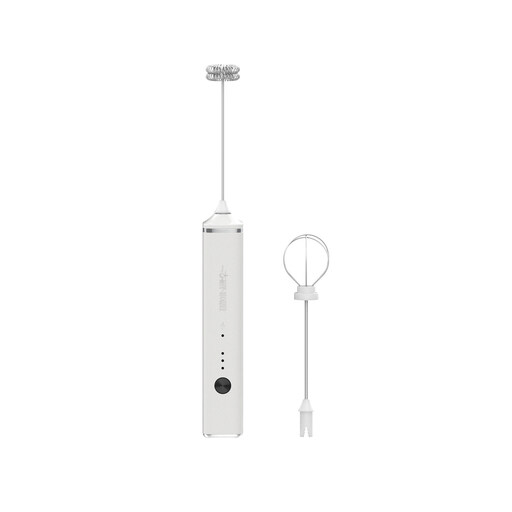
Why this product suits the profile: This compact handheld device is designed to prepare hot or cold foam and is ideal for individual portions in everyday use.
The product name explicitly states that it offers 3-in-1 functionality as well as hot and cold foam. Before use, check whether the milk needs to be heated separately.
Handheld design, stainless-steel whisk, and versions in white and black.
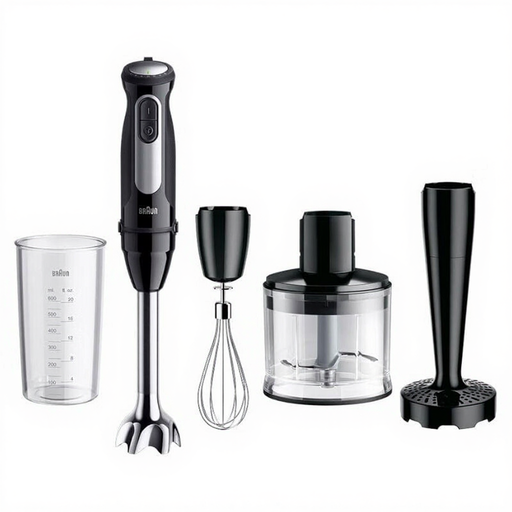
Why this product suits the profile: This device is suitable for users who want to froth milk as well as blend and handle other kitchen tasks with a stick blender.
The specification lists 25 speed settings plus Turbo and a removable accessory system. This means control does not depend solely on high wattage.
1,000-W motor, stainless-steel whisk, blending container and dishwasher-safe contact parts according to the product specifications.

Why this product suits the profile: If you want to prepare soups, sauces, smoothies or eggs as well as froth milk for coffee, this set provides several accessories in one package.
The stated maximum operating time of one minute followed by a break makes the usage limitation transparent and helps prevent overheating during continuous operation.
1,000 W rated power, maximum 1,200 W, continuously variable speed control, 700-ml beaker and stainless-steel blending foot according to the product description.
We have put together a complete, regularly updated list of products that fully meet these strict selection criteria and the safety regulations applicable in the EU.
For a consistent foam, the container should be large enough, as the volume increases during frothing. Hold the whisk just below the surface and move it slowly. Immersing it too deeply is more likely to create large air bubbles, while positioning it directly at the surface can cause splashes.
After use, rinse the stainless-steel whisk immediately with warm water. Keep the motor housing dry. For devices with removable parts, follow only the relevant manufacturer’s instructions regarding dishwasher cleaning.
Its lifespan depends on how often it is used, cleaning, storage and compliance with the maximum operating time. Milk residue, moisture in the motor housing and continuous operation can affect its performance. A robust-looking stainless-steel whisk is also no substitute for a secure connection to the motor and proper care.
Cow’s milk and many plant-based alternatives can be frothed, but they differ in their fat, protein and stabiliser content. The result can therefore vary depending on the brand and variety. Milk should not be overheated for hot drinks; the device’s instruction manual and the information on the packaging are the deciding factors.
For a short frothing process, electricity consumption is generally low. The ongoing cost depends on the power consumption in watts, actual operating time and electricity tariff. With a handheld device, the greater effort often comes from cleaning and, where necessary, heating the milk separately.