
Lieferung heute & morgen

Qualitätsgarantie

Willkommens-Angebote freischalten: KOSTENLOSE Lieferung | Bis zu 80 % RABATT | Kostenlose 30-Tage-JoyPlus-Testphase
App herunterladen
An electric mini cooker promises quick, uncomplicated meals in the smallest of spaces. It's ideal for dorm students, single-person households, or for lunch breaks at the office. But the market is flooded with devices whose real-world performance often falls short of their marketing promises. Before you make a decision, it's crucial to know the common pitfalls that can quickly turn a supposed kitchen helper into an unused gadget.
As your Joybuy Product Recommendation Officer, I'll help you distinguish the essential features from the superfluous ones. This guide focuses on the three most common problems with budget-friendly models and shows you what to look for to make an informed choice.
Many buyers regret their decision within just a few weeks. This is often due to the same three weaknesses that are overlooked at the time of purchase.
To avoid these problems, you should focus on three core technical parameters. These determine the longevity, safety, and versatility of your appliance.
The power, measured in watts (W), determines how quickly your portable electric cooker brings water to a boil. Models with 400W are more economical but take longer. Appliances with 600W or more are significantly faster, which is a major advantage during a short lunch break.
Even more important, however, are adjustable heat settings. Simple models offer only a single setting, which is often too powerful for delicate foods. A small multi-cooker with two settings (e.g., 300W for warming/simmering and 600W for boiling) offers much more flexibility. This allows you to prepare not only instant noodles but also stews, porridge, or a small electric hot pot for one person.
The choice of interior material has a direct impact on the cooking experience and cleanup.
For most users who value convenience and quick cleanup, a high-quality non-stick coating is the more practical choice.
For use in small apartments, dorms, or while travelling, safety certifications and features are non-negotiable. Two features are critical here:
A well-insulated handle that stays cool during cooking is also an important feature for a safe travel cooker or cooker for students.
Based on the criteria above, we have identified some products that are well-suited for specific use cases.

Why This Fits Their Persona: With a 1.6-litre capacity and two power settings (up to 600W), this model is a flexible all-rounder. It's suitable as an electric noodle cooker for a quick meal, but also for simmering or for a small hot pot. The capacity is sufficient for one large portion or two smaller ones, making it an ideal cooker for students or a single-person cooker with extra room.
The device features boil-dry protection and an automatic shut-off, which counteracts safety risks. The food-grade non-stick coating prevents food from sticking and makes cleanup much easier.
Two power levels for versatile cooking; 1.6-litre capacity for full-sized meals.
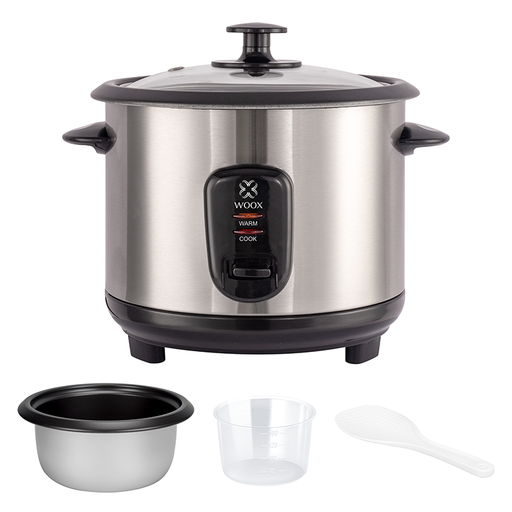
Why This Fits Their Persona: With just a 1-litre capacity and 400W of power, this model is extremely compact and energy-efficient. It's the ideal solution for a single person who wants to quickly prepare soup or noodles at the office without taking up much desk space. As a travel cooker, it fits easily into a backpack.
The non-stick coating on the inside prevents food from sticking and makes cleaning straightforward. The 1-litre capacity is realistically sized for a single portion, avoiding the disappointment of exaggerated claims.
Very compact design and low weight; lower energy consumption at 400W.
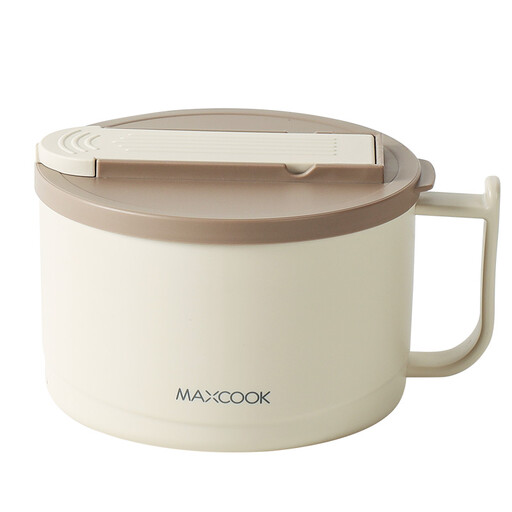
Why This Fits Their Persona: For the true ramen lover, preparation is only half the battle. This large 1.5-litre bowl is not a cooking appliance but the perfect companion to a ramen cooker. It offers enough space for noodles, broth, and all the toppings without anything spilling over. The included cutlery completes the set.
This product avoids the trap of having to eat a lovingly prepared meal from an unsuitable or undersized container. It elevates the entire dining experience and ensures the effort of preparation is properly appreciated.
Generous 1.5-litre capacity for complete ramen dishes; includes matching cutlery.
We've compiled a full, up-to-date list of products that meet these strict selection criteria and current safety regulations.
Power consumption depends on the wattage and duration of use. A 600W (0.6 kW) model running for 10 minutes on the highest setting consumes 0.1 kilowatt-hours (kWh). With an average electricity price of about 35 cents per kWh, the cost for this cooking session is around 3.5 cents. Operation is therefore very cost-effective.
Yes, models with adjustable heat settings are particularly versatile. They can be used as a small multi-cooker for preparing soups, stews, oatmeal, boiled eggs, or even for a small fondue or shabu-shabu (hot pot). The non-stick coating makes it easy to prepare a wide variety of foods.
The most important rule is: Never immerse the entire appliance, especially the base with the power connection, in water. Always unplug the cooker before cleaning. The exterior can be wiped with a damp cloth. The inner pot is easiest to clean after it has cooled down, using a soft sponge, warm water, and a little dish soap. Thanks to the non-stick coating, food residue should come off easily.