
Lieferung heute & morgen

Qualitätsgarantie

Willkommens-Angebote freischalten: KOSTENLOSE Lieferung | Bis zu 80 % RABATT | Kostenlose 30-Tage-JoyPlus-Testphase
App herunterladen
An electric mobility vehicle can make shopping, doctor’s appointments, commuting or short city journeys much easier. The choice ranges from a compact e-scooter to a three- or four-wheeled electric mobility vehicle and an electric motorcycle. However, the differences in registration, driving licence, range and seating comfort are significant.
If you only focus on motor power or a claimed maximum range, you often overlook important buying criteria. Three typical pitfalls are particularly relevant:
For use on public roads, the legal classification is crucial. With a road-legal electric vehicle, the product documentation should clearly state which vehicle category it belongs to. Examples from our selection include:
An EU type-approval according to Regulation (EU) No 168/2013 is not the same as a general CE marking. Before buying, you should also ensure that a suitable CoC (Certificate of Conformity) is provided. The VIN, type, variant, version, motor, battery and maximum speed on the delivered vehicle must match the documents.
The wattage alone does not describe the entire riding behaviour. For short journeys, acceleration, hill-climbing ability, braking system, vehicle weight and maximum load are also relevant.
A vehicle with a top speed of 20 or 25 km/h is not automatically exempt from a driving licence. For the L1e, L2e and L6e vehicles described here, a driving licence of class AM or a licence with AM entitlement, such as class B, is generally required in Germany. Before your first ride, you must also have third-party liability insurance and, where required, an insurance number plate.
For an open vehicle with a speed of more than 20 km/h, you should generally plan to wear a suitable protective helmet. Exceptions depend on the specifically approved equipment, such as mandatory seat belts.
A removable lithium battery is practical if there is no socket at your parking spot. In many cases, it can be charged separately, but it must be stored appropriately for the intended charging setup and environment. A permanently installed battery, on the other hand, can be protected against theft, but requires a suitable charging location.
The stated range is a guideline. For a realistic assessment, you should consider at least the following factors:
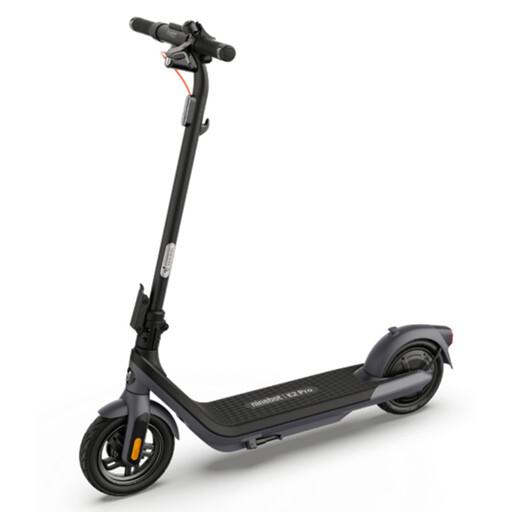
Why this product fits the profile: At 18.8 kg, this e-scooter is relatively portable and designed for short urban journeys. According to the product details, it reaches up to 20 km/h and offers a range of up to 35 km.
The product description states speed, range, brakes, lighting and StVZO compliance. The maximum load of 100 kg should be considered before purchase.
10-inch hollow tyres, traction control, plus front electronic and rear drum brake.
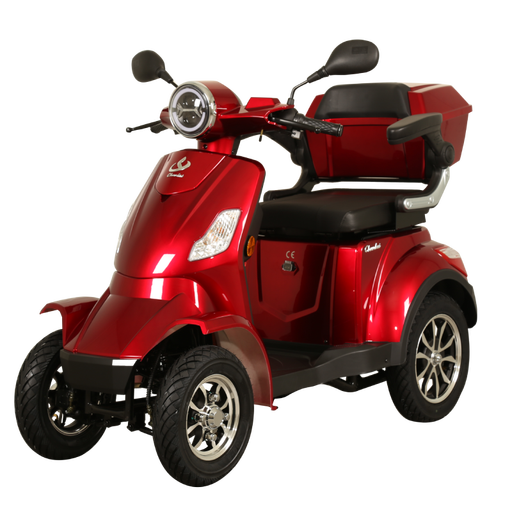
Why this product fits the profile: This four-wheeled electric vehicle is aimed at adults and seniors who prefer an upright seating position and a four-wheeled chassis for short everyday journeys.
The stated L6e-A EU type-approval, the CoC and the specific battery variant should be checked before the first road journey. This model is not exempt from a driving licence.
1,000 W motor, 60 V 20 Ah lithium battery, removable battery, reverse function and four wheels.
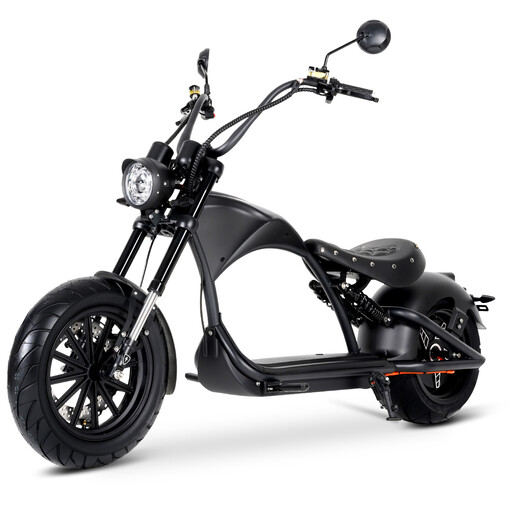
Why this product fits the profile: For commuters with longer daily distances, the supplier states up to 45 km/h and a range of up to 80 km. The vehicle is described as L1e-B.
The advertised range should not be equated with a guaranteed everyday distance. For road use, a CoC, third-party liability insurance, insurance number plate and a suitable driving licence are required.
2,000 W motor, 60 V 30 Ah battery, hydraulic disc brakes and, according to the supplier, a charging time of around four to six hours.
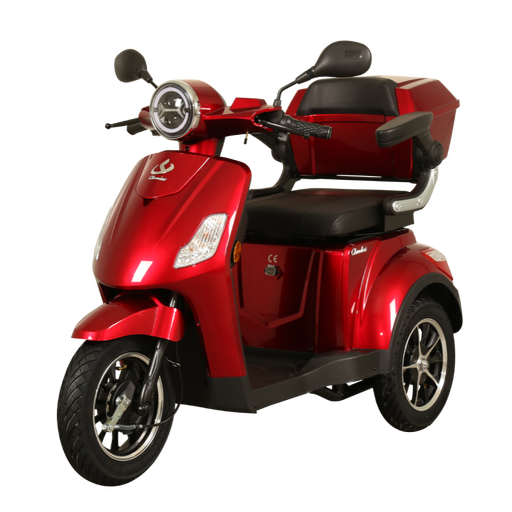
Why this product fits the profile: This electric three-wheeled scooter combines a seated position with a compact turning circle and is classified as an L2e-P vehicle for one person, according to the details.
The three-wheeled design does not replace checking the CoC, brakes, lighting and insurance. For the stated speed of 25 km/h, you should plan to wear a protective helmet.
1,000 W motor, 25 km/h top speed, three riding modes, reverse function and digital display.
We have put together a complete, regularly updated list of products that fully meet these strict selection criteria and the safety regulations in force in the EU.
That depends on the vehicle class. A vehicle classified as L1e, L2e or L6e is not automatically exempt from a driving licence. For the vehicles mentioned, at least a driving licence of class AM or an equivalent licence is generally required. The details in the individual CoC and the current German legal situation are decisive.
It is not possible to give a reliable general lifespan. It depends on factors such as charging cycles, temperature, state of charge, storage and usage. A lithium battery should be charged with the correct charger, protected from extreme heat and frost, and stored according to the manufacturer's instructions during longer periods of inactivity. Check before buying whether the battery is removable and available as a spare part.
Ongoing costs include electricity, maintenance, possible spare parts, tyres and brake components, as well as the legally required motor vehicle third-party liability insurance. For many L1e, L2e and L6e vehicles, an insurance number plate is also required. At higher speeds, a helmet, parking space and possibly additional maintenance services can also affect the total cost.