
Lieferung heute & morgen

Qualitätsgarantie

Willkommens-Angebote freischalten: KOSTENLOSE Lieferung | Bis zu 80 % RABATT | Kostenlose 30-Tage-JoyPlus-Testphase
App herunterladen
Anyone looking to buy an electric motorcycle will find models with widely varying speeds, vehicle classes and legal requirements. An electric two-wheeler can make your daily commute easier, be suitable for longer journeys around town or be intended exclusively for use on private land. The key factor is not just the wattage, but the combination of vehicle class, COC, range, battery and intended use.
As a Joybuy Product Recommendation Officer, I filter through the most important information and show you which points to check before buying.
A 3000W electric motorcycle advertised for sale is not automatically approved for use on public roads. The decisive factors are the approved vehicle class, design, top speed and the documents supplied. An off-road electric motorcycle with 3500W may be more powerful, but it still cannot be ridden on roads, cycle paths or pavements.
Figures such as “up to 80 km” or “up to 115 km” are determined under specific conditions. Rider weight, speed, gradients, outside temperature, tyre pressure and riding style all affect the actual range. Anyone travelling 35 km each way every day should plan for an electric motorcycle with a long range or arrange access to charging at their destination.
A COC electric motorcycle requires the correct vehicle documents for the next steps. After delivery, check that the VIN on the vehicle matches the VIN on the COC and invoice. The vehicle should also remain in its approved configuration. Changes to the motor, controller, lighting, brakes, tyres or top speed can affect its road approval.
An L1e-B electric moped is designed for lower speeds. Depending on the model, a driving licence, insurance number plate, helmet and other requirements may apply. An L3e electric motorcycle, on the other hand, belongs to the motorcycle class. For example, the LUYUAN MS90 is listed as category L3e-A1; according to the product data, the model reaches speeds of up to 80 km/h and requires, among other things, registration, third-party motor insurance and the appropriate driving licence for use in Germany.
An electric moped or an e-scooter with a seat should therefore not automatically be treated like a bicycle or pedelec. The vehicle documents determine which rules apply.
Do not compare voltage and ampere-hours in isolation. A 72 V battery with 50 Ah has a different energy capacity from a 48 V battery with 23.4 Ah. Other practical considerations include:
A removable battery makes charging at home or in the office easier. In cold temperatures and when frequently riding at high speeds, you should allow for a reserve of range.
If you regularly want to carry a second person, check the number of seats listed in the COC and the permitted total load. Hydraulic disc brakes, LED lighting, rear-view mirrors, indicators and robust suspension are important features for everyday road use. For an electric motorcycle for commuters, charging time, storage space, weather protection and the ability to store the battery securely are also important.
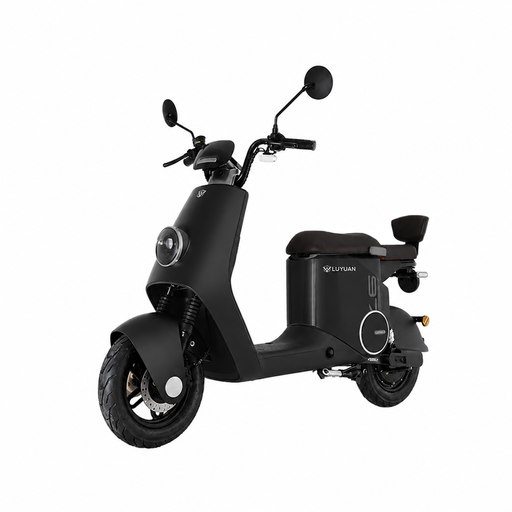
Why this product suits this profile: This L1e-B electric moped is designed for short urban journeys and offers 600W, speeds of up to 35 km/h, a range of up to 52 km and two designated seats.
The stated L1e-B class and supplied COC make its classification easier to understand than advertising based solely on wattage. The range should still be treated as a maximum figure.
Top speed of 35 km/h, stated range of 52 km and two seats according to the COC.

Why this product suits this profile: This road-approved L3e model combines a 3000W motor with a removable lithium battery and a stated range of up to 115 km.
The COC, L3e classification and information about the brakes, lighting and seats are criteria that can be checked before buying.
Hydraulic disc brakes, LED lighting, two seats and a removable battery according to the product information.
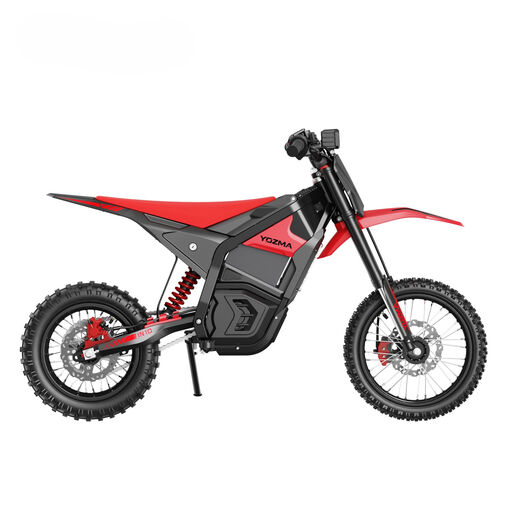
Why this product suits this profile: This electric dirt bike is aimed at young people aged 16 and over and adults for use on private land or designated off-road tracks, not on public roads.
The product information explicitly states “Offroad only” and confirms that it is not road-approved. This means it is not suitable for commuters, but exclusively for appropriate types of terrain.
48V 23.4 Ah battery, three riding modes, plus hydraulic brakes and suspension according to the manufacturer’s information.
We have put together a complete, regularly updated list of products that fully meet these strict selection criteria and the safety regulations applicable in the EU.
Before your first journey on public roads, check the requirements set by the relevant authority and insurer. Depending on the class and model, you may need:
Buying a road-approved electric motorcycle does not therefore mean that you can ride it immediately without taking any further steps. For an L3e model such as the LUYUAN MS90, the product information states that registration, third-party insurance and the appropriate motorcycle licence are required, among other things. Off-road models such as the VIPCOO H3, on the other hand, may not be used in public traffic.
The cost depends on the battery capacity, electricity tariff and charging losses. A rough calculation is: multiply the battery energy in kilowatt-hours by the price per kilowatt-hour. For a realistic estimate, you should also take charging losses and actual consumption into account.
Service life depends on charging cycles, temperature, storage, state of charge and usage. Use the supplied charger, avoid extreme temperatures and follow the information in the instruction manual. With removable batteries, you should also check how to store them safely outside the vehicle.
That depends on the vehicle class and your individual driving entitlement. An L1e-B model may have different requirements from an L3e-A1 electric motorcycle. Before buying, check the COC, top speed and the driving licence category applicable in Germany together.