
Lieferung heute & morgen

Qualitätsgarantie

Willkommens-Angebote freischalten: KOSTENLOSE Lieferung | Bis zu 80 % RABATT | Kostenlose 30-Tage-JoyPlus-Testphase
App herunterladen
An electric multi-cooker can prepare pasta, rice, soup, vegetables or hot pot in a single appliance. It is a practical choice for students, single people, couples, those living in small flats and campers. However, compact cookers vary considerably in capacity, heating power, controls and ease of cleaning.
The product name alone tells you very little. An appliance marketed as a “multi-cooker” may have just two power settings, while another may also offer steaming, keep-warm or timed cooking. These points should be checked before you buy.
The stated capacity does not always correspond to the amount that can be used sensibly during cooking. When preparing soup, pasta or hot pot, the pan should not be filled to the brim. This reduces the usable volume.
For one person, 1.0 to 1.6 litres is often enough. Two people will usually benefit from 1.6 to 2.4 litres. Families or shared meals generally require around 5 to 6 litres. A clearly visible maximum-fill mark is also important. Some appliances recommend filling the pan to no more than around two-thirds of its capacity to prevent liquids from boiling over.
High power does not automatically mean greater versatility. An electric pasta cooker with 300 watts may be sufficient for slow cooking, but it will take longer to bring liquids to the boil. An appliance with 1,000 or 1,500 watts heats liquids more quickly, but without suitable controls it may be impractical for delicate foods.
You should therefore look for at least two power settings or continuously variable temperature control. Lower settings are suitable for keeping food warm and simmering, while higher settings are useful for water, pasta or hot pot. With an electric hot plate, the diameter of the heating surface is also important, as it should match the frying pan or saucepan you use.
A non-stick cooking pot can generally be wiped clean more easily than an uncoated inner container. However, the coating must not be scratched with metal utensils. Silicone or wooden utensils are the better choice, provided this is permitted in the instruction manual.
Other practical features include:
The electrical base must not be immersed in water. Before cleaning or moving the appliance, unplug it and allow it to cool down completely. Hot surfaces and steam can cause burns.
A 1.0-litre mini cooking pot saves space and is suitable for a single portion. Models with capacities of 1.6 to 2.4 litres offer more flexibility for couples, students or preparing soup for the following day. A multi-cooker with a lid and steaming insert can prepare several components one after another or partly at the same time.
For family meals, an electric hot pot with a capacity of 5 or 6 litres is more suitable. However, these appliances require considerably more worktop space and should be used on a stable, heat-resistant surface.
A simple rotary control with two settings is sufficient for pasta, eggs, porridge and simple soups. If you regularly prepare rice, stews or steamed food, preset programmes, a timer and a keep-warm function can be useful.
A rice cooker specialises in preparing rice, while a soup maker often also offers automatic cooking programmes. An electric multi-cooker combines several functions, but does not automatically replace every other kitchen appliance. Check which features are actually included with the product.
A portable cooker is suitable for small kitchens, halls of residence, offices or camping equipment. For use away from home, check whether a suitable 220- to 240-volt power supply is available. A camping cooker of this type is not the same as a gas-powered outdoor cooker and may only be used in accordance with the manufacturer’s instructions.
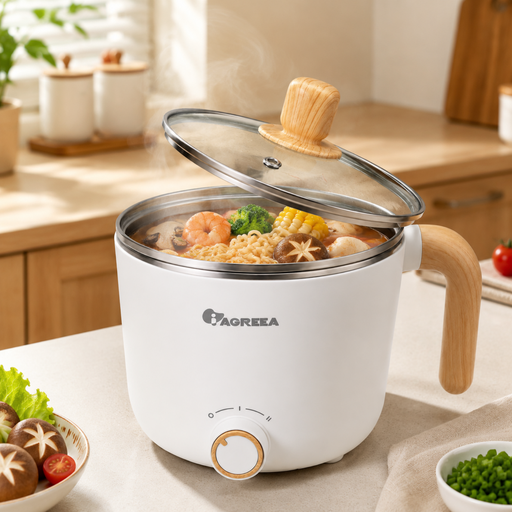
Why this product suits this profile: The 1.0-litre model is designed for one or two people and takes up very little space. It is suitable for pasta, rice, soup, vegetables and small hot-pot meals.
The two power settings of 300 and 600 watts offer more control than a basic on/off cooker. According to the product description, the stainless-steel inner container has a smooth finish and is designed for easy cleaning.
Compact 1.0-litre size and stainless-steel inner pot; low and high power settings for different cooking tasks.
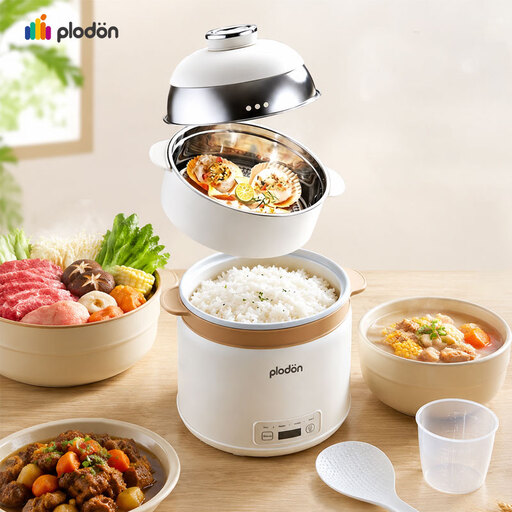
Why this product suits this profile: The model combines one-touch programmes for rice, soup, porridge and steaming with a 2.3-litre pot for one to three people.
The choice of programmes goes beyond simply boiling food. Automatic shut-off, overheating protection and a recommended maximum fill level of two-thirds help ensure controlled operation.
2.3-litre capacity and separate steaming insert; keep-warm function and preset cooking programmes.

Why this product suits this profile: The 5-litre electric hot pot is designed for families or users who want to prepare larger quantities for several people.
The large capacity means you do not have to cook for several people in a mini cooking pot. According to the product specifications, it offers continuously variable power selection and dry-boil protection.
5-litre capacity and 1,500 watts; can be used as a hot pot, braiser and slow cooker with a glass lid.
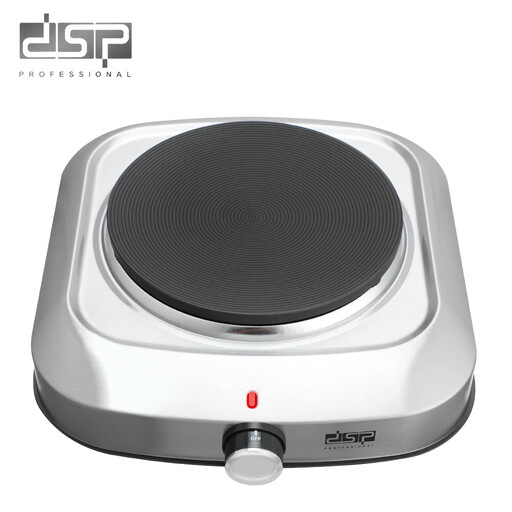
Why this product suits this profile: This electric hot plate provides an additional cooking area and is suitable for small kitchens, offices, halls of residence or appropriate campsites.
The continuously variable temperature control avoids limiting you to a single heat setting. An indicator light, stainless-steel housing and 185-millimetre heating surface make the specification clear.
1,500 watts and continuously adjustable thermostat; compact design for an additional cooking surface.
We have put together a complete, regularly updated list of products that fully meet these strict selection criteria and the safety regulations applicable in the EU.
Costs depend on power, usage time and your electricity tariff. An appliance rated at 600 watts theoretically uses 0.6 kilowatt-hours during one hour of operation. A 1,500-watt appliance requires 1.5 kilowatt-hours over the same period. In actual use, however, the heating element does not always operate continuously at full power.
For short tasks such as cooking pasta or heating water, higher power can reduce the operating time. Lower power settings are usually sufficient for slow cookers, soup makers and keep-warm functions. When comparing appliances, therefore, consider not only the wattage but also how you plan to use them.
Many models can cook rice, but they do not necessarily offer the same automatic programme control as a dedicated rice cooker. Check whether the appliance has a rice programme, automatic shut-off or keep-warm function. The rice-to-water ratio should be selected according to the relevant instruction manual.
First unplug the appliance and wait until it has cooled down completely. A removable inner pot can be cleaned by hand in accordance with the instructions. The electrical base, cable and plug must not be immersed in water. With non-stick coatings, do not use abrasive sponges or metal utensils.
It is not possible to give a reliable fixed lifespan. This depends on how often the appliance is used, its coating, cleaning, storage and whether it is operated correctly. Look out for damage, loose cables, unusual smells or peeling coating. If you notice any of these signs, stop using the appliance and consult the manufacturer’s instructions.