
Lieferung heute & morgen

Qualitätsgarantie

Willkommens-Angebote freischalten: KOSTENLOSE Lieferung | Bis zu 80 % RABATT | Kostenlose 30-Tage-JoyPlus-Testphase
App herunterladen
An electric multi-cooker can replace several individual appliances in a small flat, student accommodation or office. Depending on its design, it can be used as an electric cooking pot, rice cooker, steamer, pasta cooker, soup maker or electric hot pot. However, appliances vary considerably in capacity, heating power, controls and cleaning requirements.
If you focus only on a high wattage or as many programmes as possible, you can easily overlook important details. Three typical buying pitfalls are particularly relevant:
The stated capacity does not always indicate the actual usable filling volume. Liquid foods often should not be filled to the rim, as steam and foam are produced during cooking. As a practical guide:
The amount of worktop space required is also important. A compact appliance fits into small kitchens, but it must still be operated at a safe distance from walls, cupboards and flammable materials.
The wattage indicates how much electrical power the appliance consumes. However, it does not automatically guarantee a particular cooking speed. A mini multi-cooker with 300 or 600 watts is designed for smaller quantities. Models with 860 to 1,000 watts generally heat larger quantities of liquid more quickly. Appliances with 1,500 watts may be suitable for a large electric hot pot, but require an appropriate socket and should not be operated through an unsuitable extension lead or multi-socket adaptor.
Check whether the appliance offers only two settings or a finer temperature selection:
A slow cooker typically operates at a low temperature and is more suitable for long cooking times. An electric cooking pot with two power settings is more flexible for quick meals, but does not automatically replace a programmable rice cooker.
When using a non-stick coating, only wooden, silicone or plastic utensils should be used. Metal can damage the surface. If you want particularly straightforward cleaning, look for the following features:
A stainless-steel inner pot is resistant to scratches, but starchy foods may stick to it more readily. A coated interior makes it easier to remove rice, pasta or porridge, but requires gentle cleaning. Never immerse the heating base, plug or power cable in water.
The following appliances have been categorised according to capacity, features and intended use. The information comes from the respective product descriptions and should be checked against the instruction manual and the technical specifications in the listing before purchase.
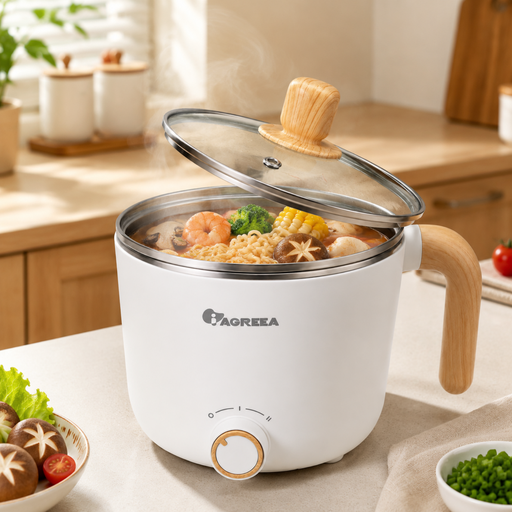
Why this product suits the profile: According to the product details, the 1.0-litre pot is designed for 1–2 people and requires comparatively little space and power with its 300/600 watts. This makes it suitable for individuals, students and small kitchens.
The small capacity reduces the risk of buying unnecessarily large quantities for a small household. Two power settings make the intended use clear.
1.0 litre, 300/600 watts, stainless-steel inner pot, plus functions for pasta, rice, soup and vegetables.
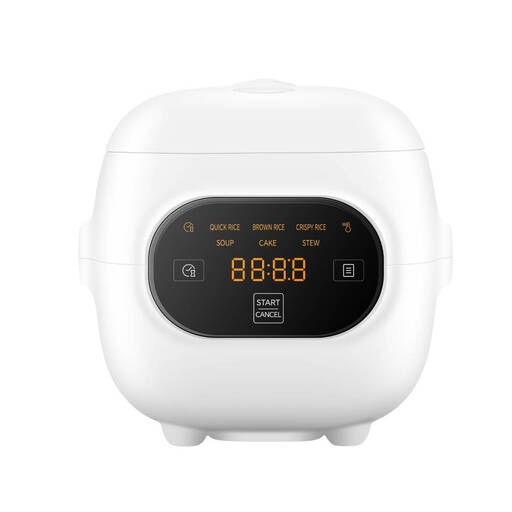
Why this product suits the profile: The manufacturer lists six one-touch programmes, a 24-hour preset timer, keep-warm function, LED display and removable lid. This makes the appliance well suited to planned rice dishes and everyday meals.
The number of programmes is clearly stated rather than being advertised vaguely as multifunctional. The removable lid makes cleaning easier.
1.2 litres, six programmes, LED display, timer, keep-warm function and, according to the supplier, a dishwasher-safe inner pot.
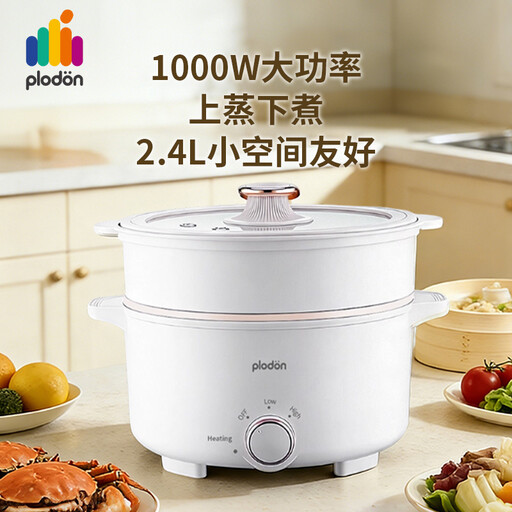
Why this product suits the profile: According to the product description, the appliance offers a 2.4-litre capacity, 1,000 watts, two heat settings and a removable steaming rack. It is designed for hot pot, pasta, soups and simultaneous steaming.
The separate steaming level expands its versatility without requiring an additional steamer. Two power settings allow for both quick cooking and gentle simmering.
2.4 litres, 1,000 watts, non-stick interior, removable steaming rack and compact dimensions of approximately 27 × 22 cm.
We have put together a complete, regularly updated list of products that fully meet these strict selection criteria and the safety regulations applicable in the EU.
The type of appliance should suit your meal plan. A rice cooker is practical if rice, porridge and keeping food warm are your priorities. A multifunctional cooking pot is more flexible for soups, pasta, eggs and hot pot. A steamer is particularly suitable for vegetables, fish or side dishes, while an air fryer uses hot circulating air and is better suited to potato products, vegetables or crispy foods.
If you mainly prepare liquid dishes and one-pot meals, you do not necessarily need an air fryer. However, if you want two different cooking methods, two compact appliances may be more practical than a compromise model.
Before buying, make sure that the voltage and frequency are compatible with the German power supply. The appliances mentioned specify 220–240 volts and 50–60 hertz in some cases. Also look for overheat or boil-dry protection, a stable base, heat-resistant handles and controlled steam release.
Electricity costs depend on power and operating time. The simple calculation is:
Power in kilowatts × operating time in hours × electricity price per kilowatt-hour
An appliance rated at 600 watts that runs for 30 minutes theoretically consumes 0.3 kilowatt-hours. In practice, the heating element switches off intermittently depending on the temperature control system. For a realistic estimate, therefore, consider how often you use the appliance, cooking times and the keep-warm function.
For one person or a couple, 1.0 to 1.6 litres is often sufficient. If you regularly batch-cook or host guests, you can choose a model with a capacity of 2.0 to 2.6 litres. Regardless of the stated capacity, the maximum fill line should always be observed.
Its lifespan depends on use, the coating, cleaning and storage. Do not use metal utensils, avoid operating the appliance without liquid and allow it to cool down completely before cleaning. A damaged or peeling coating is a reason to stop using the inner pot.
Consumption depends on wattage and operating time. Small 300- to 600-watt appliances can be economical when used for short cooking times, while more powerful models heat larger quantities more quickly. Do not compare wattage alone: also consider the required cooking time and how often the keep-warm function is used.