
Lieferung heute & morgen

Qualitätsgarantie

Willkommens-Angebote freischalten: KOSTENLOSE Lieferung | Bis zu 80 % RABATT | Kostenlose 30-Tage-JoyPlus-Testphase
App herunterladen
Electric kitchen appliances make it easier to prepare rice, pasta, soups, stews and steamed dishes every day. The range includes everything from a compact mini cooker and rice cooker to a built-in oven. However, cheap deals can lead to disappointing purchases if you don’t check the technical specifications, cleaning requirements and space needed.
A higher wattage doesn’t automatically mean an appliance is right for your household. An electric cooking pot rated at 1,000 watts will generally heat liquids faster than a 600-watt model, but it may use more electricity per hour of operation. For slow cooking, a lower power setting is often enough.
What matters is the combination of power, capacity and intended use. A capacity of 1.6 to 2 litres is often enough for one person. Families may prefer 3 to 4 litres or more.
A non-stick cooker can make cleaning easier. However, the coating may be damaged by metal utensils, scouring pads and high temperatures, unless the manufacturer explicitly says otherwise. Use wooden or silicone utensils, and let the appliance cool completely before cleaning.
Important: Never immerse the housing, mains connection or electrical base in water. Many appliances should only be cleaned by wiping the exterior with a damp cloth.
Product images often show only the appliance, not the extra space needed for the cable, lid, steam and accessories. Check the external dimensions, the height with the lid open and where you’ll store the steamer insert, cooking pot or grill plate.
For kitchen appliances for smaller households, removable parts, a detachable cable or a stackable design can be useful. An appliance with lots of programmes isn’t necessarily a good choice if its key components are difficult to reach.
Bear in mind that the stated capacity doesn’t always match the usable fill level. When cooking rice, soup or boiling liquids, stick to the maximum fill level to prevent boil-overs and escaping steam.
An induction hob needs magnetic cookware. Aluminium or ceramic pans without a magnetic base won’t work reliably on one. An electric hot pot or a multi-cooker with an integrated pot is more straightforward, as the compatible vessel is included.
For a built-in oven, you’ll also need to check the niche dimensions, power connection, ventilation and installation instructions. Features such as fan cooking, a grill, a timer or steam cleaning are only useful if you’ll actually use them day to day.
Look for clearly described features such as overheating protection, boil-dry protection, automatic shut-off, a child lock or a heat-insulated handle. These features don’t replace supervision while the appliance is in use.
For steamers, rice cookers and slow cookers, a secure lid, a visible steam vent and easily removable inner parts are also important. Before buying, make sure you can access the instruction manual, mains voltage details and cleaning guidance.

Why this product suits this profile: This compact electric cooking pot is designed for individual portions, pasta, soups and simple stews in halls of residence, offices or smaller flats.
The 1.6-litre capacity and 600-watt power rating are clearly stated. Boil-dry protection and automatic shut-off address common safety risks; according to the product information, metal utensils should not be used.
Compact design, non-stick coating and one-button operation for simple meals.
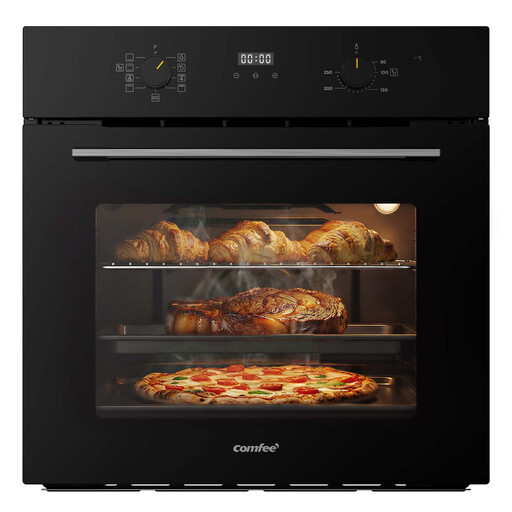
Why this product suits this profile: This built-in oven is designed for households that want to bake, grill and cook on several shelves using fan cooking, and are planning a permanent kitchen installation.
The specifications list a 70-litre capacity, 3 kW power rating, ten functions, a timer and AquaClean steam cleaning. Check the niche dimensions and connection requirements before installation.
Fan cooking, grill and pizza functions, an LED display with timer, and a stated energy efficiency rating of A.
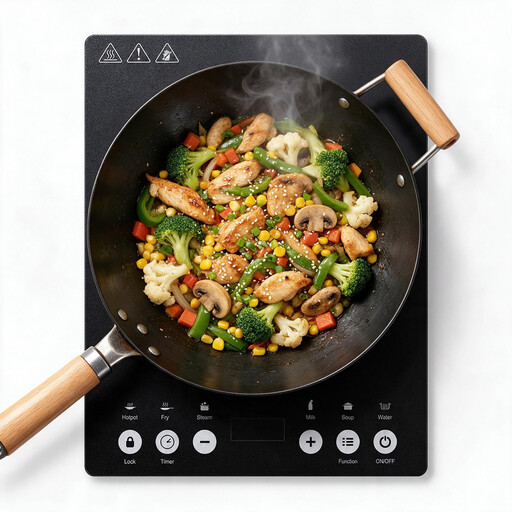
Why this product suits this profile: This portable induction hob is suitable for rented accommodation, as an extra cooking zone or for flexible use with compatible magnetic cookware.
The product information clearly states that it works with magnetic cookware. A child lock and boil-dry protection are also listed.
2,000 watts, ten power levels, six programmes, touch controls and a flat glass surface.
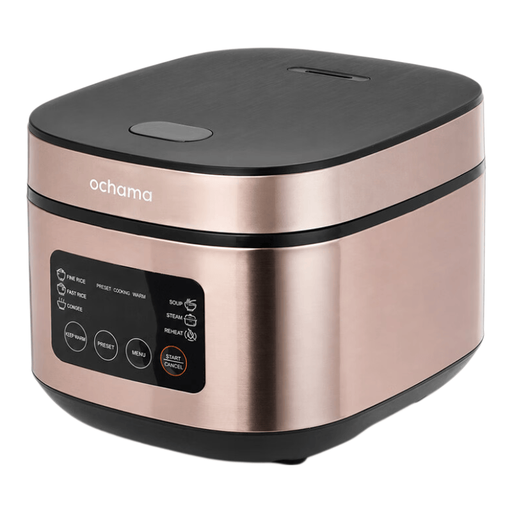
Why this product suits this profile: Its capacity is designed for family-sized portions. As well as rice, the appliance can also prepare porridge and slow-cooked dishes, and has other programmes, according to the product information.
The controls offer six functions and an LED display. The removable inner pot makes cleaning easier, but you’ll still need to observe the maximum fill levels.
4-litre capacity, ceramic coating, timer, keep-warm function and steamer insert.
We’ve put together a complete, regularly updated list of products that fully meet these strict selection criteria and the safety regulations in force in the EU.
Usage depends on the appliance’s power rating and how long it runs. A 1,000-watt appliance running for 30 minutes would theoretically use 0.5 kilowatt hours. Thermostats, pauses in heating and programmes can all affect actual consumption. For a fair comparison, consider the cooking time as well as the wattage.
If you have limited worktop space, consider a mini cooker, a compact rice cooker or a portable induction hob. Before buying, check the external dimensions, how the cable can be stored and whether accessories can be put away neatly. A steamer or multi-cooker is a good choice if you regularly use several different cooking methods.
Lifespan depends on use, cleaning, the coating, seals and how the appliance is stored. Follow the instructions, don’t overfill the pot and keep the base away from water. If you notice damage to the cable, plug or coating, stop using the appliance and check the manufacturer’s guidance.