
Lieferung heute & morgen

Qualitätsgarantie

Willkommens-Angebote freischalten: KOSTENLOSE Lieferung | Bis zu 80 % RABATT | Kostenlose 30-Tage-JoyPlus-Testphase
App herunterladen
An electric nail drill is a rotating tool designed for the precise and efficient treatment of fingernails and toenails. Compared to manual files, it allows for faster shaping, shortening, and removal of nail enhancements like gel or acrylic, as well as cuticle care. A device's functionality is primarily determined by its technical specifications, such as rotation speed, power source, and the included attachments.
Choosing the right model depends on your individual needs and intended use. The following technical parameters are relevant for making an informed decision.
The rotation speed, measured in revolutions per minute (RPM), is a key performance indicator. Different applications require adjusted speeds:
A device with continuously variable speed control offers the greatest flexibility for various tasks.
The versatility of a nail drill kit is defined by its selection of attachments, also known as bits. Common materials include ceramic, carbide, and diamond-coated bits. Each attachment has a specific function:
A comprehensive set of attachments covers most needs for a complete electric manicure and pedicure kit.
A lightweight, low-vibration handpiece is essential for precise and fatigue-free work. Effective heat dissipation prevents the device from overheating during extended use. The shape of the handpiece should fit comfortably in your hand and allow for secure control.
Based on an analysis of technical specifications and practical benefits, we are highlighting two models that cater to different user profiles.
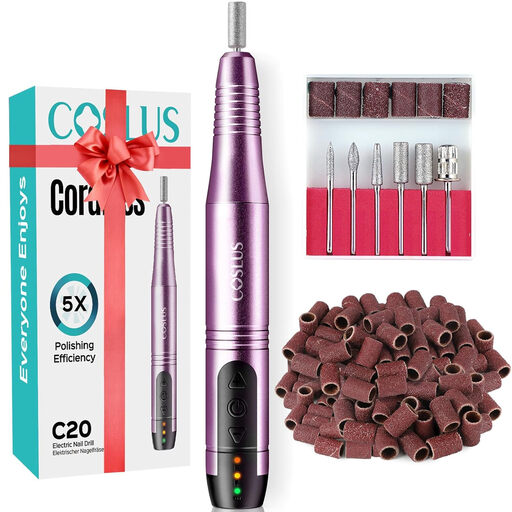
Why We Recommend This Product This model (C20) stands out for its cordless design, which allows for excellent portability. According to the manufacturer, the integrated battery provides over 3 hours of continuous use. The adjustable speed of up to 20,000 RPM and bi-directional rotation make the device comfortable for both right- and left-handed users. The kit includes 6 metal bits and 31 sanding bands, covering a wide range of manicure and pedicure applications.
Pros
Who It's For This device is a great choice for DIY nail art enthusiasts looking for a flexible and portable tool for home use. It is also suitable for mobile nail technicians who need a lightweight and straightforward device for use on clients.
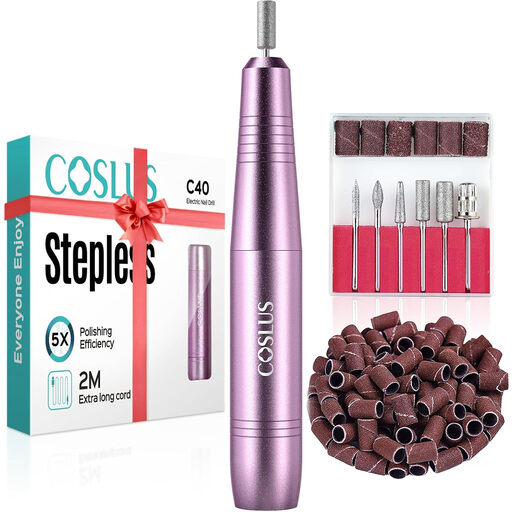
Why We Recommend This Product This corded model is designed for consistent power output during longer work sessions. The lightweight, pen-shaped handpiece supports precise control. Its motor is engineered for low-noise operation and effective heat dissipation. With a 6.5-foot (approx. 2-meter) control cord, it offers a sufficient range of motion for stationary use. The kit also includes 6 different metal bits and 31 sanding bands for working on acrylic, gel, and dip powder nails.
Pros
Who It's For This model is designed for users with a fixed workstation who value uninterrupted, consistent performance. It is an excellent choice for the ambitious enthusiast looking for a nail drill for home use, as well as for a professional nail drill setting where reliability is paramount.
A high-quality electric nail file is a core tool for advanced nail care. However, the final result also depends on the quality of the materials you use. For users looking to expand their kit, a selection of gels, polishes, and other accessories offers additional creative possibilities. You can find a collection of suitable products in our Gel Nail Kit category.
1. How many RPM does a nail drill need for gel nails? For removing gel nails, a speed in the range of 15,000 to 25,000 RPM is recommended. It is advisable to start at a lower speed and increase it as needed. Using a suitable bit, such as one made of ceramic or carbide, is crucial for removing the material efficiently and without excessive heat buildup.
2. Can you use an electric nail file on natural nails? Yes, you can work on natural nails. For this, you should use a very low speed (under 5,000 RPM) and a fine-grit bit, such as a fine diamond bit or a buffing bit. It is important to apply only light pressure and to keep the bit in constant motion to avoid damaging the natural nail plate.
3. How do you clean nail drill bits? Proper cleaning is essential for the hygiene and longevity of the bits. After use, dust and nail debris should be removed with a small brush (e.g., a nail brush). The bits can then be disinfected in a solution suitable for metal or ceramic instruments. After the required contact time, rinse the bits thoroughly with water and let them air dry completely before storing them. Sanding bands are single-use items and should be disposed of after each use.