
Lieferung heute & morgen

Qualitätsgarantie

Willkommens-Angebote freischalten: KOSTENLOSE Lieferung | Bis zu 80 % RABATT | Kostenlose 30-Tage-JoyPlus-Testphase
App herunterladen
An electric paint sprayer can apply an even coat to walls, furniture, doors and fences, and speed up painting larger areas. But buying one alone is no guarantee of a good result. Choosing the right nozzle, getting the viscosity right and finding a cleaning routine that suits how you plan to use it are all important.
A high power rating may sound impressive at first. In practice, airflow, pressure control, nozzle size and material viscosity all matter too. An 800 W HVLP system may be suitable for walls and fences, while a more compact model may be enough for furniture or small touch-ups. The wattage alone won’t tell you how fine the finish will be.
A paint sprayer with a 1300 ml tank needs refilling less often, but can feel heavier in your hand when full of paint. With a system that has a separate motor and hose, some of the weight is taken off your hand. For smaller pieces of furniture, a lightweight tank may matter more than a large capacity.
Paint, varnish and stain vary in viscosity, and may need to be thinned depending on the manufacturer’s instructions. If the paint isn’t prepared correctly, the nozzle and needle can clog or the spray pattern may become uneven. Clean the tank, nozzle, needle and paint channels straight after every use. When working with solvent-based materials, make sure you use suitable protective equipment and have adequate ventilation.
An HVLP paint sprayer uses a high volume of air at relatively low pressure. This can help you apply paint with control, but it doesn’t replace the need to set the machine up correctly. Some devices specify viscosity in DIN-S. This value describes how long a liquid takes to flow through a standardised viscosity cup. It’s only meaningful when the paint, measurement method and manufacturer’s guidance are all taken into account.
Before you buy, check:
According to the product specifications, a system rated up to 100 DIN-S is suitable for materials prepared accordingly. The TILSWALL Shark model is described as compatible with materials up to 120 DIN-S. These ratings don’t mean the sprayer is suitable for every type of paint. Always follow the instructions on the paint container and in the user manual.
A paint sprayer with nozzles offers more versatility if it comes with different diameters for different materials. Smaller nozzles may suit thinner varnishes and detailed work, while larger ones may be better for wall paint or stain. The final result also depends on thinning, distance and how you move the sprayer.
At least three spray patterns are useful:
Before applying the paint to the surface, test the sprayer on cardboard or an inconspicuous area. Keep the sprayer as steady as possible and move your whole arm rather than just your wrist.
For a paint sprayer for indoor and outdoor use, the hose and cable lengths should suit your work area. A 2.5-metre hose and a 3-metre power cable can give you more freedom of movement when working on walls, ceilings or fences. A separate motor housing may reduce the weight in your hand, while an integrated unit may be quicker to get started with.
Also look for:
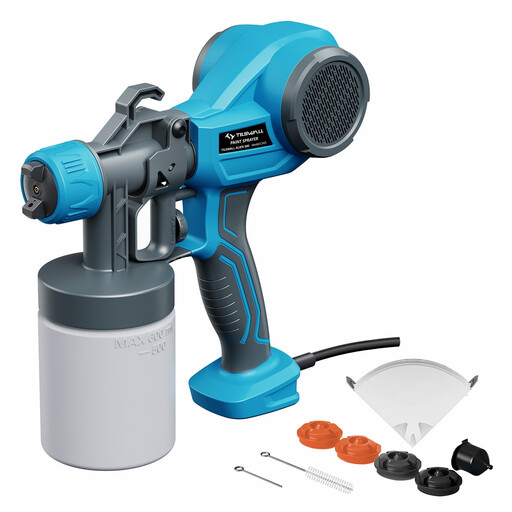
Why this product suits this type of user: According to the product specifications, this lightweight device is designed for furniture, cupboards, walls and fences, and can be assembled without tools.
Four nozzles and three spray patterns make it easier to adapt the sprayer to different surfaces. The stated limit of 100 DIN-S means you’ll need to check the material and thin it if necessary.
According to the product details, it weighs 0.7 kg and has a removable tank and included cleaning tools.
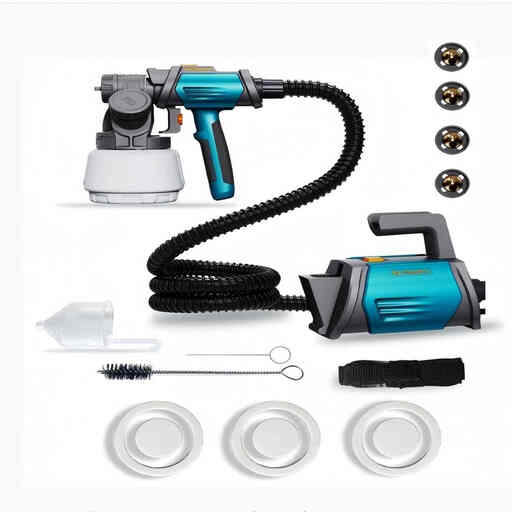
Why this product suits this type of user: This 800 W HVLP system combines four brass nozzles with three spray patterns and, according to the product description, is designed for indoor and outdoor surfaces.
The viscosity rating of up to 120 DIN-S, adjustment knob and included viscosity cup provide clear reference points for preparing your material.
According to the product details, it comes with four brass nozzles measuring 1, 1.5, 2 and 3 mm, a 2.5-metre hose and a 3-metre cable.
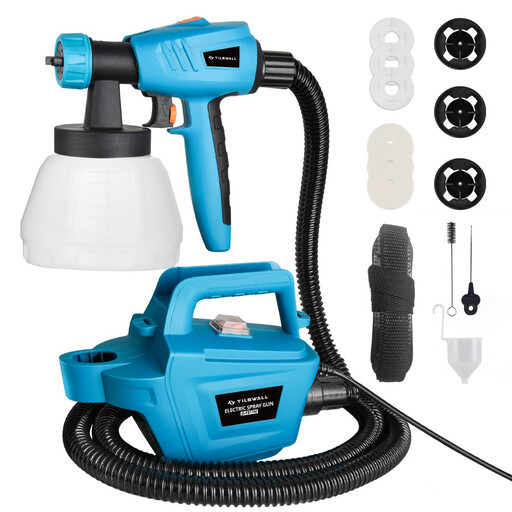
Why this product suits this type of user: According to the product specifications, this system is designed for wall paint, varnishes, stains, primers and other materials specifically listed as suitable.
According to the description, the removable opening makes cleaning easier. However, when using solvent-based products, make sure the thinner, ventilation and protective equipment are suitable for the material.
According to the product details, it has 800 W power, a 1300 ml tank, a 2.5-metre hose and three nozzles measuring 1, 1.8 and 2.6 mm.
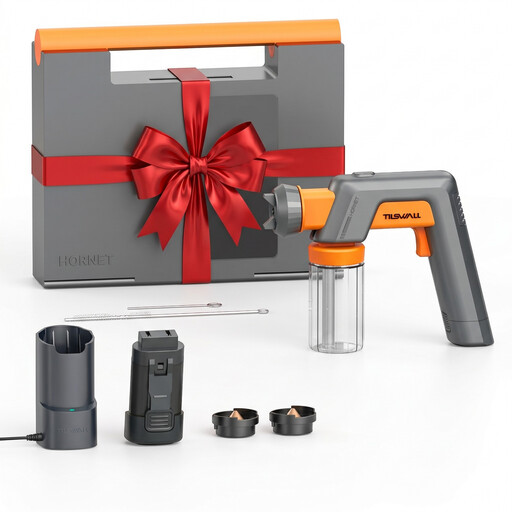
Why this product suits this type of user: According to its product name, the cordless design is suited to jobs where a power socket or long cable would get in the way.
Going cordless removes one potential limitation when tackling smaller outdoor jobs. Before buying, check the battery life, charging time and material compatibility.
According to the product name, it weighs 450 g and has three operating modes, two nozzle sizes and two batteries.
We’ve put together a comprehensive, regularly updated list of products that meet these strict selection criteria and fully comply with the safety regulations in force in the EU.
Before first use, make sure furniture, walls or fences are clean, dry and as free from dust as possible. Protect areas that shouldn’t be painted with dust sheets and masking tape. Then prepare the paint according to the manufacturer’s instructions and choose the appropriate nozzle.
A good order to follow is:
When using solvent-based varnishes, follow the instructions on the container. Safety goggles, suitable respiratory protection and chemical-resistant gloves may be necessary. The device must be unplugged before cleaning, dismantling or changing the nozzle.
It depends on the particular wall paint and its viscosity. Larger nozzles may be suitable for thicker materials. The paint sprayer manufacturer’s guidance and a test spray on cardboard will give you more reliable advice than a general recommendation for one nozzle size.
Yes, as long as the material and device are compatible. For furniture, it’s useful to have adjustable material flow, a finer spray pattern and a suitably small nozzle. Test edges and hidden areas first.
As well as the purchase price, you’ll need to budget for paint, thinner or cleaning products, and possibly replacement nozzles and batteries. Power consumption depends on the device’s output and how long you use it. Cleaning it thoroughly after each use can also help prevent blockages and reduce the need for replacement parts.