
Lieferung heute & morgen

Qualitätsgarantie

Willkommens-Angebote freischalten: KOSTENLOSE Lieferung | Bis zu 80 % RABATT | Kostenlose 30-Tage-JoyPlus-Testphase
App herunterladen
An electric paint sprayer can apply an even coat to walls, furniture, fences and ceilings. To avoid unnecessary extra work, DIYers should look beyond wattage, container size and the length of the accessories list. What matters is matching the paint, nozzle and spray pattern, and cleaning the sprayer straight after use.
An 800 W paint sprayer can provide a useful power reserve for larger areas. However, wattage alone doesn’t tell you how fine the spray pattern will be or whether the paint can be applied evenly. Air volume, material flow, nozzle size and viscosity all need to work together. Too much material flow can cause runs, while a nozzle that’s too small can clog when used with thicker paint.
A paint sprayer with a 1300 ml container means fewer refills on larger projects. However, a full container can make the sprayer heavier to hold when working overhead. With a paint spraying system that has a separate motor and hose, less weight sits directly on the spray gun. This design can be more practical for ceilings, doors or longer sections of fencing.
Paint can dry quickly in nozzles, seals and paint channels. This can make the spray uneven and make the sprayer harder to use next time. You should therefore dismantle the paint sprayer after every use and rinse it with a cleaning agent suitable for the material you’ve used. Water is often suitable for water-based paints; for solvent-based products, follow the paint manufacturer’s instructions.
HVLP stands for ‘High Volume Low Pressure’. An HVLP paint sprayer uses a relatively high volume of air at lower pressure. This can help you apply material in a controlled way, but the right settings are still essential. Before starting your project, it’s a good idea to test the spray on cardboard or a spare piece of material.
Some sprayers specify viscosity in DIN-S. A higher figure indicates a thicker material. The TILSWALL Shark is listed as compatible with materials up to 120 DIN-S. Use this as a guide and check it against the recommendations for your paint, varnish or wood stain. Only thin materials according to the manufacturer’s instructions.
A spray gun supplied with several nozzles is more versatile:
Horizontal and vertical oval spray patterns are suited to wider passes. A round pattern can be easier to control around edges, furniture parts or smaller areas. A paint sprayer for furniture and fences should therefore have several nozzles or an adjustable material feed.
A 2.5 m air hose and a 3 m power cable can extend your reach when working on walls, fences and sheds. However, don’t treat the cable as an extension lead for damp outdoor areas. Indoors, make sure the room is well ventilated, cover nearby surfaces and wear a suitable respirator in line with the coating material’s safety data sheet. For solvent-based products, also follow the guidance on flammability and sources of ignition.
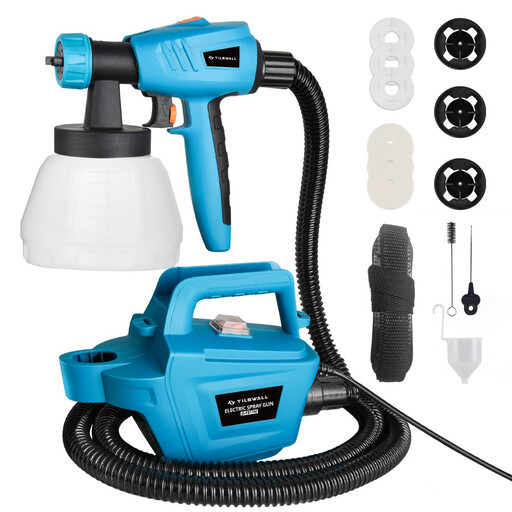
Why this product suits this type of user: The 800 W motor, 1300 ml container, 2.5 m hose and three spray patterns make it suitable for typical indoor and outdoor renovation jobs.
The adjustable material feed helps you match the application to the paint and nozzle, rather than choosing on motor power alone. The removable container also makes cleaning easier.
800 W, 1300 ml container, three spray patterns and nozzles with diameters of 1.0, 1.8 and 2.6 mm.
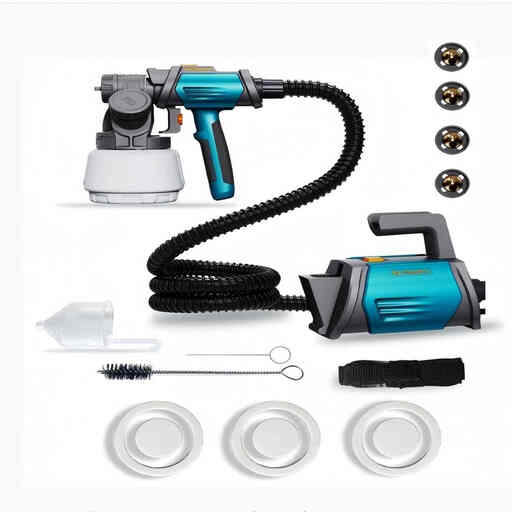
Why this product suits this type of user: With brass nozzles, a side-mounted material feed and three spray patterns, this model is aimed at users who want more choice of materials and settings.
Four brass nozzles ranging from 1.0 to 3.0 mm mean you’re not restricted to a single nozzle size. The viscosity check helps you choose settings suited to the material.
800 W HVLP system, four brass nozzles, 1300 ml container, 2.5 m hose and 3 m cable.
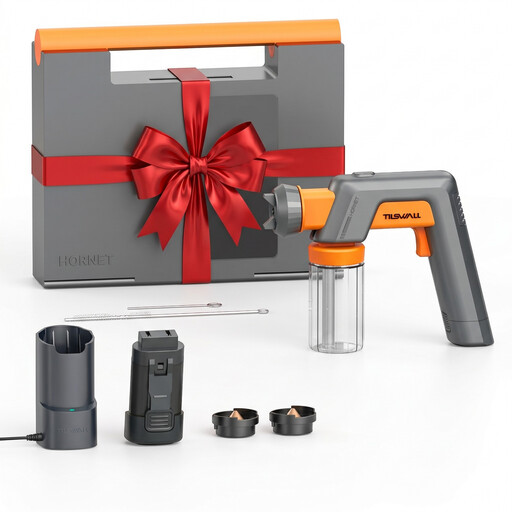
Why this product suits this type of user: Its cordless design and two batteries make it suitable for smaller jobs spread across furniture, fences, sheds or hard-to-reach areas.
Being powered without a mains cable makes it easier to move between locations. Two nozzle sizes and three spray modes let you adapt it to a range of smaller projects.
Product specifications list a weight of 450 g, cordless operation, two batteries, two nozzles and three spray modes.
Before spraying, prepare the surface, paint and surrounding area. Cover furniture and mask off windows and fittings. Dust, grease and loose paint can all affect adhesion, whatever sprayer you use.
Ongoing costs mainly come from paint, thinner or cleaning products, replacement nozzles and, where applicable, batteries. A larger container can save time on refills, but it won’t automatically reduce the amount of material you use. Keeping a consistent distance from the surface and moving steadily are key. When buying, also consider the availability of spare parts, seals and cleaning tools.
We’ve put together a complete, regularly updated list of products that meet these strict selection criteria and fully comply with the safety regulations in force in the EU.
It depends on the sprayer’s specifications and the material’s viscosity. Wall paint, varnish, wood stain and primer may require different nozzle sizes and thinning settings. Always follow the instructions on the paint container and in the user manual.
Start by adjusting the sprayer on a test surface. Hold the spray gun steadily and move it parallel to the surface. Moving too slowly, using too much material or holding the sprayer too close can cause runs. Several thin coats are often easier to control than one very heavy coat.
Its lifespan depends on the materials used, maintenance, seals, nozzles and how often you use it. Cleaning it straight after use, thinning materials correctly and storing it in a dry place help protect the paint channels and moving parts. Before carrying out maintenance, dismantling or cleaning, disconnect a mains-powered sprayer from the power supply.