Which design suits you?

Class leaders making lots of portions

If you’re preparing several rounds for a group, you’ll need a generously sized, flat cooking surface and a practical workflow. A large capacity doesn’t tell you how much free cooking surface is available at once. Tristar and Princess specify the surface dimensions of their respective pans.

Class leaders focusing on batter technique

If participants are practising how to portion, spread and turn the batter, it’s important to consider whether they can choose the size freely. A flat plate offers more flexibility, while fixed moulds determine the shape. Rommelsbacher and Severin describe different designs for these purposes.

Class leaders looking for versatility

If you’d like to prepare other pan-fried dishes as well as pancakes, consider an electric party pan or multi-purpose pan. For a commercial class, follow the instructions for the specific model: Clatronic explicitly excludes commercial use of the PP 3401.

What should you look for when buying?

Large-surface electric party pan

A good fit if: you want to make freely portioned pancakes and occasionally cook other pan-fried dishes.

Consider: The diameter and temperature settings don’t confirm a specific pancake capacity or even heat distribution.

More compact electric party pan

A good fit if: space at the class table is limited and you want to portion the batter freely.

Consider: The smaller surface may mean more cooking rounds; according to its instructions, the Clatronic PP 3401 is not intended for commercial use.

Pancake maker with fixed moulds

A good fit if: your class needs portions that are consistently the same size.

Consider: The moulds determine the shape and size, so they’re not suitable for pancakes in freely chosen shapes.

Flat crepe plate

A good fit if: spreading thin batter and choosing the size freely are your priorities.

Consider: Without a raised edge, the plate is less versatile for dishes that need one.

What matters What to check before buying Who is it important to?
Usable surface and serving flow Consider the flat inner surface, space for turning, the rim, handles and space on the worktop; don’t infer the number of pancakes from the diameter. When several participants are cooking in turn, I need enough flat space to work and turn the pancakes. Around 36% of consumers prioritise the number of portions made in a given time.
Spreading batter and turning pancakes Check whether you need free-form shapes, whether the rim affects how you use the turner, and whether you can adjust the temperature during a round. If the group is practising how to portion and spread the batter, I want to choose the size and shape freely. Around 29% of consumers put the freedom to make pancakes their own way first.
Using it for other dishes Think about which other dishes you plan to make, and check the instructions and whether the model is intended for private or commercial use. If I want to use the appliance for other pan-fried dishes too, I compare its design and permitted use rather than just its capacity. Around 21% of consumers prioritise versatility for pan-fried cooking.
Cleaning and storage space Check the cleaning instructions and overall dimensions, and consider cable management and a suitable place for the appliance to cool. After several rounds of batter, I want to know how to clean and store the appliance, and whether there’s enough room for it. Around 14% of consumers say cleaning and storage are their main concerns.

Avoid common buying mistakes

  • Assuming the capacity in litres or external diameter tells you how many pancakes it makes

    Princess lists a capacity of 6.25 litres and a diameter of 35 cm for the 162367. The volume doesn’t tell you how much free surface is available for cooking and turning pancakes at once.

    Compare the flat inner surface and allow room for a turner, rather than estimating the number of portions from the volume or diameter.

    A cramped cooking surface may mean extra rounds and therefore a longer class.

  • Assuming a larger, deeper party pan is automatically better for pancake classes

    The Clatronic PP 3570 C is described as having a diameter of 42 cm and a depth of around 9 cm. A higher rim serves a different purpose from a flat plate or fixed moulds.

    First decide whether freely shaped batter, set portions or other pan-fried dishes are most important for your class.

  • Planning to use a household appliance for a commercial class without checking the instructions

    The Clatronic instructions state that the PP 3401 is for private use and exclude commercial use.

    Check whether your class is being run commercially, and review the terms of use for the specific model you’ve chosen.

  • Assuming a non-stick coating means it’s dishwasher-safe

    A non-stick coating doesn’t automatically mean that the appliance or its parts can go in the dishwasher. Tristar states that the PZ-2964 is not dishwasher-safe; Severin says that no individual parts of the CM 2198 are dishwasher-safe.

    Follow the cleaning instructions for the specific model, and allow enough time if you’ll be washing it by hand.

    Hand-washing takes time between class sessions.

Key brands at a glance

Tristar

With a manufacturer-stated cooking surface of 40 cm, the PZ-2964 multi-purpose pan is a useful option to compare for consecutive rounds of pancakes.

  • Tristar lists five temperature settings, a detachable thermostat cable and a lid for this model.
  • According to the manufacturer, the model is not dishwasher-safe. These specifications don’t confirm even browning or a specific number of pancakes.

Clatronic

The party pans vary considerably in diameter and depth: the PP 3401 is described as having a diameter of 32 cm and a depth of 3.5 cm, while the PP 3570 C has a diameter of 42 cm and a depth of around 9 cm.

  • Clatronic lists a continuously adjustable thermostat for both models.
  • The larger PP 3570 C isn’t automatically the better pancake surface, as it has a higher rim. According to the instructions, the PP 3401 is intended for private use only.

Princess

According to the manufacturer, the 162367 Multi Wonder Chef Pro electric pan combines a 35 cm surface with a capacity of 6.25 litres.

  • The manufacturer lists an adjustable thermostat, a lid and a 1.5 m cable.
  • The capacity doesn’t confirm that more pancakes can be cooked at once or that heat distribution has been independently measured.

Rommelsbacher

The PC 1800 is a pancake-specific alternative for classes where portions need to be a set size.

  • According to the manufacturer, the appliance has four baking moulds, each 13.5 cm in diameter, as well as a timer.
  • The fixed moulds limit your freedom to choose the shape and size.

Severin

The CM 2198 is a flat crepe plate for classes focused on spreading thin batter.

  • Severin lists a diameter of around 30 cm, continuously variable temperature control and included batter tools.
  • According to the product information, the individual parts are not dishwasher-safe; the plate also lacks a raised edge for cooking other dishes.

Joybuy product selection for pancake classes

This selection includes electric plates and crepe makers for spreading batter freely. The description “Waffle Iron” in the name of the AN-108 is an important point to check against your planned use in class.
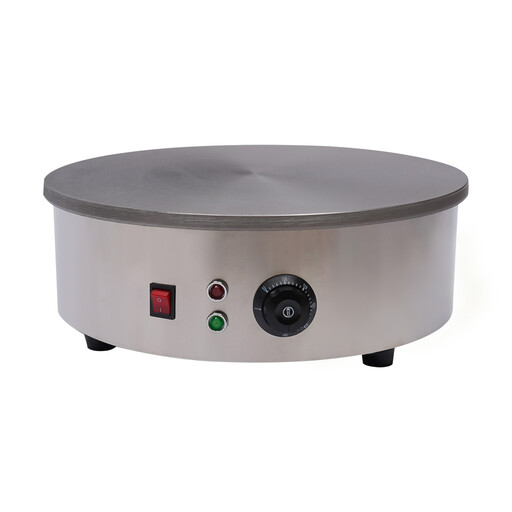
Electric crepe maker with batter spreader and spatula

Electric Crepe Maker, 17.7 Inch, 3KW

The product name describes it as a crepe maker with a batter spreader and spatula; check whether its design suits the pancakes you’ll be making in class.

The name specifies a 17.7-inch surface, 3KW and an adjustable temperature.

View at Joybuy
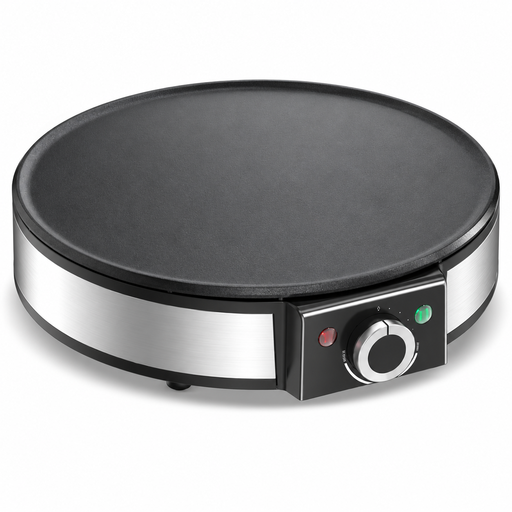
YASHE AN-110 crepe maker with batter spreader and spatula

YASHE AN-110 Crepe Maker, 1200w

The product name describes a crepe maker with temperature control and accessories for spreading and working with batter.

The name also specifies stainless steel, a batter spreader and a spatula.

View at Joybuy
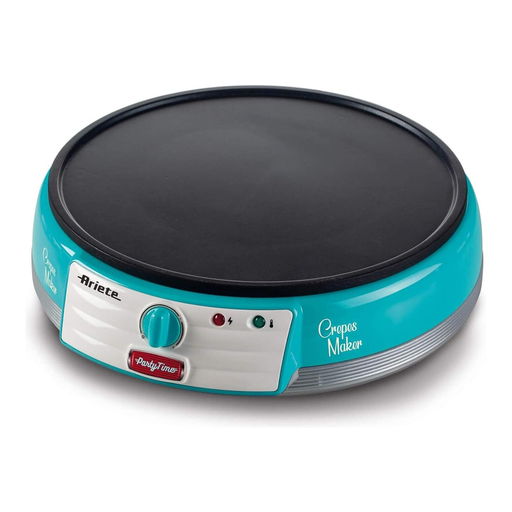
Ariete Party Time Series Crepe Maker, 33x33x9.5cm, 1000W

Ariete Party Time Series Crepe Maker, 33x33x9.5cm, 1000W

The product name describes this model as an electric crepe maker; before buying, check whether its design suits the pancakes and exercises planned for your class.

The name specifies dimensions of 33x33x9.5cm and a power rating of 1000W.

View at Joybuy
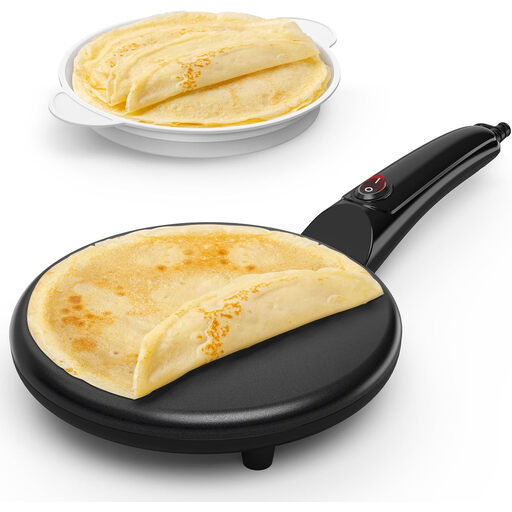
AN-108 Waffle Iron, 800 W, with non-stick coating

AN-108 Waffle Iron, 800 W

The product name describes this model as a waffle iron. Before choosing it, check whether this type of appliance is suitable for your pancake class.

The name specifies 800 W, a non-stick coating and a heat-insulated handle.

View at Joybuy

Frequently asked questions

Can I use the Clatronic PP 3401 in a paid cookery class?

If the class is run commercially, the PP 3401 isn’t intended for that purpose according to its instruction manual, which restricts use to private purposes. If you’re considering another model, check its own terms of use.

How should I set up the workspace for an electric pan?

Set up the appliance according to its instructions, and allow for a stable work surface, safe cable routing and time for it to cool before cleaning. Tristar specifies a 1 m cable for the PZ-2964; the Clatronic instructions also require you not to leave the appliance unattended and to unplug it before cleaning.

Can a non-stick surface go in the dishwasher?

It depends on the model. Tristar states that the PZ-2964 is not dishwasher-safe; for the Severin CM 2198, the manufacturer says that some individual parts are not dishwasher-safe. Follow the instructions for the appliance you buy.

Is the CE mark an independent safety certificate?

No. According to Your Europe, the manufacturer uses the CE marking to declare that a product complies with the relevant EU rules; it isn’t an independent quality mark. Whether a specific product needs the marking and meets the applicable requirements must be assessed for that product.

What requirements apply to the surface that comes into contact with pancake batter?

Food contact materials made available on the EU market must meet the applicable requirements of Regulation (EC) No 1935/2004. The European Commission describes these requirements for materials that come into contact with food; a non-stick claim alone doesn’t prove that a particular product meets them.