Making flatbread for several people
If you’re making flatbreads for several people, look for a flat cooking surface that’s large enough and adjustable heat to suit the size of flatbread you usually make.


Choose an appliance with adjustable heat and, ideally, a flat cooking surface that’s large enough for the flatbreads you usually make. The stated diameter alone doesn’t tell you how much usable surface there is or whether it will brown food evenly. A larger electric pan may offer more space and greater versatility, while a flat crêpe maker may suit thin flatbreads and kitchens with limited storage. However, it won’t replace a deep pan for dishes with liquid. Before buying, also check the specific model’s external dimensions, electrical connection and care instructions.
If you’re making flatbreads for several people, look for a flat cooking surface that’s large enough and adjustable heat to suit the size of flatbread you usually make.
If your available worktop space is limited, consider the appliance’s external dimensions, handles and cable, as well as where you’ll store it afterwards.
If you want to make meals other than flatbread, consider whether a flat plate or a pan with sides and a lid is better suited to the dishes you have in mind.
Start by checking the size of your flatbreads against the usable cooking surface. Then consider where the appliance will go, what else you’ll cook, how it’s cleaned and how it connects to the mains.
A good fit if: you want to make larger flatbreads or several smaller ones, and use the appliance for other dishes too. Tristar lists a 40 cm cooking surface for the PZ-2964 and mentions tortillas.
Consider: A larger cooking surface needs more room. High sides and a lid can be useful for other dishes, but they also make the appliance bigger.
A good fit if: temporary worktop space is limited and the pan is the right size for your flatbreads. Tristar lists a diameter of 30 cm for the PZ-2963, while Clatronic lists 32 cm for the PP 3401.
Consider: Larger flatbreads or multiple portions may mean cooking in batches. Measure the space where you’ll use it, including room for the handles and cable.
A good fit if: you mainly want to make thin flatbreads on a flat plate and need an appliance that’s easy to store. Severin lists a plate measuring around 30 cm for the CM 2198, along with a cable storage facility.
Consider: A flat plate isn’t a like-for-like replacement for a deep pan when cooking dishes with liquid. Whether it’s suitable for thicker flatbreads depends on the model.
A good fit if: you want to make larger quantities of other dishes at your temporary cooking station too. Nedis lists a capacity of 7.0 l for the FCSP110EBK40.
Consider: Capacity doesn’t tell you how much flat cooking surface there is for a flatbread. Check the base and external dimensions separately.
| Buying priority | What to check | Who it matters to |
|---|---|---|
| Flat cooking surface and adjustable heat | Compare the size of your flatbread with the usable inside surface, and allow room to turn it. | If you want your usual flatbread to sit fully on the surface and be easy to turn, pay particular attention to the flat cooking area. Around 29% of consumers put this first. |
| Space in a temporary kitchen | Check the external dimensions, including handles, and allow room for the cable and safe turning. | If worktop space is limited during your renovation, the appliance must fit in the available space with its handles and cable. Around 23% of consumers prioritise the space it takes up. |
| Making other dishes | Decide what you’ll cook, then assess the sides, lid and flat base separately. | If you want to make meals other than flatbread without a hob, choosing the right design is key. Around 18% of consumers prioritise this versatility. |
| Cleaning with limited kitchen facilities | Read the care instructions for the pan, lid and temperature control separately. | If your sink and kitchen are only partly usable, you’ll need a cleaning routine that works with the instructions for each component. Around 18% of consumers prioritise ease of cleaning. |
| Electrical connection and product safety | Check the rated power, voltage, condition of the connection and German-language operating and safety instructions. | If you plan to use an appliance at a temporary cooking station, check in advance that its electrical connection and power requirements are compatible. Around 12% of consumers put this first. |
A deep pan with a large capacity won’t necessarily have enough flat surface for a flatbread.
Compare the inside cooking area with the size of your rolled-out flatbread instead of choosing by capacity alone.
Handles, external dimensions and cable routing all need extra room. For the CASO Profi Partypfanne 1491, the manufacturer lists external dimensions of 490 × 160 × 430 mm as well as a diameter of 42 cm.
Measure the whole space where you’ll use it, allowing room to turn your flatbread and for the cable.
Care instructions vary by model and component. Nedis excludes the temperature control plug from the dishwasher-safe parts of the FCSP110EBK40, while Tristar says the PZ-2964 isn’t dishwasher-safe.
Read the instructions for the pan, lid and temperature control, and clean each part only as directed.
Appliances have different rated power requirements. The German Fire Service Association warns against using electrical appliances with damaged cables or visible scorch marks.
Check the connection details against the specifications for the specific appliance and don’t use damaged cables. If you’re unsure, ask a qualified professional to assess whether a temporary installation is suitable.
The PZ-2963 and PZ-2964 are electric multi-purpose pans with different stated diameters.
The PP 3401 is an electric party pan with a diameter of 32 cm, a lid and a continuously adjustable thermostat.
The CM 2198 is a flat crêpe maker designed for cooking on a plate.
The FCSP110EBK40 is a deep, rectangular electric pan.
The Profi Partypfanne 1491 is a large electric pan with a lid.
This selection includes an electric wok and flat crêpe makers. Compare each appliance’s design with the size of your flatbreads and the dishes you want to prepare during your renovation.
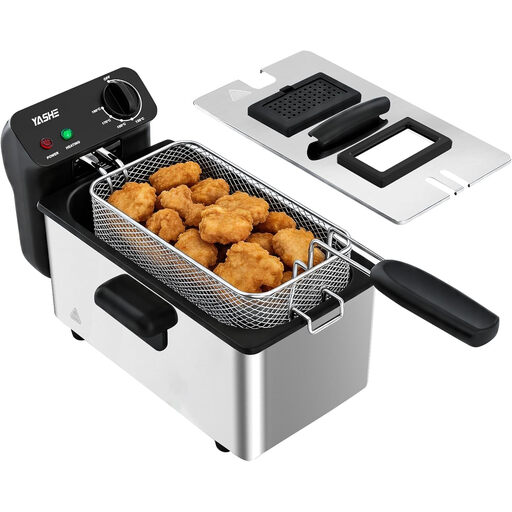 No image available
This model is described as an electric wok. Before buying, check whether its actual cooking surface is suitable for your flatbread.
3 L capacity; 2000 W; adjustable temperature; glass lid.
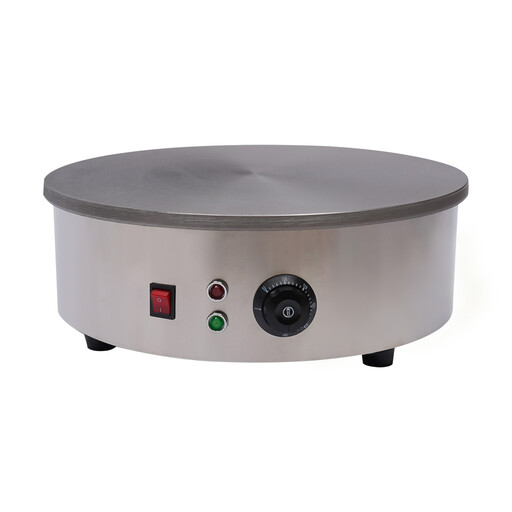 No image available
If you want to make thin flatbreads on a flat plate, compare the stated plate size with your flatbread and check the electrical connection.
17.7-Inch cooking surface; 3 kW; adjustable temperature; batter spreader and spatula, according to the product name.
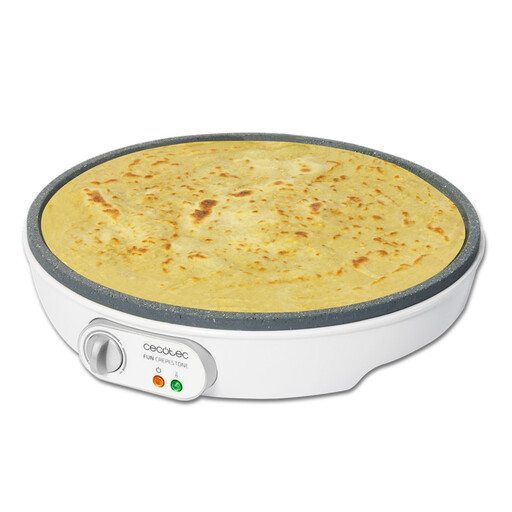 No image available
For thin flatbreads on a flat plate, compare the stated plate size with the size of the flatbreads you usually make.
30.5 cm diameter; 1000 W; adjustable temperature; RockStone non-stick coating, batter spreader and spatula, according to the product name.
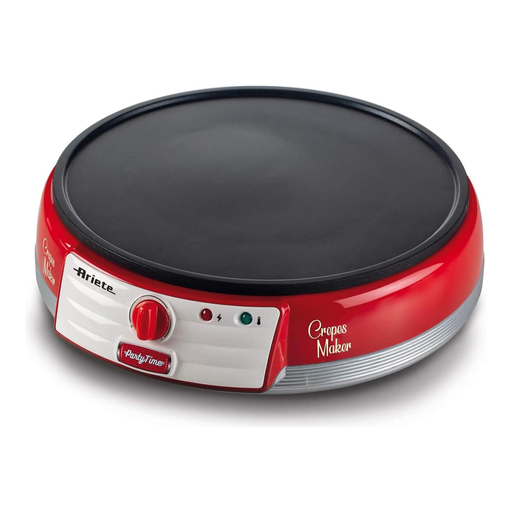 No image available
As a crêpe maker, this model may suit cooking on a flat plate. Check that its actual cooking surface is the right size for your flatbreads.
Not necessarily. Compare the diameter of your rolled-out flatbread with the actual flat inside surface, and allow room to turn it. A capacity in litres describes how much the pan holds, not the size of its flat cooking surface.
Compare the voltage and rated power of the specific model with a suitable, undamaged electrical connection, and follow the operating instructions. For example, Clatronic lists 220–240 V and 1500 W for the PP 3401. This doesn’t mean it’s automatically suitable for every extension lead or building-site installation.
Only if the instructions for the specific appliance explicitly say that you can. For the Nedis FCSP110EBK40, the manufacturer specifically excludes the temperature control plug from the dishwasher-safe parts.
New electrical products covered by the Low Voltage Directive must meet its safety requirements, as implemented in Germany by the 1. ProdSV. The Federal Network Agency lists CE marking, manufacturer identification and the required German-language information among its market surveillance checks. The CE mark alone isn’t an independent quality seal for cooking performance.
Follow the instructions and avoid uncontrolled high heat. Germany’s Federal Institute for Risk Assessment warns that cookware with a PTFE coating can release harmful fumes if the empty coating overheats. You’ll need to know the coating type of the specific appliance.