What should you look for when buying?
Automatic pasta maker
A good fit if: You want the machine to mix the flour and egg, then extrude the pasta.
Consider: Recipe requirements, the shaping discs included and how easy the individual parts are to clean.
Motorised dough roller
A good fit if: You want to make the dough yourself and roll it into sheets of an adjustable thickness.
Consider: The roller won’t mix or knead the dough, and you’ll need to follow the care instructions for the roller attachments.
Pasta attachment
A good fit if: You already own a stand mixer that’s compatible with the attachment you want.
Consider: An attachment isn’t a standalone automatic pasta maker. The main appliance and accessory must be compatible.
Whichever option you choose, check the details for the specific model to make sure the pasta shape you want, the quantity in your recipe and the care requirements for each part all match your needs.
| What matters |
What to check |
Who is it important to? |
| Effort involved |
Check whether the machine mixes and extrudes the dough, and which steps you’ll need to do yourself for that model. |
If I want to prepare other ingredients after shopping while the machine works the dough, automation is key. Around 33% of consumers put automatic preparation first. |
| Shape and dough thickness |
Compare the shaping discs included and, for rollers, the available dough thickness settings. |
If I want ribbon pasta or sheets of a particular thickness, the right shaping options matter more than extra automation. Around 27% of consumers say control over the dough is their top priority. |
| Batch size |
Compare the minimum and maximum quantities with your recipe, and check whether the figures refer to flour or finished pasta. |
If I make different quantities depending on the meal, I don’t want to compare capacity figures based on different measures. Around 20% of consumers prioritise portion size. |
| Cleaning |
Read the care instructions for the bowl, lid, shaping discs and rollers separately. |
If I want to spend as little time as possible washing up by hand after cooking, I need clear care instructions for every part. Around 20% of consumers put cleaning first. |
Related products at Joybuy
The products below include attachments for compatible stand mixers, an electric dough roller and automatic pasta makers. For each model, check that the instructions and accessories suit your egg-noodle recipe and the shape you want.
 No image available
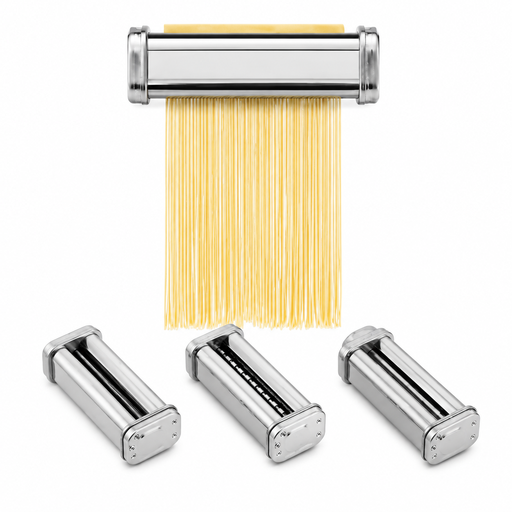
Three-piece pasta attachment set for KitchenAid stand mixers
An option if you want to roll out and cut pasta using a compatible KitchenAid stand mixer.
The set includes three stainless steel rollers for fettuccine, lasagne, angel hair and spaghetti. Hand-washing is recommended; check compatibility with your main appliance.
View at Joybuy
 No image available
FOHERE electric pasta maker with seven dough thickness settings
This motorised roller may suit you if you want to make sheets of dough in different thicknesses.
It’s listed with seven thickness settings from 0.5 to 3 mm and two cutting widths. The description lists attachments for lasagne, spaghetti and dumplings. Don’t immerse the appliance in water; clean it with a dry cloth and brush.
View at Joybuy
 No image available
Automatic electric pasta maker with nine shaping discs
An option if you want the machine to mix the ingredients and then extrude the pasta dough.
The description lists nine shapes, including three discs described as non-stick, as well as automatic mixing and extrusion.
View at Joybuy
 No image available
Automatic electric pasta maker with 180 W motor and nine interchangeable shaping discs
This model may suit you if you want the machine to knead the dough and make pasta in a range of shapes.
It’s listed with a 180 W motor, nine interchangeable shaping discs, an opening for water or vegetable juice, and a reverse function.
View at Joybuy
 No image available
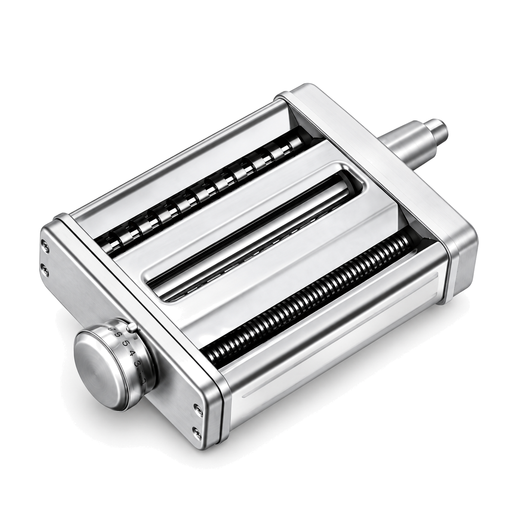
FOHERE 3-in-1 pasta attachment for KitchenAid stand mixers
This attachment may suit you if you want to roll out and cut pasta using a compatible KitchenAid stand mixer.
It’s listed with eight thickness settings, stainless steel construction, a dough roller, and cutters for spaghetti and fettuccine. It’s designed to fit the KitchenAid power hub; check compatibility with your model. A brush is recommended for cleaning.
View at Joybuy
Frequently asked questions
Can I put flour and egg straight into a motorised dough roller?
No. The roller motor on the Marcato Atlasmotor+ doesn’t mix or knead the dough. You need to prepare it first, then feed it through the rollers. If you want a machine that can also mix and extrude the dough, an automatic pasta maker may be a better choice.
How should I clean a pasta maker after working with raw eggs?
Clean any parts that have been in contact with raw egg thoroughly, and follow the care instructions for each part. Rommelsbacher says the bowl and lid of the PM 220 can occasionally go in the top rack of the dishwasher at a low temperature; the other accessories listed should be washed by hand. The German Federal Institute for Risk Assessment warns that pathogens may be present on and in raw eggs.
What should I bear in mind when making fresh egg noodles?
Keep raw eggs in the fridge, follow good kitchen hygiene when handling them and cook egg dishes thoroughly. The German Federal Institute for Risk Assessment recommends heating food to a core temperature of at least 70 °C for at least two minutes to kill potential pathogens; this is a hygiene recommendation, not a feature of the pasta maker.
Who is responsible if a product is faulty, and does a manufacturer’s guarantee replace your statutory rights?
If a product is faulty, the retailer is initially responsible for your statutory consumer rights. The Verbraucherzentrale distinguishes these rights from a voluntary manufacturer’s guarantee, which is subject to its own terms and conditions.
Is the CE mark an independent safety test?
No. For products that must carry the CE mark, the manufacturer uses it to declare that the product complies with the relevant EU requirements. Your Europe describes it as a manufacturer’s declaration, not an independent quality mark.


