Cooking fresh portions
You want to make a fresh portion for anyone arriving later. Check whether your machine’s minimum batch size is suitable for a single meal.


For spinach pasta served at different times, an electric extruder is a good fit if its minimum batch size and cleaning requirements suit your portions. If you want to make spinach dough and roll it into sheets yourself, a motorised roller may be a better option. If you prepare a larger batch in advance, the Federal Centre for Nutrition recommends cooling it quickly, storing it in an airtight container in the fridge and reheating it just once if possible. The German Federal Institute for Risk Assessment advises cooling hot food quickly to below 7 °C for longer-term storage. When adding spinach, always check the recipe and liquid requirements for your specific model.
You want to make a fresh portion for anyone arriving later. Check whether your machine’s minimum batch size is suitable for a single meal.
You prepare several portions together and plan ahead for cooling, airtight storage and reheating later. For spinach, the Federal Centre for Nutrition recommends cooling food quickly and reheating it just once if possible.
You want to control how much spinach you add and how thick the sheets of dough are, and are happy to do a few separate steps. A motorised roller works with dough you have already made; a stand mixer attachment requires a compatible machine.
First decide whether you want to make a fresh batch for each mealtime or prepare several portions in advance. If you’re cooking ahead, rapid cooling and storage need to be part of your plan, not just the machine’s capacity.
| Buying consideration | What to check | Who it matters to most |
|---|---|---|
| Suitable batch size | Check the minimum and maximum quantities for the same model; don’t compare the amount of flour with the weight of finished pasta. | If I want to make fresh individual portions for people arriving later, one batch should be the right size for a meal. Around 34% of consumers would focus first on practical batch sizes. |
| Storing food between meals | Consider whether you can cool prepared portions quickly and store them in an airtight container in the fridge. The German Federal Institute for Risk Assessment recommends cooling hot food quickly to below 7 °C for longer-term storage. | If I prepare several portions, I want to be able to keep them chilled safely until serving. Around 22% of consumers would put safe storage first. |
| Spinach in the dough | Check the recipe and liquid requirements for the specific model; a weighing function doesn’t guarantee that every amount of spinach will work with a standard programme. | If I want to adjust the amount of spinach and the dough consistency myself, I need recipe guidance that suits my machine. Around 22% of consumers would prioritise being able to adjust how their spinach dough is made. |
| Work involved per batch | Compare assembly, kneading, shaping and cleaning. Advertised preparation times don’t necessarily include cooking or cleaning. | If I make small batches repeatedly, I want to minimise the extra work between runs. Around 15% of consumers would prefer fewer steps and cleaning that’s easy to plan for. |
| Kitchen equipment you already own | Check what’s included, what powers the attachment and whether it’s compatible with your specific stand mixer. | If I already own a suitable kitchen appliance, I want to know whether an attachment will fit and what accessories I’ll need. Around 7% of consumers would consider their existing equipment and accessory requirements first. |
According to the manufacturer, the Springlane Nina processes 200–600 g of flour per batch. Rommelsbacher states that the PM 220 makes up to 800 g of finished pasta; these figures refer to different quantities.
Compare minimum and maximum amounts on a like-for-like basis, and plan separately for smaller meals served later.
Keeping spinach warm for a long time and cooling it slowly can encourage nitrite formation. The Federal Centre for Nutrition recommends cooling it quickly, storing it in an airtight container in the fridge and reheating it just once if possible.
Divide prepared food into portions and cool it quickly. The German Federal Institute for Risk Assessment recommends cooling hot food to below 7 °C for longer-term storage.
The Kenwood Pasta Set MAX980ME is an accessory for compatible Chef stand mixers. The Marcato Atlasmotor+ comes with a motor for the roller.
Check the drive and compatibility of the specific model before choosing an attachment or a standalone appliance.
Philips points out that the pasta maker doesn’t weigh the liquid you add. Rommelsbacher offers semi-automatic programmes for custom mixtures, but that doesn’t mean every amount of spinach is suitable.
Follow the recipe and liquid measurements for your specific model rather than putting any spinach mixture into a standard programme.
The Nina is a standalone extruder for households that want to plan batches using a stated flour quantity.
The PM 220 Pastarella comes with an extruder, scales and water feed for people who also want to process their own mixtures.
The standalone Pastamaker 7000 HR2665/96 combines weighing, mixing and extrusion.
The Atlasmotor+ is a motorised roller for homemade spinach dough and sheets of dough with adjustable thickness.
The Pasta Set MAX980ME is an attachment for a compatible Chef stand mixer.
The Joybuy products below include electric rollers, a stand mixer attachment and electric pasta makers with shaping discs. For spinach pasta, follow the recipe guidance for the specific model.
 No image available
A roller-style option if you want to adjust the thickness of your pasta sheets.
The product title specifies 7 thickness settings. For care, don’t immerse the appliance in water; wipe it clean instead. Clean the blades with a brush.
 No image available
An electric machine for making different pasta shapes, if you’d rather not roll the dough by hand.
The product title specifies 9 shapes. Check the instructions to see whether your spinach recipe is suitable for this model.
 No image available
This machine may suit you if you’re looking for an electric option with interchangeable pasta shapes.
The product title specifies 180 W and 9 shapes. For spinach pasta, check the liquid requirements for the specific model.
 No image available
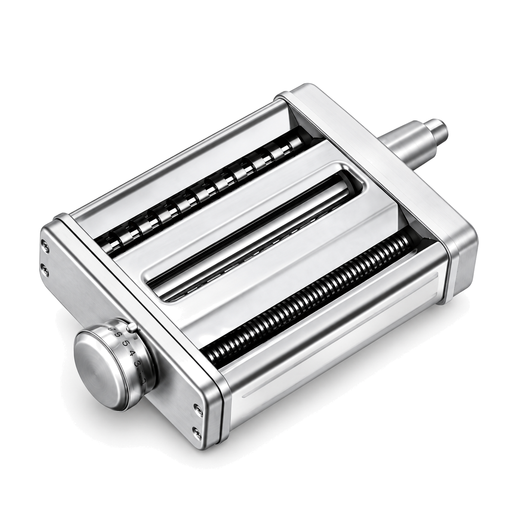
This attachment could be a good option if you already own a compatible KitchenAid stand mixer and want to roll and cut your dough.
The product title specifies a dough roller and cutters for fettuccine and spaghetti. You’ll need a compatible powered stand mixer; hand-washing is recommended.
 No image available
The stated dough quantity may be useful if you’re planning to make smaller amounts in consecutive batches.
The product title specifies 200 g of dough per batch. Don’t rinse the main appliance; wipe it clean with a soft cloth instead.
Not as a general rule: the permitted form and amount of liquid depend on the recipe and model. Rommelsbacher specifies semi-automatic programmes for custom mixtures for the PM 220; Philips points out that the pasta maker doesn’t weigh the liquid you add. Check the instructions for your specific appliance.
The Federal Centre for Nutrition recommends cooling it quickly, storing it in an airtight container in the fridge and reheating it just once if possible. The German Federal Institute for Risk Assessment advises cooling hot food quickly to below 7 °C for longer-term storage; leaving it at room temperature for a long time isn’t a suitable way to store it.
No. The MAX980ME is an accessory for the Chef range and needs a compatible powered stand mixer. Check that it’s compatible with your model before choosing the attachment instead of a standalone pasta maker.
If you bought the product from a retailer, your statutory consumer rights generally apply against the seller; a voluntary manufacturer’s guarantee is separate. The Verbraucherzentrale lists repair or replacement as the first remedies for a fault.
For products covered by relevant harmonised EU rules, the manufacturer uses the CE mark to declare that the product complies with the applicable requirements. The European Union points out that CE isn’t an independent quality mark and doesn’t replace checking the model details and instructions for use.