
Lieferung heute & morgen

Qualitätsgarantie

Willkommens-Angebote freischalten: KOSTENLOSE Lieferung | Bis zu 80 % RABATT | Kostenlose 30-Tage-JoyPlus-Testphase
App herunterladen
By the Joybuy Product Recommendation Officer, August 28, 2026
Anyone who regularly works on sensitive electronics like smartphones, laptops, or PC components knows the problem: one wrong move with a conventional screwdriver, and a tiny screw is stripped or a component is damaged. An electric precision screwdriver promises a solution, but the market is flooded with devices making grandiose promises.
Choosing the right tool is crucial to avoid frustration and expensive damage. Many users invest in a set only to find it's unsuitable for their needs. This guide highlights the most common pitfalls and explains which technical features truly matter.
Before you make a purchase, you should be aware of the common marketing traps that often lead to a bad buy.
To find a durable and functional electronics repair tool, you should check three core parameters. These determine whether a device is suitable for precision work or not.
Torque, measured in Newton-metres (N.m), is the crucial metric for power transmission. For a precision screwdriver, two values are relevant:
The quality and selection of the bits are just as important as the screwdriver itself. Pay attention to the following points:
A cordless PC screwdriver should be practical and quick to get back in action. A battery capacity of around 350 mAh is sufficient for most electronics projects and allows for handling several hundred screws per charge. A modern USB-C port is preferable to older Micro-USB ports, as it is reversible and often enables faster charging times.
Based on the criteria above, we have identified a few models that represent a considered choice for different requirement profiles.
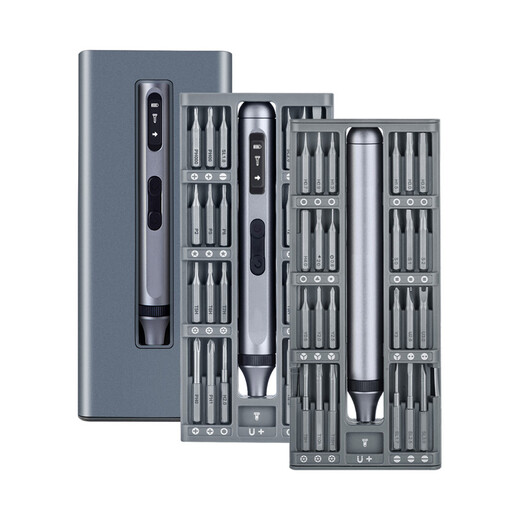
Why This Fits Their Persona: Ideal for individuals who occasionally repair devices or are building their first PC. The set offers a comprehensive kit with 48 bits without requiring a large initial investment. It covers most common scenarios for home use.
The device combines an electric torque (0.3 N.m) with a robust manual torque (3.5 N.m). This bypasses the pitfall of a weak or inflexible drive. Tight screws can be loosened by hand.
Comprehensive 48-piece bit set for a wide variety of applications. Includes useful additional tools like tweezers and a pry tool for disassembling cases.
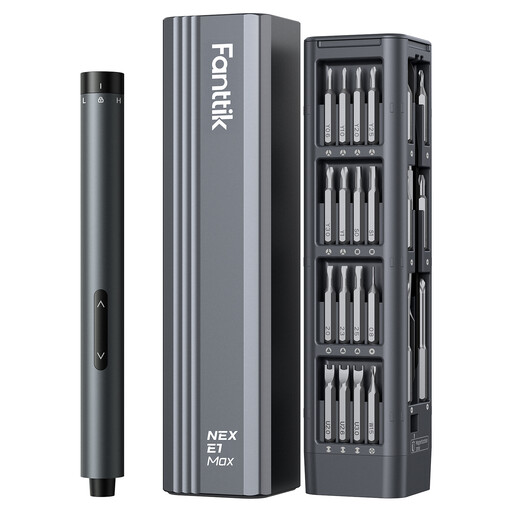
Why This Fits Their Persona: For users who regularly work on high-end electronics (smartphones, cameras, drones) and value precision, feel, and durability. The design and functionality are tailored for demanding tasks.
This model directly addresses the bit quality pitfall by using S2 steel. It also offers two electric torque settings (0.05 N.m / 0.2 N.m), which allows for precise control and prevents overtightening.
Two precise torque settings for delicate work. High-quality, magnetic aluminium case for bits and the screwdriver. 50 bits made of S2 steel cover nearly every application in precision mechanics.
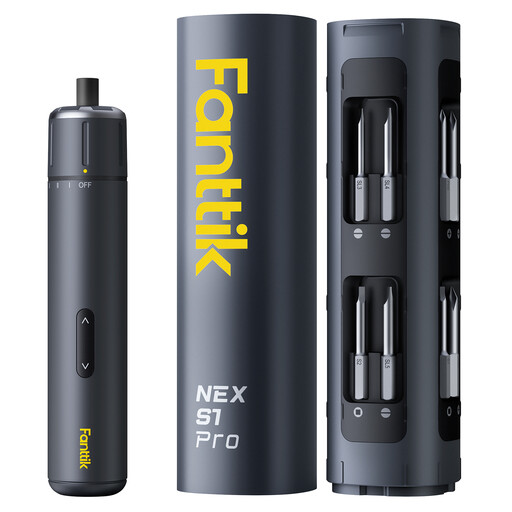
Why This Fits Their Persona: Perfect for users who need a powerful tool for furniture assembly, PC cases, or other larger screw-driving tasks, but don't want to give up the convenience of a cordless screwdriver. It bridges the gap between a precision tool and a compact power screwdriver.
With three adjustable torque settings (up to 4.2 N.m) and a strong manual torque (8 N.m), this model solves the problem of uncontrolled torque. The large 2000 mAh battery counters the pitfall of unrealistic runtime claims with genuine endurance.
High electric torque for demanding tasks. Large battery for long operating times and a USB-C charging port. The S2 steel bits are designed for the standard 1/4-inch hex shank.
If you need specialised bits or different configurations, you'll find a wide selection of tools that meet our quality criteria in our full category.
The actual battery life depends heavily on usage—specifically, the torque setting, the material, and the length of the screws. Manufacturer specifications usually refer to no-load operation. In practice, a model with a 350 mAh battery can be sufficient for assembling or disassembling hundreds of small electronics screws before needing a recharge.
Yes, it is excellently suited for this purpose. A cordless PC screwdriver makes working on motherboard screws, M.2 SSDs, and other small components much easier. For the larger screws on the case, a model with higher manual torque or adjustable electric torque is advantageous to tighten the screws securely but not too tightly.
In most cases, yes, as long as they have the same shank diameter. For precision screwdrivers, the standard is usually a 4 mm hex shank (H4). Larger cordless screwdrivers, on the other hand, use a 1/4-inch hex shank. Always check the compatibility with your tool before purchasing additional bit sets.