Quick individual portions
If you want to heat pre-cooked butter beans for your next lunch break, first consider whether a separate pressure cooker is right for this one task.


You don’t need an electric pressure cooker to heat tinned butter beans: according to the German Federal Centre for Nutrition, pulses in tins or jars are already cooked and ready to eat. A cooker may be more worthwhile if you also want to cook other ingredients or prepare several portions for lunch; in that case, consider the usable capacity, the functions you need and how much cleaning is involved. You’ll need to plan for cooling, chilled storage and transport whatever appliance you use.
If you want to heat pre-cooked butter beans for your next lunch break, first consider whether a separate pressure cooker is right for this one task.
If you prepare several portions with beans and other ingredients, plan the usable capacity, cooling and chilled storage together.
If you want to use the same appliance for other dishes too, consider not only the functions you’ll actually need, but also the space it takes up and how easy it is to clean.
A good fit if: You only want to heat pre-cooked tinned beans and don’t plan to pressure-cook other ingredients.
Consider: First check whether your existing kitchen equipment is up to the job.
A good fit if: You usually prepare smaller quantities but also want to cook other ingredients.
Consider: The stated capacity isn’t the same as the usable capacity. Also check the space it takes up and the maximum fill level for the specific model.
A good fit if: You regularly batch-cook several complete lunches and need more usable capacity.
Consider: Extra capacity won’t necessarily be useful for a single portion of beans. Cooling, chilling and transport still need to be planned separately.
| Buying priority | What to check | Who it matters most to |
|---|---|---|
| Pressure function for heating | Check whether the appliance has a non-pressure function and whether you want to pressure-cook other ingredients. | If I only want to heat one portion of pre-cooked beans for my lunch break, I don’t need a pressure-cooking programme for that. Around 36% of consumers put heating individual portions first. |
| Storing your lunch portion | Plan for cooling, sealed storage and transport separately from any keep-warm function. | If I’m taking my lunch with me, I also need to consider the time between preparing it and eating it. Around 29% of consumers place the safe preparation of lunch portions at the top of their list. |
| Usable capacity | Compare the quantity in your recipe with the usable capacity and the fill limits in the model’s instructions. | If I’m preparing several lunches in one go, the actual usable capacity needs to suit my recipe. Around 21% of consumers prioritise cooking several portions at once. |
| Functions and cleaning | Check which programmes you’ll actually use and how to clean the pot, lid and seal. | If I use the appliance for other dishes too, the extra programmes should justify the everyday cleaning involved. Around 14% of consumers prioritise versatile use with manageable upkeep. |
According to the German Federal Centre for Nutrition, tinned pulses are already cooked. There’s no evidence that the pressure function offers an advantage for this one step.
First decide whether you want to cook other ingredients or complete meals as well as the beans.
For the Tefal and Rommelsbacher models mentioned, the stated usable capacity is lower than the nominal capacity.
Plan around the usable capacity and also follow the fill limits in the instructions for your specific model.
A cooker’s keep-warm function doesn’t replace cooling, chilling and suitable transport conditions for a portion you’re taking with you. The German Federal Institute for Risk Assessment highlights the importance of keeping food sufficiently chilled during transport and storage.
Plan storage separately from the appliance’s functions. The German Federal Centre for Nutrition recommends keeping pre-cooked dishes sealed in the fridge once they have cooled.
You may need suitable containers and a way to keep food chilled during storage and transport.
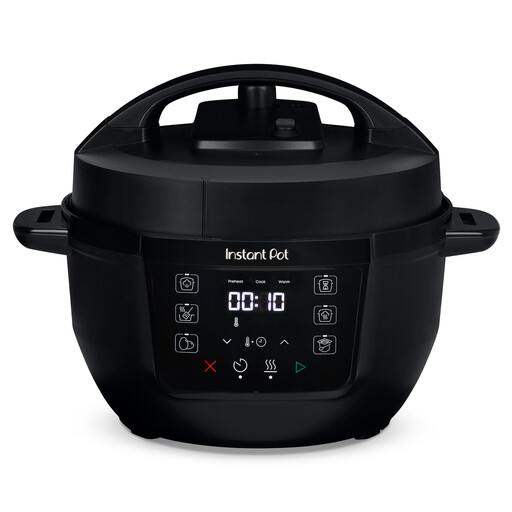
The Classic Mini is a smaller pressure-cooking option for anyone who also wants to sauté and prepare other dishes.
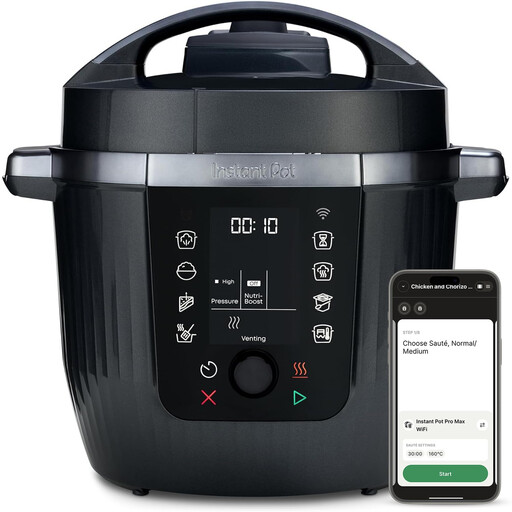
According to the manufacturer, the Turbo Cuisine CY754830 combines pressure cooking with browning and other cooking methods.
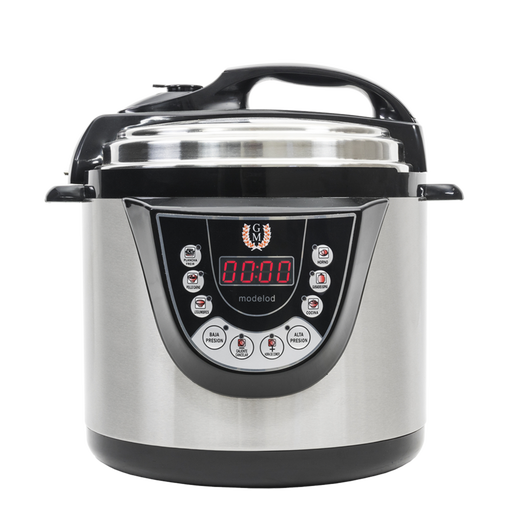
According to the manufacturer, the MeinHans MD 1000 offers 4 l of usable capacity and programmes with and without steam pressure.
This selection includes compact and larger electric multi-cookers with extra cooking functions and capacity for preparing several portions. You don’t need pressure cooking just to heat pre-cooked tinned beans.
 No image available
For smaller lunch portions and other dishes; the product description says it serves up to four portions.
3.8 l capacity; pressure cooking and sautéing. The inner pot is described as dishwasher-safe.
 No image available
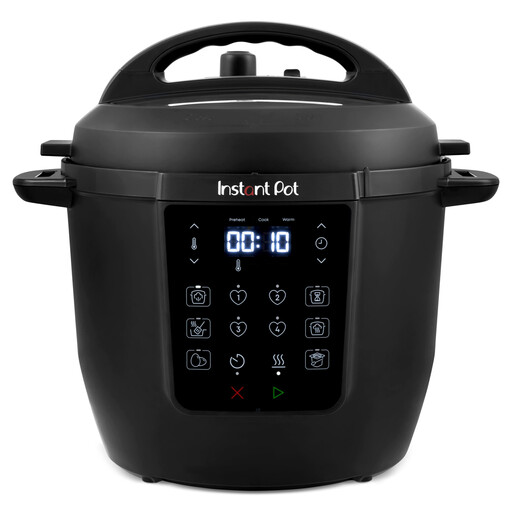
For several portions and a range of cooking methods; the product description says it has capacity for up to six people.
5.7 l capacity; pressure cooking, sautéing and keeping food warm. The inner pot and lid are described as dishwasher-safe.
 No image available
For preparing several portions and using a range of cooking functions; the product description says it serves up to six portions.
5.7 l capacity and 1200 W. The pressure must be fully released before opening.
 No image available
For larger quantities; the product description lists 5 l of usable capacity in the 6 l pot.
Nine cooking menus and two pressure settings. When pressure-cooking beans or other foods that swell, the product description says not to fill beyond the 1/2 mark. The pressure must be fully released before opening.
 No image available
For larger quantities and extra cooking methods; the product description says it serves up to ten portions.
8 l capacity, 1200 W and twelve pre-set menus. For beans and grains, the product description says not to fill beyond the 1/2 mark. The pressure must be released before opening.
No, as long as they’re pre-cooked pulses from a tin: the German Federal Centre for Nutrition describes beans in tins or jars as pre-cooked and ready to eat. Check the information on the specific product; this doesn’t apply to raw or dried beans.
Don’t rely on the keep-warm function alone. It applies to food in the appliance, not to later storage in a lunchbox you’re taking with you. The German Federal Institute for Risk Assessment highlights the need to keep food sufficiently chilled during transport and storage; the German Federal Centre for Nutrition recommends storing pre-cooked dishes in a sealed container in the fridge once they have cooled.
Follow the instructions for the specific model. The Instant Pot Classic Mini instructions call for a stable, level work surface with the air vents unobstructed; Rommelsbacher’s instructions for the MD 1000 warn that hot steam or water may escape when opening it.
Check which parts of the specific model need cleaning and which are dishwasher-safe. The Instant Pot Classic Mini quick-start guide lists the inner pot; this doesn’t mean the lid and seal can also go in the dishwasher.
Electrical equipment covered by the EU Low Voltage Directive 2014/35/EU, operating at 50 to 1,000 V AC, must meet its requirements; the consolidated version cited on EUR-Lex is dated 30 May 2026. According to the European Union, CE marking is required only for products covered by relevant harmonised EU legislation; it is not, in itself, an independent performance test.