For making larger batches of stock
You want to cook several portions using bones, vegetables and water, and focus on usable capacity rather than just the stated capacity.


Choose an electric pressure cooker for chicken stock based on its usable capacity and the fill limit for that specific model, not just the advertised pot size. In a small holiday cottage kitchen, you’ll also need room for the lid and steam release. Only plan to make a larger batch if you can chill the stock promptly afterwards. The German Federal Institute for Risk Assessment (BfR) recommends cooling hot food quickly to below 7 °C for longer-term storage.
You want to cook several portions using bones, vegetables and water, and focus on usable capacity rather than just the stated capacity.
You need to fit the cooker, lid and steam release into a limited workspace, and want to get to grips with the instructions quickly in an unfamiliar kitchen.
You want to check the fill limit, how to release the pressure fully and the cleaning instructions for your exact model before cooking.
First, work out how much stock you want to make, based on the usable capacity and fill limit for the model in question. Then check whether the available space, pressure release and cleaning requirements are practical for your holiday cottage kitchen.
| Consideration | What to look for | Who is it important to? |
|---|---|---|
| Usable capacity for stock | Check the usable capacity and fill mark for the specific model; bones and vegetables take up space too. Tefal lists the Turbo Cuisine CY7548 as having a usable capacity of 3.2 l from a stated capacity of 5.0 l. Rommelsbacher gives the MD 1000 a usable capacity of 4 l in a 6-l pot. | If I want to cook bones, vegetables and water together for several portions, the permitted fill level matters to me. That’s why around 31% of consumers put usable capacity first. |
| Space and controls | Check the dimensions, lid movement and clearance needed for steam release against the kitchen space available; look at the controls and instructions for the exact model. | If worktop space is limited in the holiday cottage, I want to position the cooker and lid safely and understand the controls quickly. Around 23% of consumers prioritise kitchen space and ease of use. |
| Pressure and hot stock | Check the fill limit, valve and instructions for opening the cooker after the pressure has been fully released. For the Instant Pot Duo models described, the manufacturer’s instructions limit filling to no more than two-thirds when pressure cooking. | When handling hot stock, I want to know exactly when the pressure has been fully released and it’s safe to open the lid. Around 31% of consumers put pressure handling first. |
| Cleaning and care | Check the instructions for the lid, valve and sealing ring, and make sure any replacement parts are compatible with the exact model. F.A.Z. Kaufkompass describes cleaning the Rommelsbacher MD 1000 as awkward. | If I want to clean the cooker easily after making stock, I check not only the inner pot but also the lid and sealing ring. Around 15% of consumers prioritise cleaning and care. |
The stated capacity doesn’t tell you how much liquid, bones and vegetables you can put in when pressure cooking. Tefal lists the Turbo Cuisine CY7548 as having a stated capacity of 5.0 l, but a usable capacity of 3.2 l.
Plan the batch size according to the usable capacity and fill mark for the specific cooker.
You may need to cook another batch, which takes extra time and requires more space for containers to chill the stock.
Once the programme has finished, the pressure must be fully released before you can open the cooker. If you’re keeping the stock, you’ll also need to chill it promptly afterwards.
Plan the whole process, from cooking to chilled stock, and follow the cooker’s instructions.
Allow time for pressure release, transferring the stock and chilling it too; the cooking time alone doesn’t cover the whole process.
For the Rommelsbacher MD 1000, the manufacturer lists a removable inner pot, while F.A.Z. Kaufkompass describes cleaning the model as awkward. The lid, valve and sealing ring also need attention.
Before buying, check the instructions for the specific model to see how each part should be cleaned and cared for.
For the MD 1000, Rommelsbacher lists a 6-l pot with a usable capacity of 4 l, plus a pressure-cooking mode for poultry and soups. These specifications apply to this model.
For the Turbo Cuisine CY7548, Tefal lists a stated capacity of 5.0 l and a usable capacity of 3.2 l. Usable capacity is what matters when planning how much stock to make.
The instructions reviewed apply to the Duo variants described in them. Before buying, check that the instructions match the exact model name.
These Joybuy product options can be compared for making chicken stock in a holiday cottage, based on batch size, features and ease of use. Before using a model, check its fill mark and instructions.
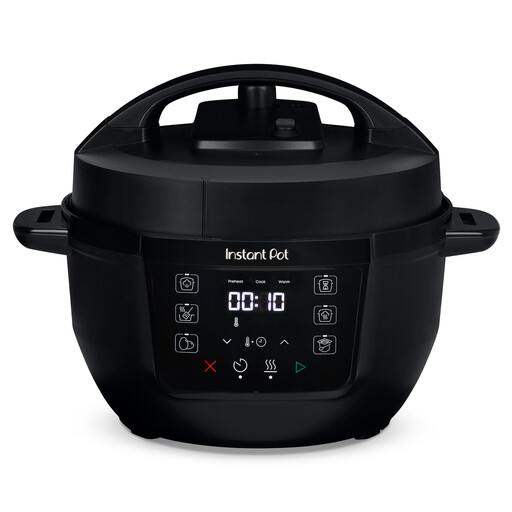 No image available
For smaller batches of stock: the product details list pressure cooking and a capacity of up to four portions.
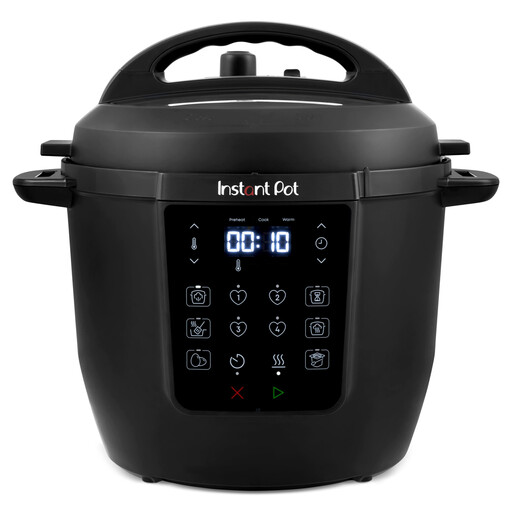 No image available
For several portions: the product details list pressure cooking and a capacity of up to six people.
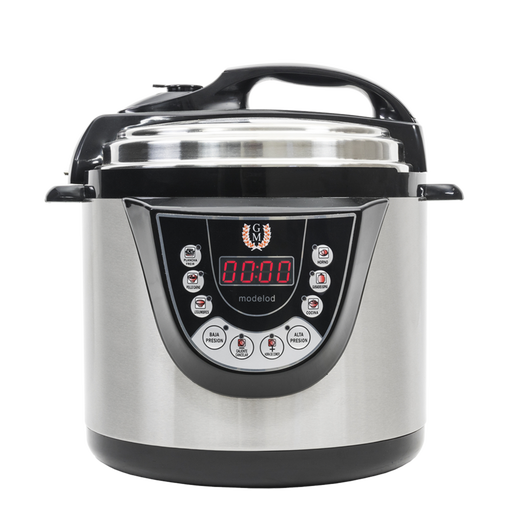 No image available
For pressure-cooked stock: the product details list a usable capacity of 5 l in a 6 l pot.
The product details state that an English-language manual is not guaranteed.
 No image available
For larger batches of stock: the product details list programmes for poultry and soup or stock.
The product description warns against forcing the cooker open while it is under pressure or filling it above the MAX mark.
No, not just because the programme has ended: the Instant Pot Duo instructions reviewed require you to make sure the pressure has been fully released before opening. Always follow the instructions for your own appliance.
Cool hot stock quickly if you’re planning to store it for longer. The BfR recommends cooling hot food rapidly to below 7 °C; for perishable foods, it gives a fridge temperature of 2 °C to no more than 7 °C. Make sure you have suitable containers and enough room in the fridge.
The BfR stresses the need for extra care when preparing poultry. Follow good kitchen hygiene when handling raw poultry and the cooking instructions in your recipe before serving or storing the stock.
Electrical appliances covered by the EU Low Voltage Directive must meet its requirements for being made available on the market. The European Commission explains that CE marking indicates the manufacturer’s declaration of conformity; it does not mean that an individual appliance has been safety-tested by a public authority. Also check the information and safety instructions for the specific model.