
Lieferung heute & morgen

Qualitätsgarantie

Willkommens-Angebote freischalten: KOSTENLOSE Lieferung | Bis zu 80 % RABATT | Kostenlose 30-Tage-JoyPlus-Testphase
App herunterladen
An electric radiator can provide extra heat in your living room, bedroom or home office when your central heating isn’t enough, or when you only want to heat one room. A portable option is particularly practical for renters, while homeowners may also want to consider permanently installed models, depending on where they’ll be used.
However, it’s easy to incur unnecessary costs when buying one. The key factors aren’t just the design, remote control or a high wattage, but how heat output, thermostat, placement, safety features and ease of use work together.
A 2,000 W heater draws 2,000 watts when running at full power. Whether it’s suitable for your room also depends on its size, insulation, ceiling height, window area and how you plan to use it. A poorly insulated room can take a long time to feel comfortable, even with a high rated output.
So treat the recommended room size as a guide only. Aigostar, for example, recommends using its heater in rooms of 20 to 25 square metres. This depends on the conditions in your home and isn’t a substitute for an individual heat-loss calculation.
An electric heater converts electrical energy into heat. For the same amount of heat delivered, oil-filled radiators, convector heaters and fan heaters don’t have a magical efficiency advantage over one another. Your electricity costs depend on how much energy you use:
Cost = power in kilowatts × operating time × electricity price
A radiator with a thermostat can limit how long it runs by switching off or reducing its output once the target temperature is reached. A timer can also stop the heater running for longer than necessary. In everyday use, this can be more practical and use less electricity than a heater without temperature controls.
Overheat protection and tip-over protection are important features, but they don’t prevent every risk. An electric radiator should be placed on a level, stable, heat-resistant surface. Keep curtains, furniture, paper and fabrics at a safe distance. The product details for the Midea NY2009-24UR recommend leaving at least one metre between the heater and flammable materials.
Never cover a radiator while it’s running. It’s also not designed for drying clothes. In bathrooms and other damp rooms, check whether the specific model is approved for use in that environment and has the required protection rating.
Several heat settings are useful if you only need occasional extra warmth. An oil-filled radiator rated at 1,500 or 2,000 watts can be used flexibly, depending on the room and its insulation. Three heat settings, as on the Ariete Vintage Line Oil Radiator, make it easy to adjust the output to suit your needs.
A fan heater usually warms you quickly by blowing out hot air. An oil-filled radiator typically takes longer to heat up, but continues to give off stored heat for a while after it’s switched off. A convector heater, on the other hand, uses natural air circulation. The right type for you depends on whether fast heat, quiet operation or an even room temperature matters most.
A thermostat measures the room or heater temperature and controls when it heats. Check whether you can set your preferred temperature and what heating settings are available. A heater with a remote control is particularly convenient in a bedroom or home office, but it doesn’t replace checking that the heater is positioned safely.
A programmable timer lets you limit use to certain time slots. The Aigostar convector heater has a timer that can be set for up to 24 hours. This is useful if, for example, you only need the heater in the morning or during working hours.
A portable radiator with wheels can be moved between your living room and home office. Check its weight and cable length, and make sure there’s enough space around the heater. Wheels make it easier to move, but the radiator must still be placed on a stable surface while it’s running.
For wall mounting, make sure the dimensions, fittings and connection type are suitable for your wall. A permanently installed flat radiator isn’t the same as a portable oil-filled radiator, and should be fitted according to the manufacturer’s instructions.
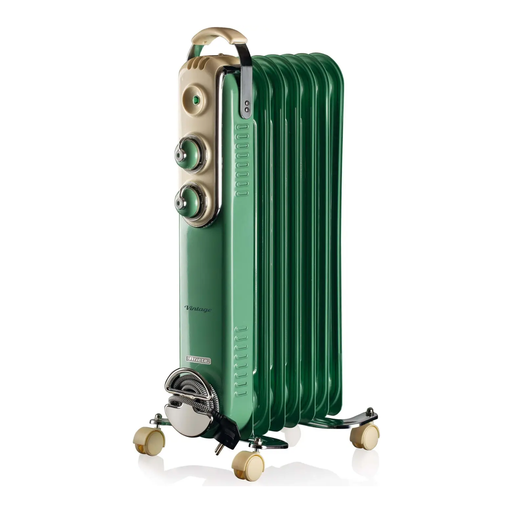
Why it suits this buyer: Its portable design, with a handle and four swivel castors, makes it a good choice for occasional extra warmth in different rooms. Three heat settings make it easy to adjust the output.
Its clearly stated 1,500-watt output helps you avoid assuming that a generic 2,000 W rating will automatically suit a particular room size.
1,500 watts, seven heating elements, three heat settings and castors for easy portability.
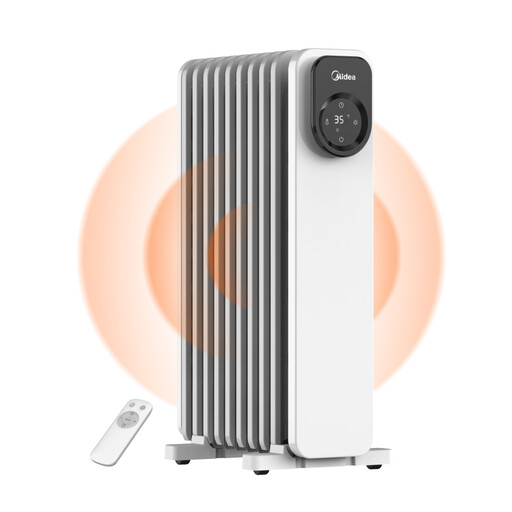
Why it suits this buyer: This oil-filled radiator combines 2,000 watts, nine fins, a thermostat, four operating modes, a remote control and an LED touch control panel. It offers controlled heating in well-insulated rooms or for occasional use.
The thermostat and multiple modes help you tailor the running time to your needs. The stated tip-over and overheat protection provide extra reassurance when the heater is placed safely.
2,000 watts, nine fins, remote control, LED touchscreen and four operating modes, according to the product description.
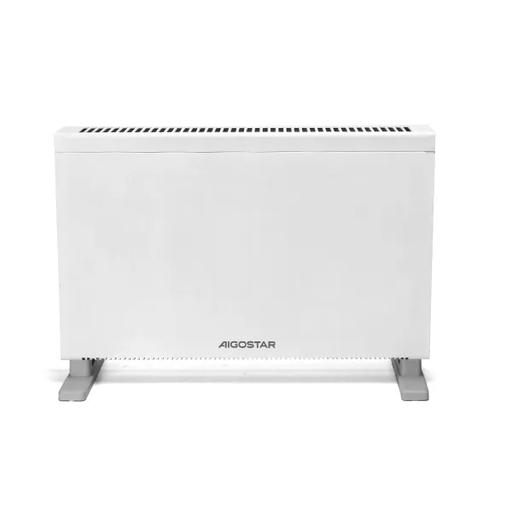
Why it suits this buyer: This convector heater offers two heat settings, a temperature range of 5 to 35 °C, a remote control and a programmable timer. It’s well suited to regular use in a living room or home office.
Choosing between 1,250 and 2,000 watts, along with using the timer, can help you avoid running the heater continuously at full power.
Natural convection, a temperature range of 5 to 35 °C, remote control, and overheat and tip-over protection, according to the product details.
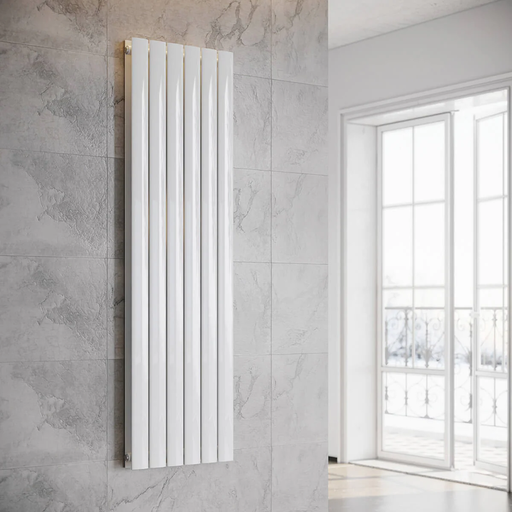
Why it suits this buyer: This flat radiator is designed for permanent installation with a central connection, making it a better choice for homeowners or planned renovations than for renters.
The mounting method and dimensions are clearly stated, so you can check before buying whether the available wall space and connection are suitable.
Wall-mounted design, central connection, white finish and low-carbon stainless steel construction, according to the product description.
We’ve put together a complete, regularly updated list of products that meet these strict selection criteria and the safety regulations in force in the EU.
Before using your heater for the first time, read the instruction manual and check the rating plate. For use in Germany, 220–240 volts and 50 hertz are particularly relevant, if stated on the appliance. Where possible, plug the radiator directly into a suitable wall socket. Depending on their rated capacity, extension leads and multi-socket adaptors may not be suitable.
Other important safety tips:
A 2,000-watt appliance running at full power for one hour would theoretically use 2 kilowatt-hours. Actual consumption may be lower, depending on the thermostat, heat setting and room temperature. To work out the cost, multiply the energy used by your electricity tariff.
An oil-filled radiator doesn’t use a powerful airflow, so it’s often considered quiet. A convector heater uses natural air circulation, which may be assisted depending on the model. Noise levels vary from one appliance to another. If you plan to work or sleep in the same room, check the manufacturer’s stated operating noise.
Not every model is suitable for damp environments. Only use a radiator in the bathroom if the manufacturer explicitly approves it and states the required protection rating. Keep it away from water sources, install it correctly and follow the instructions in the manual. Even if a product is described as a ‘bathroom heater’, don’t assume it’s safe to use right next to a shower or bath.