
Lieferung heute & morgen

Qualitätsgarantie

Willkommens-Angebote freischalten: KOSTENLOSE Lieferung | Bis zu 80 % RABATT | Kostenlose 30-Tage-JoyPlus-Testphase
App herunterladen
Electric ride-on toys for children range from small ride-on cars and quad bikes to electric motorbikes and remote-control toy cars. There’s plenty to choose from, but product photos and marketing claims don’t always show whether a model is suitable for your child’s age, weight and intended use.
Three issues are particularly likely to lead to the wrong purchase:
Before buying, parents should check whether the electric ride-on is genuinely suitable for how their child will use it: indoors, on hard-surfaced paths, on grass or only with direct supervision.
The manufacturer’s age recommendation is a useful starting point. Buyers should also check the maximum speed, starting mechanism and controls. A slow ride-on toy may be a more suitable choice for beginners than a faster model.
For younger children, soft start, easy-to-understand controls and, where appropriate, a remote control for adults are practical features to look for. A ride-on toy with a remote control lets you supervise the journey or stop it if needed. If an electric scooter for children has several speed settings, start with the lowest one.
The maximum weight capacity must be suitable for your child. When comparing models, take specific figures such as a maximum weight capacity of 30 kg or 60 kg into account. The width of the vehicle, its centre of gravity and the number of wheels also affect its stability.
A four-wheeled electric quad may offer different stability at low speeds from a two-wheeled electric motorbike. Models with extra stabiliser or training wheels may be easier for younger children to handle. Before buying, also check that the vehicle will fit through your doors and that there’s enough space to turn around.
Battery voltage and motor power give you an idea of the drive system, but on their own they tell you little about actual running time. This depends on factors including your child’s weight, the surface, temperature and riding style. Treat any stated range as a manufacturer’s estimate.
If you’re buying in Germany, also check the CE marking, warnings, age recommendation and German-language safety information. Small detachable parts may not be suitable for younger children. The vehicle should only be used on suitable surfaces and with the level of supervision set out in the instructions. Public roads, cycle paths and pavements aren’t automatically suitable play areas.
The models below cater to different needs. Details about age, speed, weight capacity and features are taken from the relevant product information.
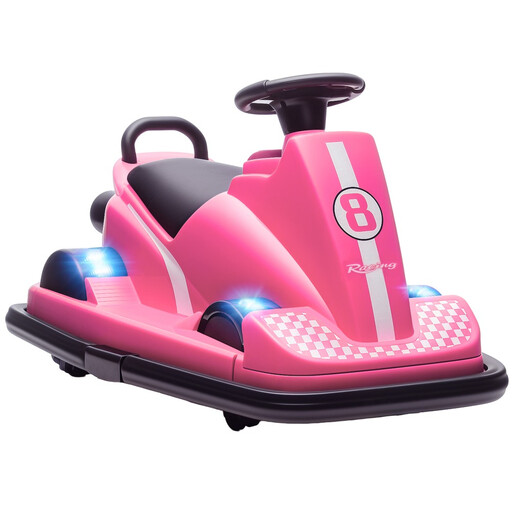
Why this product suits this profile: According to its product name, this compact 6-volt model is designed for children aged 3 to 8 and reaches 2.5 km/h. Measuring 74 × 53 × 48 cm, it’s a good fit for families looking for a manageable ride-on toy.
Its stated speed of 2.5 km/h places it in the slower category. Even so, check the age recommendation, weight limit and specific instructions before buying.
360-degree rotation, soft start, music and a horn according to the product details; 6-volt drive and compact dimensions.
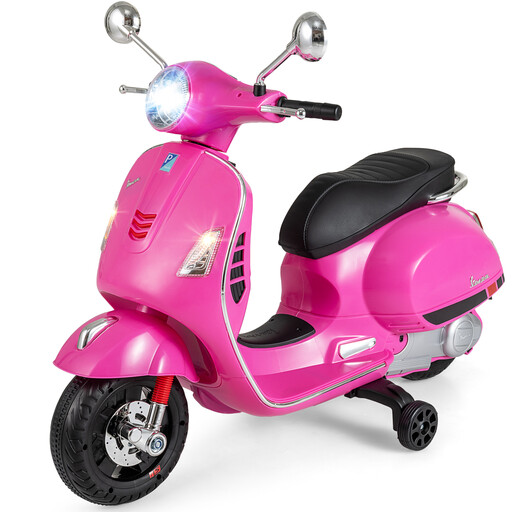
Why this product suits this profile: According to the product details, this four-wheeled electric motorbike for children is designed for ages 3 to 6. It features training wheels, a triangular frame and a maximum weight capacity of 30 kg.
The training wheels and four-wheel design address a common concern with two-wheeled vehicles. Before buying, check that the weight limit is suitable for your child’s current weight.
12-volt system with two 30-watt motors, training wheels, hard-wearing tyres, plus music, stories, a horn and LED headlights according to the product description.

Why this product suits this profile: According to the description, this model is aimed at children aged 5 to 12. It combines five wheels, a foldable design and adjustable speeds to suit different situations.
Three speed settings of 5, 10 and 15 km/h, along with app-based speed limiting, give you more control than a vehicle with just one fixed speed.
Maximum weight capacity of 60 kg, five wheels, foldable design and a 120-watt motor. The product description states a range of 15 to 20 km per charge.
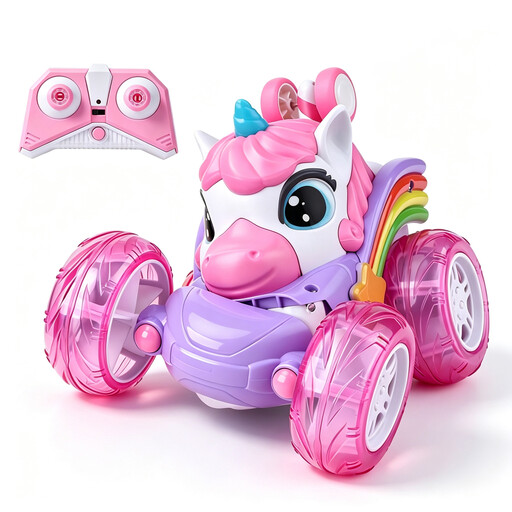
Why this product suits this profile: This small electric toy for girls and boys isn’t a ride-on; it’s a remote-control stunt car for children aged 3 and over. It’s suitable for short play sessions indoors or outside.
The product information gives a minimum age of 3 and warns that it contains small parts. Direct supervision is therefore an important factor when choosing this toy.
2.4 GHz remote control with a range of up to 40 m according to the description, LED details, USB rechargeable battery and stunt functions.
We’ve put together a complete, regularly updated list of products that meet these strict selection criteria and fully comply with the safety regulations in force in the EU.
It depends on the specific model. The selection includes vehicles for children from around 3 years old, while the RICTOR C8 is stated to be suitable for ages 5 to 12. As well as age, you’ll need to consider your child’s height, weight and ability to use the controls, along with the level of supervision required.
There’s no single answer. Running time and range depend on battery capacity, motor power, the surface, outside temperature and the load. The RICTOR C8 is described as having a range of 15 to 20 km per charge. Treat figures like these as manufacturer estimates, and don’t assume they apply to every electric ride-on.
Running costs mainly include the electricity used for charging and, if needed, replacement parts such as tyres or batteries. Electricity use is usually lower than for motorised vehicles for adults, but it varies depending on battery voltage and how often you charge it. Before buying, check the charger, battery replacement options, availability of spare parts and storage instructions.