
Lieferung heute & morgen

Qualitätsgarantie

Willkommens-Angebote freischalten: KOSTENLOSE Lieferung | Bis zu 80 % RABATT | Kostenlose 30-Tage-JoyPlus-Testphase
App herunterladen
Electric ride-on toys can provide plenty of active fun in the garden, on private land or on supervised outings. There’s a wide choice, from electric cars and motorbikes for children to electric quad bikes, go-karts and tractors. But looks aren’t everything. The child’s age and height, the vehicle’s speed, the terrain and how it’s controlled all need to suit both the child and how you plan to use it.
The age shown on the packaging is only a guide. A child with long legs may quickly outgrow a small model, while a larger vehicle could be difficult for a younger child to control. So be sure to check the seat height, vehicle dimensions, handlebar position and maximum load too.
For a ride-on toy for children aged 3 and over, a manageable speed is usually more important than a particularly powerful motor. Multiple speed settings, a gentle start and a parent-controlled speed limit make it easier to adapt the vehicle to your child’s experience and surroundings. A remote-controlled ride-on toy also lets you step in if your child is very young.
Actual running time depends on factors including the child’s weight, slopes, terrain, temperature and driving style. Battery capacity alone doesn’t give you a reliable indication of range. When choosing a battery-powered ride-on toy, parents should also consider charging time, replacement battery availability, the charger and storage conditions.
A 6 V ride-on toy is often designed for younger or smaller children and relatively flat surfaces. A 12 V ride-on toy generally offers more power and, depending on its design, may also be suitable for grass or slightly uneven ground. But voltage isn’t the only measure of quality: the tyres, gears, number of motors and vehicle weight also affect how it handles.
Models with multiple speed settings make it easier to adjust the ride. For more powerful electric motorbikes, parents should pay particular attention to an adjustable speed limit, easy-to-reach brakes and a safe riding environment.
Look for clear instructions, a sturdy seat and easy-to-reach controls. Depending on the model, you may also want a seat belt, emergency stop function or remote control. Products carrying the relevant markings should have a CE mark, warnings and details of the responsible person in the EU that are present and easy to verify. These don’t replace adult supervision.
For safe use:
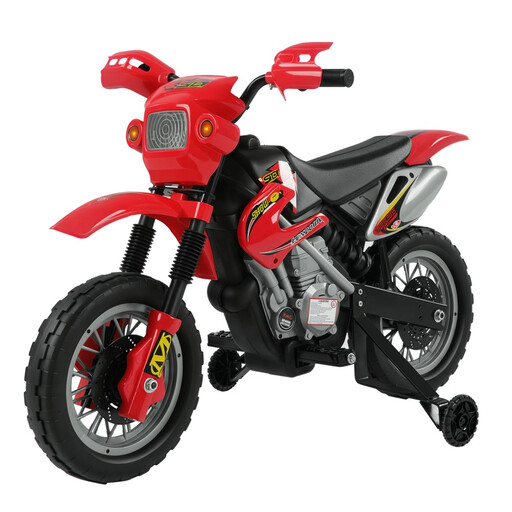
Why this product suits this profile: This 6 V motocross model is listed for children aged around 3 to 6 and measures 102 × 58 × 66 cm. It’s a good fit for families looking for a compact outdoor ride-on toy with lights, a horn and music.
Its lower voltage and compact dimensions make it easier to understand what it’s suited to than an off-road model that looks large but may not be appropriate for every child.
6 V system, compact design, plus front headlights, a horn and music playback, according to the product details.
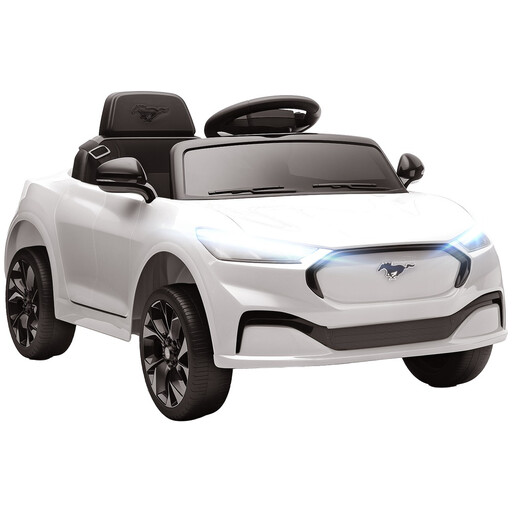
Why this product suits this profile: This 12 V electric car for children has two motors and is designed for supervised use with a parent-operated remote control. It’s a good choice for parents who want to combine convenience with close supervision.
The remote control lets you adjust speed and direction from a distance, rather than leaving your child to ride entirely on their own.
12 V drive, two motors and a 2.4 GHz remote control, according to the product name.
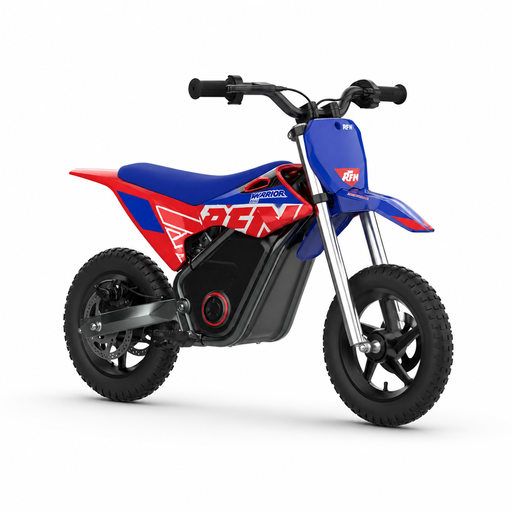
Why this product suits this profile: According to the product details, this electric motorbike for children has three speed settings, a 36 V 5 Ah battery and a range of up to 18 km. It’s aimed at more experienced children within the stated age and height range.
The three selectable speed settings and stated parent-controlled speed limit help you match the power to your child’s riding ability.
14-inch wheels, front and rear suspension, disc brakes, plus 36 V and 5 Ah, according to the product details.
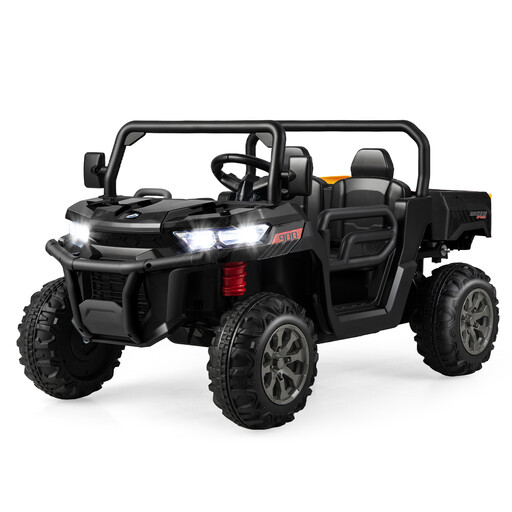
Why this product suits this profile: According to the product details, this two-seater is designed for children aged 3 to 8, with a maximum load of 50 kg and speeds of 3 to 8 km/h.
The stated low speed and remote control help address the risk of buying a large vehicle that’s difficult to control.
Two seats, a 50 kg maximum load, 2.4 GHz remote control, seat belt and soft start, according to the product description.
We’ve put together a complete, regularly updated list of products that meet these strict selection criteria and fully comply with the safety regulations in force in the EU.
It depends on your child’s height, weight and motor skills. Slower 6 V or 12 V models with a stable design are often suitable for younger children. A remote control and multiple speed settings make it easier for you to supervise them. Always check the manufacturer’s guidance against your child’s physical size and abilities.
There’s no single answer. Battery capacity, voltage, number of motors, terrain, temperature and load all affect running time. After use, charge the battery according to the instructions and store the vehicle somewhere dry. If you won’t be using it for a while, follow the manufacturer’s guidance on storage and charge level.
As well as the purchase price, you’ll mainly need to budget for electricity to charge the battery and, where necessary, replacement batteries, chargers, tyres or fuses. The actual cost depends on how often you charge it, battery capacity and your electricity tariff. Before buying, it’s worth checking the availability of spare parts, warranty terms and instructions in English.